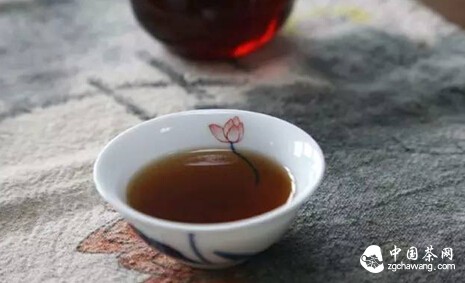
In daily tea brewing, a gaiwan is used for Tieguanyin, lightly to medium-roasted rock tea, and raw Pu'er (new tea). Some choose a teapot in cold weather, as its heat retention is better than a gaiwan's. This is particularly noticeable in the later infusions. Alternatively, a teapot is used for highly roasted, fully roasted aged rock tea, and ripe Pu'er tea.
For drinking Pu'er tea, is it better to brew with a gaiwan or a teapot?
Comparison:
From the perspective of the tea soup, the liquor brewed in a teapot has a darker color and is more饱满 (full-bodied) than that brewed in a gaiwan.
From the aroma perspective, the lid aroma can be smelled when brewing with a gaiwan, which is one of the most enjoyable moments of drinking Pu'er tea. The lid aroma can also be smelled when brewing with a purple clay teapot, but the fragrance is different.
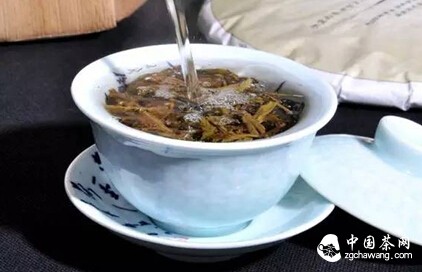
Generally, for raw Pu'er tea, the aroma from a gaiwan lid is orchid, fruity, or honey-like. A gaiwan does not absorb smells, so any off-odors can be detected immediately. A purple clay teapot比较容易 absorbs flavors. The former's aroma is more readily acceptable, while the latter's is more沉稳持久 (steady and long-lasting). When the aroma from the gaiwan lid has dissipated, the teapot lid may still retain the tea fragrance.
Tea brewed in a purple clay teapot is more浓郁 (rich) and醇厚 (mellow) than that from a gaiwan. The sweetness and returning sweetness (hui gan) are similar, but the bottom-of-the-cup aroma lasts much longer with the teapot.
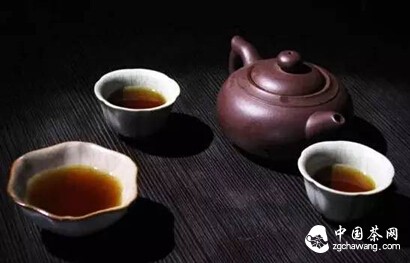
After brewing for 6 infusions, compare the two methods with a 2-minute steep. After pouring, smell the lid of the gaiwan and the lid of the purple clay teapot. The gaiwan lid aroma is floral, but it disappears once cooled. Because purple clay retains heat well, the lid aroma of the teapot is very persistent. The tea from the gaiwan has a darker color than that from the teapot, yet strangely, the tea taste from the teapot is stronger than that from the gaiwan.
Conclusion:
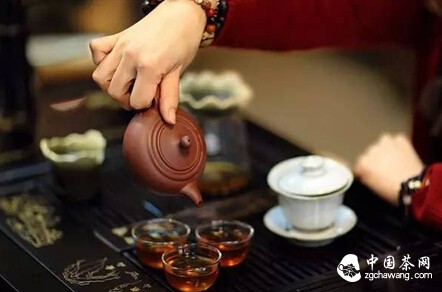
1. With the same amount of tea leaves, water temperature, and steeping time, a purple clay teapot can more effectively bring out the character of the tea (发挥茶性) and better体现 (express) the tea's flavor compared to a porcelain gaiwan.
The inferred reason is that purple clay has strong heat retention and dissipates heat slowly, helping the tea leaves release their soluble substances. A gaiwan dissipates heat relatively quickly. When water is poured into the gaiwan, the cooled bowl and tea leaf surfaces absorb some heat, reducing the water temperature, decreasing the release of soluble substances, and reducing the醇厚感 (sense of mellowness).
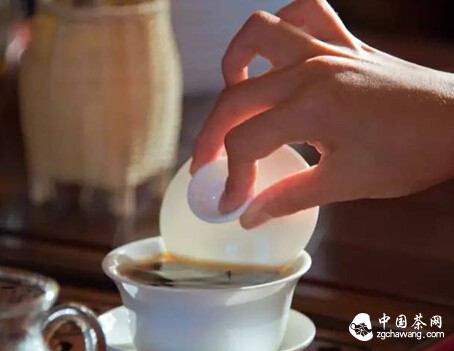
2. Regarding lid aroma, the gaiwan has a slight advantage. The gaiwan can dissipate some heat, reducing olfactory刺激 (stimulation), making the lid aroma smell more fragrant. Purple clay absorbs aroma, taking in some of the tea's fragrance, making it seem inferior to the gaiwan when smelled.
3. The gaiwan is more convenient to use, clean, and examine the spent leaves (观看叶底) than the purple clay teapot, which is probably the reason most people prefer using a gaiwan for brewing tea.
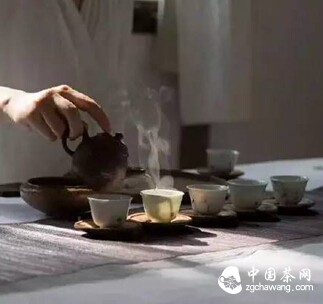
From an operational perspective, the gaiwan can be烫手 (hot to handle) for the first few infusions (though this can be ignored by experienced tea drinkers) and is easier to break. The teapot is relatively easier to handle but is troublesome to clean and can be easily broken during cleaning. Another issue: due to heat dissipation, the brewing temperature in a gaiwan is relatively lower than in a pot. It can be said that tea seems to be more耐泡 (durable for more infusions) when brewed in a gaiwan compared to a teapot.
When comparing the 7th infusion from both, the tea from the gaiwan has a darker color than that from the teapot, but because the teapot retains heat well, the tea taste is still stronger than that from the gaiwan.
Finally, from a cleaning perspective, using a gaiwan is more convenient!