Pu Fuzhou (1888-1975), originally named Qiyu, was from Zitong, Sichuan. He came from a family with three generations of medical expertise. Devoted to the field of Traditional Chinese Medicine for over 70 years, he was an outstanding TCM theorist and clinician in China.
He was skilled at applying the theoretical principles of treatment based on syndrome differentiation to guide clinical practice, forming a unique medical style characterized by 'accurate syndrome differentiation, cautious law establishment, precise formula selection, and stable herb use'. For clinical pattern differentiation, he proposed that for internal injury and miscellaneous diseases, the focus should be on differentiating deficiency, excess, cold, and heat; for externally contracted seasonal diseases, the focus should be on differentiating exterior, interior, cold, and heat. This clarified the application of the Eight Principles in differentiating externally contracted diseases from internal injury miscellaneous diseases.
Regarding the application of the Eight Methods, he put forward important treatment principles such as 'induce sweating without causing damage, purge without causing impairment, harmonize without being overly broad, induce vomiting without delay, warm without causing dryness, cool without causing congealment, disperse without attacking harshly, and tonify without causing stagnation'. Furthermore, emphasizing vital energy and preserving stomach Qi and fluids were the most refined aspects of his scholarship.
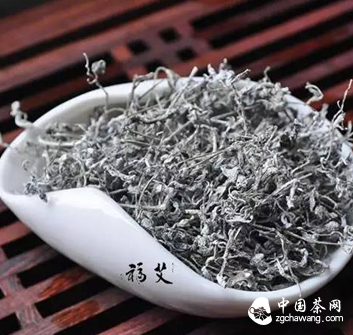
6 Grams of Tea Saves a Life
Using just one ingredient – tea leaves – to cure a critically ill elderly patient might sound like a fantasy. But in Pu Fuzhou's clinical career, this was merely a drop in the ocean.
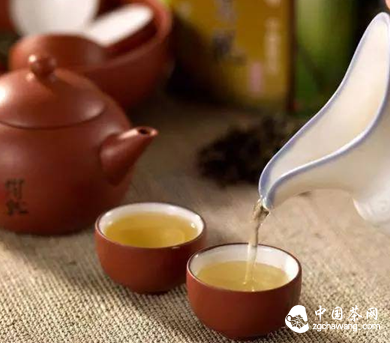
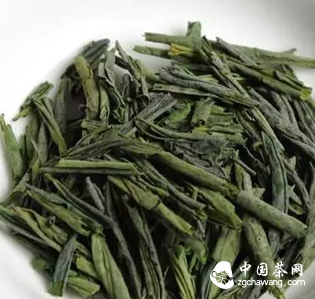
One patient developed sores after a febrile disease. After long-term medication, the heat signs slightly reduced, but the patient suffered from irritability, insomnia, lack of appetite, and no bowel movement for seven days, followed by continuous vomiting, rejecting any food or drink. Given the patient's advanced age and prolonged illness, the children felt there was no hope for survival. Pu Fuzhou inquired in detail about the condition and specifically asked what the patient felt like eating, learning that the patient only wanted to drink tea. He immediately took 6 grams of Longjing tea, instructed to add the tea leaves two minutes after the water boiled, let it boil twice more, and then give it to the patient to drink slowly, emphasizing the word 'slowly'.
The next day, the family reported joyfully: 'As soon as the tea was brewed, mother smelled the fragrance and wanted to drink it. She slowly drank a few sips and surprisingly did not vomit. She immediately felt relief in her heart. Then her stomach gurgled, she passed gas twice, and had two dry bowel movements. That night she was able to sleep. When she woke up in the morning, she felt hungry and asked for food. What medicine should we use now?'
Pu Fuzhou said: 'For an elderly person with a prolonged illness who has taken too much medicine, the stomach Qi is greatly damaged. Now that the stomach Qi is just reviving, we must absolutely not administer any more medicine. If the medication is even slightly inappropriate and the stomach Qi is cut off, the consequences would be unthinkable.' He advised using very thin rice porridge, given in small amounts, to nourish stomach Yin and stomach Qi. The family followed his instructions. After such dietary recuperation for over a month, the critically ill person actually recovered!
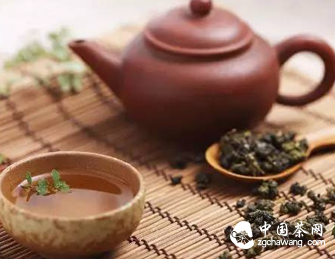
Pu Fuzhou later explained: 'At that time, the patient's stomach Qi was hanging by a thread. Although there was deficient heat accumulated internally, bitter-cold purgatives could not be used, otherwise the stomach Qi would immediately collapse. Therefore, tea was used for its slight bitterness, slight sweetness, slight coldness, and fragrance. It acridly opens without damaging Yin, bitterly descends without damaging Yang, and its bitterness combined with sweetness can awaken the stomach and please the spleen. Passing gas and having dry bowel movements after drinking tea indicated that the ascending and descending pivot of the spleen and stomach had started functioning again. Being able to sleep and asking for food upon waking were clear signs of the harmonization of Yin and Yang. And 'giving it slowly' was the key to administering the remedy. If one were greedy for quick success and advanced rashly, it would surely have failed instantly.'
Emphasizing vital energy and preserving stomach Qi and fluids is an extremely important characteristic of Pu Fuzhou's academic thought and the essence of his medical skill. From this medical case, one can comprehend the精髓 (essence) of TCM diagnosis and treatment seeking the root cause of disease, providing profound inspiration for later generations.
Integrating the Theories of Dongyuan and Tianshi
Traditional Chinese Medicine has always valued vital energy. The 'Inner Canon' says: 'When vital energy exists within, pathogenic factors cannot interfere; where pathogenic factors gather, the vital energy must be deficient.' This explains that the process of occurrence, development, and outcome of human diseases is a process of struggle, victory or defeat, and waxing and waning between vital energy and pathogenic factors. When applying pattern differentiation in clinical practice, an important point is to discern the relationship between the vital energy and the pathogenic factors.
Pu Fuzhou believed that the fundamental cause of disease is the insufficiency of vital energy; the prosperity or decline of vital energy also plays a decisive role in the development and outcome of disease. The occurrence and outcome of all diseases are related to stomach Qi. Therefore, when examining a disease, one must first assess the strength of the spleen and stomach; when treating a disease, one must first consider the prosperity or decline of the spleen and stomach.
He proposed preventing disease early when there is no illness, to preserve vital energy; when there is disease, expel the pathogen but be careful not to damage the vital energy. If one only sees the disease and not the person,单纯 (simply) focusing on驱除 (expelling) the pathogenic factor without considering the vital energy loses the original meaning of 'treating disease by seeking the root'. In the relationship between the person and the disease, the person is the root, and understanding and considering the person naturally requires emphasis on the person themselves. Therefore, Pu Fuzhou, when treating diseases, emphasized considering the primordial Qi as the root, stressing the role of internal factors like the body's own resistance and repair capacity.
The prosperity or decline of vital energy is closely linked to the strength of stomach Qi. The 'stomach Qi' referred to in TCM generally denotes the digestive function, primarily of the stomach and intestines. Taking stomach Qi as the root means that the digestive function represents, to some extent, the patient's general resistance, illustrating the importance of stomach Qi in the human body.
The spleen and stomach are the foundation of the acquired constitution and the source of Qi and blood transformation. When the spleen and stomach function normally, then Nutritive and Defensive Qi are harmonious, and the five Zang organs are peaceful. Pu Fuzhou believed that if the spleen and stomach function is impaired, they cannot transform and generate Qi and blood to nourish the whole body. Externally, this不足以 (is insufficient to) resist the invasion of pathogenic factors; internally, it不足以保障 (cannot ensure) the normal activity of Zang-fu functions, and thus all diseases arise from this. Therefore, regardless of the disease, one must constantly remember to regulate the spleen and stomach and cultivate the acquired constitution.
His method of regulating the spleen and stomach drew from Li Dongyuan's teachings. However, he believed that Dongyuan was detailed in treating the spleen but brief in treating the stomach; detailed in raising the spleen but brief in lowering the stomach; detailed in warming and tonifying but brief in clearing and moistening. Ye Tianshi advocated the method of nourishing stomach Yin, expounding the principle that 'the spleen prefers firmness and dryness, the stomach prefers softness and moisture; the spleen functions well when ascending, the stomach functions well when descending,' which actually supplemented what Dongyuan's method lacked. When regulating the spleen and stomach, he skillfully applied ascending, descending, moistening, and drying as appropriate. He drew from Dongyuan while focusing on preserving stomach Yin, and followed Ye Tianshi without forgetting to revitalize spleen Yang, melting the strengths of both schools into one, his profound medical theory having reached a state of perfection.
When treating externally contracted diseases, he always prioritized protecting stomach Qi, because the stomach is the root of Defensive Qi. Defensive Qi originates from the Middle Jiao; only with strong stomach Qi can Defensive Qi be secure. As Pu Fuzhou earnestly advised in his article 'A Brief Discussion on Treatment Based on Syndrome Differentiation': 'Most bitter-cold toxin-resolving herbs have the drawback of damaging the spleen and impairing the stomach. Whenever using bitter-cold purgative methods, one must be cautious, ensure accurate pattern differentiation, and stop once the effect is achieved.'
One patient with acute hepatitis had a constitutionally weak spleen. The previous doctor only paid attention to the external cause of viral infection but neglected the internal cause of spleen deficiency, repeatedly administering bitter-cold antibacterial formulas. Consequently, the patient's appetite decreased daily, with loose, undigested stools, and was bedridden for over a month. Pu Fuzhou analyzed that the patient's internal cause was spleen weakness, and thus used Xiangsha Lizhong Tang (Aucklandia and Amomum Center-Fortifying Decoction) added with Evodia fruit and Caoguo (Tsao-ko) to strengthen the spleen and support the vital energy to expel the pathogen, achieving remarkable results.
Another example is his pattern differentiation and treatment of acute hepatitis. Pu Fuzhou did not rigidly adhere to the single factor of viral infection, treating it uniformly with one method or formula. Instead, starting from a holistic view and adhering to the principle of vital energy as the root, he comprehensively analyzed the pathogenesis of hepatitis. Based on different pathological changes, he flexibly applied measures such as 'expelling pathogens without damaging vital energy, supporting vital energy also expels pathogens,' fully reflecting his proper handling of the dialectical relationship between pathogen and vital energy in the process of diagnosing and treating hepatitis.
Preserving Stomach Qi and Body Fluids
Pu Fuzhou emphasized that regulating the spleen and stomach is the key to treatment during the recovery phase of externally contracted febrile diseases. In the late stage of Cold Damage disorders, with spleen deficiency and Qi stagnation, the method should be to sweetly and warmly regulate the spleen, selecting formulas like Houpo Shengjiang Banxia Gancao Renshen Tang (Magnolia Bark, Ginger, Pinellia, Licorice, and Ginseng Decoction) or Yigong San (Extraordinary Merit Powder) accordingly; tonifying the spleen should first awaken the stomach, adding Sha Ren (Amomum fruit), Huo Xiang (Pogostemon), Mu Xiang (Aucklandia) as appropriate. In the late stage of Warm diseases, stomach fluids are most easily consumed and damaged; the method should be to sweetly and coldly nourish the stomach, selecting formulas like Maidong Tang (Ophiopogon Decoction) or Yiwei Tang (Stomach-Benefiting Decoction) accordingly; benefiting the stomach should first soften the liver, adding Bai Shao (white peony root), Shi Hu (Dendrobium), Yu Zhu (Polygonatum odoratum) for better effect.
The survival or exhaustion of stomach Qi is the key to the patient's life or death, and whether one can preserve stomach Qi in treatment is a measure of a doctor's skill level. He believed that in the initial stage of illness, when the body is still strong, expelling the pathogen is equivalent to preserving stomach Qi; once the pathogen is eliminated, stomach Qi will naturally smooth. He believed: 'If stomach Qi is damaged, then internal injuries are difficult to recover. Therefore, whether the damage progresses upwards affecting the stomach or downwards affecting the spleen, both fall into the category of difficult treatment. For deficiency in any of the five Zang organs related to the stomach, treatment must focus on the stomach; even if not related to the stomach, one must always remember to protect the stomach Qi, this fundamental aspect.' He further pointed out: 'For diseases with spleen-stomach weakness, the dosage of medicine should be light; it's better to use repeated small doses rather than a heavy dose, as a heavy dose seeking quick results may backfire,反而导致 (instead leading to) even greater weakness.' He advocated using small doses to expel pathogens, striving to expel pathogens without damaging stomach Qi, thus preventing the pathogen from taking advantage of deficiency to linger and not heal.
Treating chronic diseases especially requires considering stomach Qi as the root. For example, in internal injury low-grade fever, where the spleen and stomach are already weak, drug dosage should be light, and using powders, pills, or pastes is the main means to protect the stomach. He believed: 'Large doses often mean the medicine goes beyond the disease location,反而伤及 (instead injuring) stomach Qi.' He repeatedly warned: 'Whenever using clearing methods, one must consider stomach Qi; for those with weak constitution,宁可再剂 (rather use repeated doses),不可重剂 (not heavy doses); otherwise, before the febrile disease is cured, cold patterns arise, and various complications appear.' 'For all attacking medicinals, if the disease is severe, the disease bears it; if the disease is mild, the stomach bears it and becomes injured. This is called attacking where there is no excess. One must support the spleen-stomach's vital energy and wait for it to resolve itself.'
The survival or exhaustion of body fluids concerns the patient's safety. 'Preserving one portion of body fluids means increasing one portion of vitality.' Pu Fuzhou said: 'There is no febrile disease that does not scorch and damage body fluids,' 'Preventing damage to Yin is the foremost principle in Warm diseases.'
The 'body fluids' in TCM refer to the general term for all normal fluids in the body, including the intrinsic fluids of various Zang-fu organs and tissues and normal secretions. Like Qi and blood, body fluids are also basic substances that constitute the human body and maintain its life activities. If the distribution and excretion of body fluids are abnormal, it can滋生 (breed) water retention or酿生 (generate) phlegm turbidity, leading to a series of pathological changes.
Pu Fuzhou believed that when observing body fluids, examining the tongue should be paramount. He believed that regardless of the tongue's color, moisture indicates fluids are not yet damaged, while dryness indicates fluids are already consumed; a red, crimson, and shortened tongue indicates exhaustion of Liver and Kidney Yin; a tongue with a white coating and red tip indicates wind-heat entering the Qi level, or if the edges are also red, it indicates internal heat has appeared. In both cases, use cool and clearing resolution, and absolutely avoid acrid-warm exterior-releasing methods to prevent consuming fluids.
He advocated that generally in the early and middle stages of febrile diseases, 'expel pathogens and dissipate heat to preserve Yin, without administering Yin-nourishing substances, yet embodying the meaning of nourishing Yin'; for severe heat damaging fluids, clear heat and nourish Yin; for mild heat damaging fluids, benefit the stomach and generate fluids; when eight or nine parts of the pathogen are gone, and Yin is exhausted leading to collapse, use major Wind-Settling Pearl-type formulas to nourish Yin and extinguish wind.