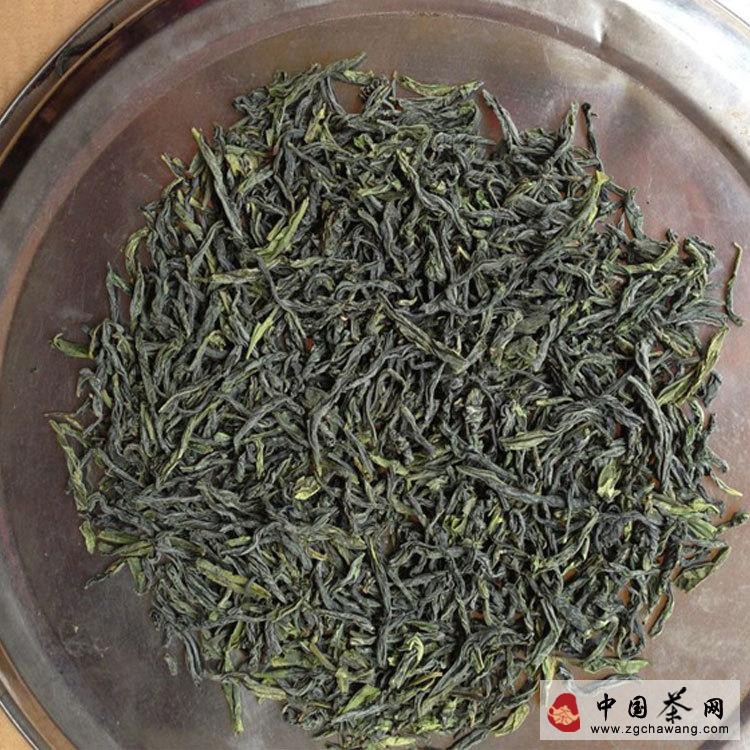
Lu'an Guapian Production Process
The picking and processing techniques of Lu'an Guapian differ from other famous teas. Spring tea harvesting starts after Grain Rain when new shoots have formed "open leaves," with the standard being one bud with two or three leaves. After picking, leaves are promptly separated: tender leaves (unopened) and mature leaves (opened) are used to make Guapian, while buds, stems, and coarse old leaves are processed into "Zhen Bazi" as a by-product.
The processing of Lu'an Guapian involves five stages: raw pan, ripe pan, preliminary baking, mild baking, and strong baking.
Preliminary baking: Charcoal fire is used in baking baskets, with about 1.5 kg of leaves per basket. The baking temperature is around 100°C, until the leaves are 80-90% dry. After removing yellow leaves, floating leaves, red veins, and old leaves, the tender and mature leaves are mixed evenly.
Mild baking: This should be done no later than one day after preliminary baking. Each basket holds 2.5-3 kg of leaves, with a moderate fire temperature until the leaves are nearly fully dry.
Strong baking: Also known as "pulling the old fire," this is the final baking stage, crucial for developing the tea's unique color, aroma, flavor, and shape. It requires high temperature and intense fire. Charcoal is arranged tightly and burned evenly with soaring flames. Each basket holds 3-4 kg of leaves, and two workers carry the basket over the charcoal fire for 2-3 seconds before removing it to turn the leaves. This process is repeated continuously. To maximize the charcoal heat, 2-3 baskets can be rotated. The rolling heat and constant movement create a unique "fire skill" in Chinese tea baking technology.
Each basket of tea is turned over 50-60 times during baking, with workers moving the baskets back and forth, covering over 10 km per day. The leaves are ready when they appear green with a frosty coating. They are then promptly packed into iron containers, layered and tightly pressed, sealed with solder, and stored.