【Main Text】With economic development and environmental changes, small and medium-sized tea shop enterprises have been severely marginalized in the market, and their survival space is becoming increasingly smaller. Although China's tea industry only has categories and no truly world-renowned tea brands, our compatriots have historically been quite ruthless when it comes to 'internal strife.' Unable to expand abroad, major domestic tea companies are still very aggressive within the country, and their expansion is rapid.
Faced with the continuous expansion of major tea companies, the situation is particularly concerning for tea shops targeting tertiary markets. However, where there is danger and challenge, there is also hope. So, what must small and medium-sized tea enterprises do to cope with the impending dangers and challenges and seize their own hope?
The editor believes that small and medium-sized tea enterprises should at least do the following seven points to have a better chance of coping with crises and challenges, and ultimately hope to carve out a path.
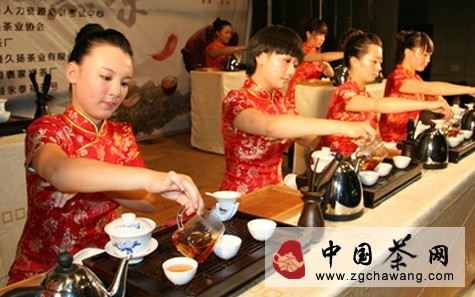
First: Train your sales staff well and build an elite team. Employees don't necessarily need to be numerous, but they must be skilled. The biggest cost of operation is not expenses, but putting untrained employees into the market. Because untrained employees going out to run business not only fail to achieve results but also disrupt the market.
For employees, you should carefully arrange a business training plan, including product knowledge, business skills, business processes, sales policies, and key points. If you lack experience in this area, you can consult Zhonghengxing, and we will be happy to serve you.
Second: Sales policies. The formulation of sales policies is very important. Be sure to inform sales staff in writing how much they can earn if they achieve certain performance levels. Make employees feel that there is potential, because salespeople often calculate for themselves how much回报 they will get for a month's efforts.
Therefore, a good sales policy is crucial for business. In this regard, two things should be done: first, formulate the sales and reward commission policy for sales staff; second, formulate the commission policy for sales staff and implement an inspection system.

Third: Do a good job in terminal stimulation for promotions. Some tea chain franchise stores have followed the manufacturer's policies of Bama Tea to carry out promotional activities. Most were successful, but a small part failed. Why? Because their basic market work had not been done properly. Imagine, if the distribution work and customer relationships are not well established, and you suddenly copy a model for promotions, it will surely be counterproductive.
Therefore, when doing this kind of work, a progress plan should be arranged. Promotions are safe and effective only when you have the following data: first, clarity on the terminals where products have been distributed; second, sales data from these terminals; third, sales staff have received the commissions specified in the sales policy. This is a solid foundation for promotional activities.
Fourth: Have confidence in your team. Caring for employees = caring for your products. Caring for all aspects of employees is the core issue. Listen to employees' voices and respond accordingly. Because a good team is exciting, stimulating, full of support and success, liked and welcomed, and it keeps everyone moving forward through encouragement and support. Conversely, a bad team is a terrible place, like a prison.
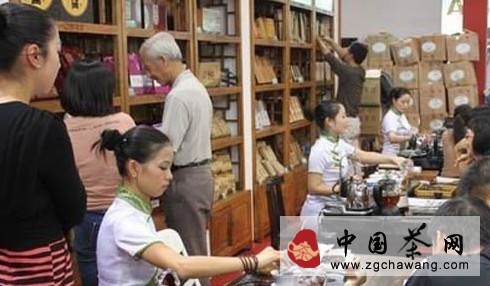
Fifth: Have confidence in yourself. Many tea shops, when facing difficulties, always ask themselves if they can do it. That is because they lack confidence. No product can guarantee that all tea shops will make money. The success of product sales requires tea shops to fully utilize the manufacturer's resources while giving full play to their unique operational capabilities.
Sixth: Have confidence in the products you choose. Any product may have problems that dissatisfy you, but you must look at the issue from a broad perspective, not from a single point. Do not have too high expectations of the manufacturer, because the manufacturer faces too many tea shops and cannot focus on serving just one.
The enterprise tries its best to provide good services to tea shops, but due to the large number of tea shops and its own resource limitations, there will inevitably be unsatisfactory aspects in its work. Tea shops should communicate more with the manufacturer to obtain timely support and ensure smooth channels.
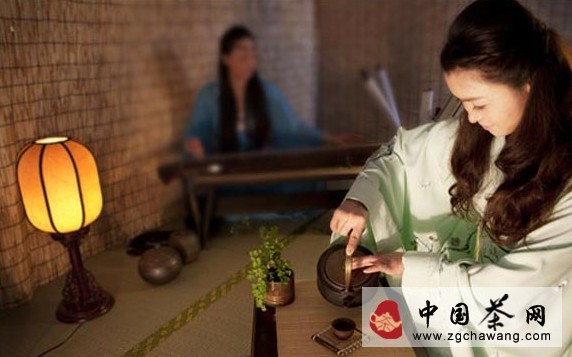
Seventh: Endurance. This is mainly reflected in whether you have sufficient funds to operate the market and whether you can reasonably use your limited funds to ensure long-term persistence.
Famous tea marketing expert Guo Baocong believes that compared to large tea brand stores, although small and medium-sized tea shops have flexible operating mechanisms and a keener sense of the market, due to their own 'shortcomings,' most are in a weak state and陷入 survival difficulties, leading to particularly prominent low-level operations lacking market common sense. Any product is meant to cultivate consumers' consumption habits. Cultivating an individual's consumption habit takes time, and cultivating a group of loyal consumers requires even more time and endurance.