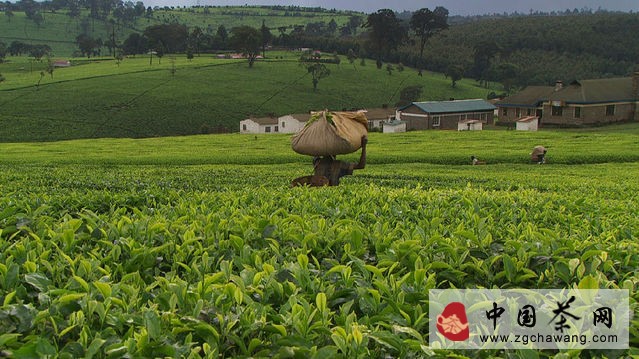
Since ancient times, most of China's tribute teas, traditional famous teas, and contemporary newly created famous teas have originated from high mountains. Why do high mountains produce good tea? There are several reasons:
One: Natural Selection
Research indicates that the place of origin of tea trees is in the rainy and humid primitive forests of southwestern China. After long-term historical evolution, they gradually developed a preference for warm, humid, and shady living conditions. The secret behind high mountains producing good tea lies in the superior ecological conditions there, which precisely meet the growth needs of tea plants.
Two: High Rainfall
Generally speaking, within high mountains up to 2,000 meters in altitude, rainfall increases with elevation. Studies show that when tea plants have sufficient water, the condensation of sugar compounds formed by photosynthesis encounters difficulties, and cellulose is not easily formed. This allows the raw tea leaves to remain fresh and tender for a longer period without becoming coarse and old.
Three: Fertile Soil
Soil is the natural base for tea plant growth. The nutrients and water required by tea plants are obtained from the soil, so the physical and chemical properties of the soil are closely related to tea plant growth. Lu Yu's "The Classic of Tea" from the Tang Dynasty states: "As for the land, the best tea grows on weathered rocky soil, medium-quality tea on gravelly soil, and the lowest quality on yellow earth."
Modern research also shows that the soil in high mountain tea gardens is more completely weathered, contains more gravel, and has good permeability. Moreover, it is rich in organic matter and various mineral nutrients, including all the major elements and trace elements needed by tea plants. This results in robust tea plant growth and abundant effective quality components and various health-beneficial nutrients in the tea.
Four: High Mountains are Often Cloudy and Misty
When sunlight hits clouds and mist, it is refracted by water droplets in the air, strengthening the red and yellow light—as those who have seen a rainbow well know. This enhances photosynthesis inside the tea plant, directly increasing the amino acid content in the leaves.
Five: Lush Vegetation in High Mountains
High mountains have abundant vegetation, which fosters the soil in a beneficial way. Fallen leaves and branches enrich the soil with organic matter, and extensive root systems improve soil structure.
Today, most cultivated tea gardens are planted with large tracts of tea bushes, often lacking understanding of the natural ecological environment. Even if planted at high altitudes, they tend to deplete soil fertility, which cannot be simply compensated for by artificial fertilization. This is also why the same variety of tea often does not match the quality of previous years.