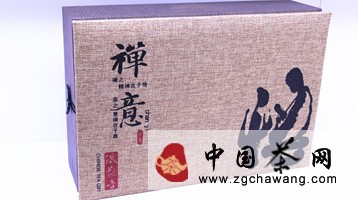
Since the beginning of winter, the northern regions have not experienced much cold. As the fiery ginkgo leaves gradually fall from the branches, Tieguanyin autumn tea has already spread its fragrance across the national tea market. As a southerner engaged in tea packaging design and sales in the north, and as a member of the Tea as a Medium Alliance, I have been invited to share some humble opinions on Tieguanyin tea packaging and the inheritance of Tieguanyin culture, for the reference and critique of industry colleagues and tea seniors.
Currently, Tieguanyin tea packaging holds the largest share in the tea packaging market among all tea packaging categories. The reason for this is closely tied to Tieguanyin's leading position in tea sales.
However, despite its nationwide popularity, Tieguanyin tea packaging faces several issues. Having worked in the tea packaging industry for many years, I often feel uneasy and guilty when thinking about these problems.
The biggest issue is that Tieguanyin tea packaging is overly commercialized, neglecting its role in carrying forward Tieguanyin culture. Specific manifestations include: 1. Excessive pursuit of high-end packaging, overlooking practical value and environmental concepts; 2. Unclear cultural value positioning, often overlapping with packaging for other tea varieties; 3. A strong commercial atmosphere, making it difficult to reflect cultural inheritance.
In response to these issues, how can Tieguanyin tea packaging achieve cultural inheritance and development? With limited knowledge, I will now offer a few preliminary ideas to stimulate further discussion.
1. Strengthen association organizations to jointly explore industry development directions.
Establish a specialized Tieguanyin tea packaging industry association to formulate development directions for Tieguanyin packaging; leverage the association's influence to improve industry standards, reduce excessive packaging, and enhance the market position of eco-friendly packaging; thereby shaping the concept of Tieguanyin as environmentally friendly, ecological, and healthy, improving its overall image and competitiveness in the tea industry, promoting sustainable development of Tieguanyin tea, and ultimately achieving commercial goals.
Encourage townships and enterprises to spontaneously organize thematic activities on Tieguanyin packaging cultural creativity, incorporating elements such as Tieguanyin culture, production techniques, place of origin, and the history and characteristics of various tea-producing regions to create themed packaging exhibitions with distinctive Tieguanyin cultural features.
2. Deeply explore Tieguanyin tea culture and integrate its cultural elements into tea packaging.
In Tieguanyin packaging design, priority should be given to incorporating various cultural elements of Tieguanyin. In the training of Tieguanyin packaging designers, courses on Tieguanyin culture should be included, enabling designers to truly understand its essence, appreciate its charm, and depict its form. This allows the audience to learn about Tieguanyin's history, culture, and characteristics from its packaging, thereby continuing the inheritance of Tieguanyin culture. Avoid plagiarized or randomly assembled elements, as such practices not only fail to provide beneficial and accurate Tieguanyin culture but may also mislead the audience, making it difficult for them to distinguish between different tea varieties, ultimately causing Tieguanyin to disappear into the vast sea of teas.
3. Innovate Tieguanyin packaging culture to make it more贴近生活 (close to life).
With the improvement of people's living standards, consumers' focus during consumption has shifted from material satisfaction to spiritual fulfillment. Therefore, returning to nature, environmental protection, and health have become more significant considerations for modern consumers.
The new concept of making Tieguanyin tea packaging more贴近生活 (close to life) requires greater consideration of the application of eco-friendly materials, increased use of renewable and biodegradable materials, and reduced environmental pollution and damage. It also demands that we consider the reuse of packaging in terms of structure, such as using it as home decor or daily necessities. Furthermore, it requires us to adhere more firmly to the inheritance of traditional Tieguanyin culture and the innovation of new cultural elements in packaging design理念 (concepts).
4. Reorganize small and medium-sized enterprises, support large enterprises, strengthen brands, and use大品牌 (big brands) to带动 (drive)小品牌 (small brands).
At this stage, most packaging enterprises are small in scale and low in efficiency, resulting in significant resource waste. Moreover, to address survival issues, they often opt for low-end, non-environmentally friendly, and harmful materials. This necessitates the integration of small-scale Tieguanyin packaging production enterprises to achieve economies of scale, improving both economic and environmental benefits.
For larger enterprises, government and industry organizations should increase support to help these enterprises strengthen their brands, plan their future development directions, and use the successful experiences of large enterprises to drive reforms in small-scale enterprises, standardize industry development, and ultimately achieve common development.