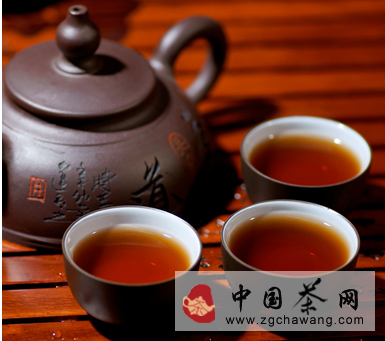
Ripe Pu-erh tea undergoes artificial fermentation, possessing a distinctive tea aroma and flavor. Its nature is mild, helping to regulate qi and warm the stomach, offering excellent health value. When brewed, the liquor is thick,偏向深红色, and the taste is温和顺滑.
Once made, ripe tea can be tasted in the same year (though not particularly pleasant, it is drinkable). However, with about three years of aging, the fermentation flavor completely transforms. The various复合聚合物 produced through artificial fermentation undergo further oxidation through contact with air, making the tea flavor deeper and more restrained. At this point, the tea aroma, taste, and韵 become clearer.
Ripe tea has an人工渥堆 fermentation process. Therefore, its characteristics can vary significantly between different manufacturers and batches.
First, let's talk about material selection. Fermentation piles are usually started with leaves of the same grade—bud tea, grades three to five, and grades seven to nine are fermented separately. One pile requires nine to twelve tons of tea. A complete fermentation cycle takes about eight to twelve weeks. During fermentation, constant monitoring of pile temperature, turning the pile, and洒水 are required... In short, the fermentation workshop has high temperature and humidity, making it a very challenging environment.
Fermentation carries risks. If the timing of turning the pile is not well controlled, leading to局部堆温过高, the tea in that area can become over-fermented, losing its value as raw material. Therefore, tea factories usually implement a 24-hour小组轮值制, and the fermentation team monitors the pile temperature closely without relaxation.
Considering production scale and工序, ripe tea基本上不会有单一茶山原料的可能性. In fact, when原料 from different tea mountains are mixed together for渥堆, the resulting flavors tend to大同.
Different manufacturers have their own insights into渥堆经验, resulting in varying tastes of ripe tea products. When tasting, we can明显 feel that some well-made ripe teas are偏“ripe”一些, or偏“raw”一些 (not fermented too deeply).偏熟的 tea can be tasted in the year of production;偏生的 tea retains some raw tea口感, so tea pressed in the same year still has astringency and bitterness, and the茶、水分离度 is still obvious. This type of tea needs to be stored for two or three years before it becomes pleasant to drink.
High-quality ripe tea from the production year, when brewed, clearly emits a distinctive “ripe” aroma produced by plant fermentation. There should be no off-flavors or异香—pay attention when smelling. The tea liquor also carries a noticeable渥堆 “pile”味, meaning the fermentation flavor has not yet receded, resulting in unclear tea taste and a pronounced茶、水分离的感觉. However, overall, the tea soup has a浓郁 flavor, feels黏稠 in the mouth (much better than raw tea in this aspect), has立体丰富的变化, and leaves a sweet and甘 aftertaste. Another crucial point is good喉韵—after swallowing, the throat feels very comfortable.
Conversely, if a ripe tea has a “aged”韵 but, no matter how it's brewed (even with a large amount of leaves), the茶汤 still feels “watery,” and after swallowing, the throat has a prickly or even呛喉感 (锁喉), it can基本可以断言 that this ripe tea has been artificially加湿存放 (wet storage)催熟 after production. It's best to drink less of such tea.
The difficulty in ripe tea processing lies in balancing the “ripening” of raw tea through fermentation with preserving the “original tea taste and活性” of the raw tea material. The taste of ripe tea we experience is essentially the “ripened” version of the complex and bitter/astringent flavors of raw tea. The “tea element substances” in raw tea are transformed into various “复合聚合物” during the渥堆 fermentation process, thus forming the ripe tea口感.
In other words, if the raw tea base is good, the fermented ripe tea will also have a厚实丰富口感. If the raw tea原料 used for渥堆 has a weak底子, the resulting ripe tea will have a淡薄口感, with weak回甜回甘.
On the other hand, if over-fermented, almost all the活性物质 in the raw tea leaves will be转化殆尽, resulting in a茶 that is ripe but has a生硬干瘪口感. The lively taste and立体感的丰富变化 of the tea product are all weakened, unable to form茶韵.
Now, do you understand what points to pay attention to when selecting ripe tea? If well-made, the aging speed of ripe tea is about two to three years per cycle. Ripe tea in the first转化期 still has “water感” and “pile味,” but the tea taste is clear, the pile味 is clean, the brewed茶汤 is slightly浑浊, the汤色 is棕红 or深红 (never black),回甜回甘 is obvious, has韵感,口感变化丰富, and喉韵 is good. Ripe tea in the second转化期 has the “pile味” completely gone;茶 and水完全溶合 into a thick tea soup; the distinctive熟香 and the茶味 representing this ripe tea form; the茶汤 turns清沏;茶韵 is obvious;口感 is立体;内容 is丰富;喉韵 is good. Ripe tea entering the third转化期 starts to form陈韵. All the advantages ripe tea should have develop during this period. Tasting it begins to bring a feeling of心旷神怡.
Regarding ripe tea, another important point to note when selecting is the water used for洒水 during渥堆 fermentation. The water used for fermentation is very讲究. Using good fermentation water greatly helps preserve the活性 of the tea's inherent substances. I am not a tea专业 or食品化学专业, so I cannot explain the specific机理 clearly. However, through brewing and tasting specific tea products, whether the fermentation water is good or not can be distinguished from the口感.
Remember the茶、水分离口感 when brewing当年制作的熟茶? At this time, we need to细细品鉴 the “水性” of this tea.静心思考,仔细品尝, whether the “water”味 in the cup, from the perspective of “水性,” is of high quality. If the “水性” is good, the口感 must be活泼丰满. Judging from the four aspects of “清、纯、正、气,” the fermentation water for this ripe tea is likely good, playing a significant positive role in forming the ripe tea's茶质. Conversely, its fermentation water may not have been well chosen, having a negative impact on the formation of the ripe tea's茶质 after fermentation is complete.