 White Hair Silver Needle, abbreviated as Silver Needle and also called Baihao, is traditionally honored as the "beauty" and "king" of tea. Since the raw material consists entirely of tea buds, the finished White Hair Silver Needle resembles needles, is densely covered with white hairs (Baihao), and is as white as silver, which gives it its name. The needle-shaped finished tea, about 3 centimeters long, is entirely wrapped in white hairs, appearing silvery-white and glittering, a truly delightful sight. After brewing, it offers a fresh aroma and a mellow taste. The spectacle in the cup also adds to its charm. When the tea is steeped in the cup, it creates a scene resembling white clouds with flickering light, a full cup of floating "floral milk," with each bud standing upright—a marvelous and unique sight.
Produced in Fuding and Zhenghe
The creation of modern white tea began with White Hair Silver Needle. Ming Dynasty scholar Tian Yiheng wrote in "Notes on Boiling Spring Water": "Tea processed with fire is of secondary quality; tea sun-dried while fresh is superior, as it is closer to nature and free from the smell of fire and smoke." If this is considered a record of ancient white tea, then modern white tea can be described as both an ancient and a young tea category.
The production areas of White Hair Silver Needle are Fuding City and Zhenghe County in Fujian Province. In the early Jiaqing period of the Qing Dynasty (1796 AD), people in Fuding used robust buds from the Cai tea variety to create White Hair Silver Needle.
Around 1857, the Fuding Da Bai (Big White) tea cultivar was successfully selected and propagated in Fuding City. Consequently, starting from 1885, robust buds from the Fuding Da Bai tea cultivar were used as the raw material instead, as the Cai tea variety's buds were too small and were no longer adopted. Zhenghe County selected and propagated the Zhenghe Da Bai tea cultivar in 1880 and began producing Silver Needle in 1889.
Fuding has a subtropical monsoon climate with ample rainfall. Mountains and hills account for about 91% of Fuding's land area, with basins and plains making up about 9%. It is home to mountains like Qinglong Mountain and Taimu Mountain, with elevations above 900 meters. Zhenghe County is also one of the main production areas for White Hair Silver Needle. It belongs to a subtropical monsoon humid climate zone. As the Jiufeng Mountain Range traverses the eastern part of the county, with undulating peaks, the climate is relatively mild and the soil fertile, creating unique dual geographical and climatic conditions of high mountains and plains suitable for tea growth. Zhenghe County is the largest white tea production base in China.
Densely Covered with White Hairs, White as Silver
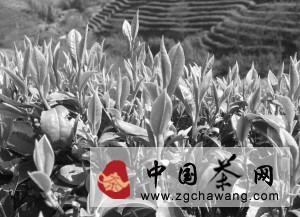
Nowadays, the tea buds for White Hair Silver Needle are all picked from the superior cultivar tea trees of Fuding Da Bai or Zhenghe Da Bai. The tea buds of the Da Bai tea tree are plump and several times larger than those of the Cai tea variety. This might be the reason why Shen Kuo of the Song Dynasty noted in "Dream Pool Essays" that the superior tea trees in the south "now, when new buds sprout, they grow over an inch long, thanks to their excellent inherent quality and the fertile soil where they are planted." Fuding Da Bai is a late-sprouting variety with plump buds, high content of polyphenols and water extracts, resulting in a finished tea that is fresh in taste, clear in aroma, and rich in soup. The raw material from Da Bai tea cultivar trees is the essential material foundation for producing White Hair Silver Needle. Both Fuding Da Bai and Zhenghe Da Bai are asexually propagated varieties with exceptionally hairy buds and leaves, propagated by layering or cutting, ensuring uniform characteristics. In the concentrated cultivation gardens of these two varieties, every spring when new buds emerge, they are densely covered with fine hairs. Under the morning sun, they shimmer with a silvery light. Viewed from afar, it looks like frost covering the fields—a unique and captivating landscape not seen in other tea gardens.
Meticulous Harvesting with "Ten Do Not Pick" Rules
The harvesting of White Hair Silver Needle is extremely meticulous and strict, governed by the rule of "Ten Do Not Pick": do not pick on rainy days, do not pick when dew is not dry, do not pick thin and slender buds, do not pick purple buds, do not pick wind-damaged buds, do not pick human-damaged buds, do not pick insect-damaged buds, do not pick open-heart buds (buds starting to separate), do not pick hollow buds, and do not pick diseased buds.
Only plump single buds are picked. If new shoots with one bud and one or two leaves are brought back, only the bud core is plucked, a process commonly called "extracting the needle" (i.e., pinching off the bud from a shoot with one bud and one or two leaves to use as raw material for Silver Needle, while the remaining stem and leaves are used for other grades of white tea or other teas). The plucked tea buds must be promptly returned to the factory for processing.
The production method for White Hair Silver Needle is unique and involves simple processes. During production, there is no frying or rolling. It only involves two main steps: withering and baking, with withering and air-drying being the primary processes. This allows the tea buds to undergo natural, slow changes, forming the special quality style of white tea. The specific method is: the plucked tea buds are thinly spread on bamboo sieves with holes and withered under weak sunlight until 70-80% dry, then moved to strong sunlight to sun-dry until fully dry. Another method involves withering under weak sunlight for two hours, then indoor withering until 80-90% dry, followed by slow baking over low heat until fully dry. There is also the method of direct sun exposure until 80-90% dry, then slow baking over low heat until fully dry. During the process, adjustments must be made according to the degree of moisture loss in the tea buds. Although the steps are simple, mastering them correctly is not easy, and producing high-quality tea is more challenging compared to other tea categories.