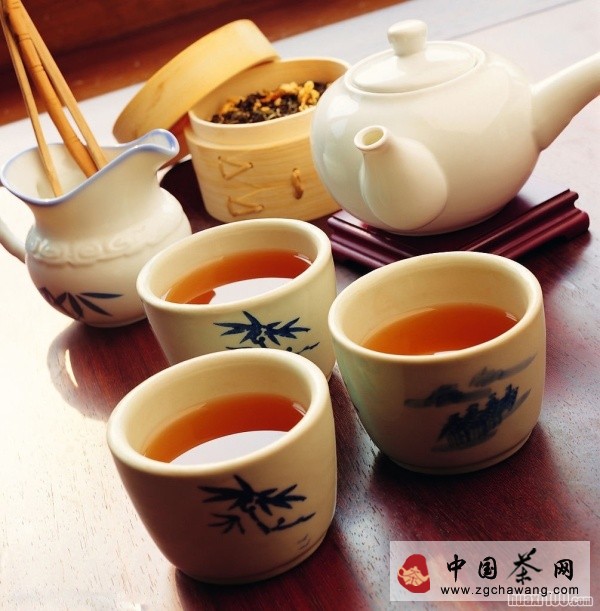
Preface: Brewing Tea and Wooing:
Brewing tea is about sustenance; wooing is about romance; both food and love are fundamental human desires. Upon closer inspection, it's not hard to see that brewing tea and wooing are remarkably similar, different paths leading to the same destination: a good mood is essential, the environment should be pleasant, both have classic manuals—"The Classic of Tea" and "The Art of Seduction," a necessary procedural process is required for success, and even the language is相通—"go have some tea" and "go chase some skirts."
What you give to the tea is what the tea gives back to you. What it gives back isn't imagination; it's reality. Looking beautiful isn't true beauty; you only know after brewing. Many may look like flight attendants, but open their mouths and they become ground crew.
Tea has its Way, women have their virtue, and brewing/wooing should also have its principles. Whether one attains mastery depends entirely on the heart. In the end, true success or failure lies in the sincerity of one's effort!
Main Text / A Detailed Discussion on the Three Key Elements of Tea Brewing:
With high-quality tea leaves, sweet, good water, and exquisite tea ware, one must also possess good brewing technique to fully bring out the inherent color, aroma, and flavor of the tea, providing enjoyment and allowing the art of tea to be appreciated.
Zhang Yuan of the Ming Dynasty pointed out in "The Tea Record": "The wonder of tea lies in its refined processing, proper storage, and appropriate brewing." This shows that ancients long ago recognized the importance of brewing methods.
When brewing tea, the three key elements to master, based mainly on the different tea categories, processing methods, and characteristics of the tea, are: the amount of tea used, the temperature of the water, and the steeping time.
The amount of tea refers to placing an appropriate quantity of leaves in each cup or pot; water temperature means using water at an appropriate temperature to brew the tea; steeping time has two meanings: first, the time needed to steep the tea to an appropriate concentration; second, for some teas that require multiple infusions, how long each infusion should be.
1. The Amount of Tea:
To brew a good cup or pot of tea, the first thing to master is the amount of tea used. There is no uniform standard for how much tea to use each time; it depends mainly on the type of tea, the size of the tea ware, and the drinking habits of the consumer. Generally speaking, more tea and less water results in a stronger flavor, while less tea and more water results in a lighter flavor. The amount of tea also varies from person to person and place to place. For tea lovers or laborers, the tea amount can be appropriately increased to brew a cup of fragrant, strong tea liquor; for mental workers or those without a strong tea habit, one can appropriately use less tea to brew a cup of clear, fragrant, and mellow tea liquor.
Home brewing usually relies on experience. Generally, each gram of tea can brew 50 to 60 milliliters of water, but the amount varies depending on the tea type.
If using Oolong tea, the amount of tea leaves should be more than double that of general black or green tea, while the amount of water for brewing should be reduced by half. The length of the tea steeping time also greatly affects the utilization of the effective components within the tea leaves. Generally, for black and green tea, the best taste is obtained after steeping for three to four minutes. Less time lacks the proper stimulating taste of the tea liquor; more time results in a diminished fresh, brisk flavor and increased bitterness and astringency. Only when the effective substances in the tea leaves—such as vitamins, amino acids, caffeine—are extracted by the boiling water through steeping does the tea liquor taste fresh, brisk, mellow, and harmonious.
Tender, fine tea leaves require shorter steeping times than coarse, old leaves, and vice versa; loose, broken leaves require shorter steeping times than compressed or whole leaves, and vice versa. For teas that emphasize aroma, such as Oolong tea and scented teas, the steeping time should not be long; while white tea, which is not rolled during processing and whose cells are not destroyed, has tea liquor that is harder to extract, so the steeping time should be relatively longer.
Typically, when tea is steeped once, about 55% of the soluble substances are extracted, 30% the second time, 10% the third time, and only 1%~3% the fourth time.
The nutritional components in tea, such as vitamin C, amino acids, tea polyphenols, caffeine, etc., about 80% of the total is extracted in the first infusion, 95% in the second infusion, and very little remains by the third.
The aroma and taste are also at their peak in the first infusion—fresh and mellow; the second infusion is strong but not as fresh; the third infusion has fading aroma and flavor; the fourth has little taste; the fifth and sixth infusions are almost like plain water.
Therefore, it's best to steep most teas two or three times; Oolong tea can manage five or six times, white tea two or three infusions.
In fact, tea of any variety should not be steeped for too long or infused too many times. It's best to drink it immediately after brewing. Otherwise, beneficial components are oxidized, not only reducing nutritional value but also potentially steeping out harmful substances. Tea should also not be too strong; strong tea harms stomach qi (irritates the stomach).
The amount of tea used is also closely related to consumers' drinking habits. In ethnic minority regions like Tibet, Xinjiang, Qinghai, and Inner Mongolia, where people's diet is primarily meat-based and vegetables are scarce, tea becomes a daily necessity. They generally prefer strong tea and often add sugar, milk, or salt to the tea, so they use more tea leaves each time. In the vast regions of North and Northeast China, people enjoy scented tea, usually brewed in larger teapots with a relatively smaller amount of tea leaves. Consumers in the middle and lower reaches of the Yangtze River mainly drink green tea, generally using smaller porcelain or glass cups, with not much tea used each time. In provinces like Fujian, Guangdong, and Taiwan, people enjoy Gongfu tea. Although the tea ware is small, a larger amount of tea leaves is used.
The amount of tea used is also related to the age structure and tea-drinking history of consumers. Tea contains caffeine; those with insomnia should drink lighter tea. Middle-aged and elderly tea drinkers, with longer tea-drinking histories, often prefer stronger tea and use more leaves; younger people, many new to tea, generally prefer lighter tea and use fewer leaves.
In summary, the key to the amount of tea used for brewing is mastering the tea-to-water ratio. More tea and less water results in a stronger flavor; less tea and more water results in a lighter flavor. For brewing general black and green tea, the tea-to-water ratio is roughly 1:50~1:60. That is, about 3 grams of dry tea per cup, with 150~200 milliliters of boiling water added. For drinking Pu-erh tea, use 5-10 grams per cup. For teapots, adjust appropriately according to capacity. The tea type requiring the most leaves is Oolong tea, where the amount投入 is almost half or even more of the pot's capacity.
2. Water Temperature for Brewing:
The ancients were very particular about water temperature for brewing tea. Cai Xiang of the Song Dynasty said in "The Tea Record": "Waiting for the water is most difficult. If undercooked, the froth floats; if overcooked, the tea sinks. What previous generations called 'crab eyes' is water that is overcooked. When boiling in a covered vessel, it's indistinguishable, hence it's said waiting for the water is most difficult." Xu Cishu of the Ming Dynasty was more specific in "Tea Commentary": "Once water enters the kettle, it must be boiled quickly. Wait for the sound of pines (a gentle roaring), then remove the lid to gauge its maturity. After the crab eyes, when the water has slight waves, it is the right time. Great waves boiling violently, then suddenly becoming silent, is past the time. Past time means the water is old and the fragrance dispersed, utterly unfit for use."
The above indicates that for brewing tea, water should be brought to a rapid, rolling boil over high heat, not a slow simmer over low heat. Water that has just reached a rolling boil with bubbles is ideal. Tea brewed with such water has excellent aroma and flavor in the liquor. If water boils for too long, what the ancients called "old water," the carbon dioxide dissolved in the water evaporates completely, greatly diminishing the fresh, brisk taste of the tea. Water that hasn't boiled, called "tender water" by the ancients, is also unsuitable for brewing tea because the low temperature doesn't easily extract the effective components from the tea, resulting in low, faint aroma, and the tea floats on the surface, making drinking inconvenient.
Mastering water temperature for brewing mainly depends on what kind of tea is being brewed. For high-grade green tea, especially various tender, fine-leaf famous teas (green tea category), 100°C boiling water should not be used; generally, around 80°C is appropriate. The more tender and greener the tea leaves, the lower the brewing water temperature should be. This way, the brewed tea liquor will be tender green and bright, with a fresh, brisk taste, and vitamin C in the tea will be less destroyed. At high temperatures, the tea liquor easily turns yellow, tastes more bitter (caffeine in tea is easily extracted), and vitamin C is largely destroyed. As commonly said, high water temperature "scalds" the tea leaves. For brewing various scented teas, black tea, and mid to low-grade green teas, 100°C boiling water should be used. If the water temperature is low, permeability is poor, fewer effective components from the tea are extracted, and the tea taste is weak. For brewing Oolong tea, Pu-erh tea, and Tuo tea, where a larger amount of tea is used each time and the leaves are relatively old, 100°C boiling, rolling water must be used. Sometimes, to maintain and raise the water temperature, one warms the tea ware with boiling water before brewing and pours hot water over the outside of the pot after brewing. Ethnic minorities drinking brick tea require even higher water temperatures, breaking the brick tea and boiling it in a pot.
So, how to judge water temperature? One can refer to the ancients' "three boils theory." Lu Yu's "The Classic of Tea · The Fifth, Brewing" says: "When it boils like fish eyes, with a slight sound, it is the first boil; when strings of bubbles rise like a bubbling spring along the edge, it is the second boil; when waves surge and roll, it is the third boil." Luo Dajing of the Southern Song, in "Crane Forest and Jade Dew," recorded his friend Li Nanjin's method of discerning water temperature by sound, summarized in a poem: "Ten thousand cicadas urged by chirping insects on the steps (first boil, sounding like insects under the steps, also like distant cicada noise), suddenly a thousand carts come laden (second boil, like fully loaded carts coming, creaking and squeaking); hearing pine wind and stream water (third boil, like surging pine waves, noisy mountain streams), hastily call for the pale green porcelain cup (then quickly lift the kettle, pour water into the cup)." Modern kettles have automatic controllers, so one doesn't need to rely on the sound of boiling to gauge readiness.
Water boiled past the point or not enough was often described by the ancients with the words "old" (or called "hundred-year soup") and "tender" (or called "infant boil"). This fastidiousness may seem繁琐, but actually has its道理. Undercooked or初沸的"tender"汤 that doesn't properly open the tea is固然不好; water boiled past the point, as boiling time延长, continuously expels gases dissolved in the water (especially carbon dioxide), this is what Lu Yu called "the water's qi completely消失," which also affects tea flavor. Particularly, many river and well waters contain some nitrites. Boiling for too long, their concentration相对 increases with evaporation;同时, some nitrates in the water can also be reduced to nitrites due to prolonged heating. Nitrites are a harmful substance; drinking water with high harmful substance content is naturally不利 to human health.
Generally speaking, brewing water temperature is positively correlated with the solubility of effective substances in tea leaves in water. The higher the temperature, the greater the solubility, and the stronger the tea liquor; conversely, the lower the temperature, the smaller the solubility, and the lighter the tea liquor. Generally, in 60°C warm water, the extraction of tea's内含物质 is only equivalent to 45%-65% of that in 100°C boiling water.
It must be clarified here: as mentioned above, high-grade green tea is suitable for brewing with 80°C water. This usually refers to boiling the water first, then letting it cool to the required temperature. If using sterile raw water, one only needs to heat it to the required temperature.
3. Steeping Time and Number of Infusions:
The steeping time and number of infusions for tea vary greatly, depending on the type of tea, brewing water temperature, amount of tea used, drinking habits, etc., and cannot be generalized.
For example, when using a cup to brew general black or green tea, place about 3 grams of dry tea per cup, brew with about 200 milliliters of boiling water, cover for 4-5 minutes, then it's ready to drink. The drawback of this method is: if the water temperature is too high, it easily scalds the tea leaves (mainly referring to green tea); if the water temperature is too low, it's hard to extract the tea flavor; and because of the large amount of water, often one cannot finish it all at once. If steeped too long, the tea liquor turns cold, affecting its color, aroma, and taste. An improved brewing method is: after placing the tea leaves in the cup, first pour in a small amount of boiling water, just enough to cover the leaves, cover for about 3 minutes, then add boiling water to about 70-80% full, and it can be enjoyed while hot. When about one-third of the tea liquor remains in the cup, add more boiling water. This ensures a more even concentration between the earlier and later tea liquor. Usually, three infusions are appropriate.
For drinking finely granulated, fully rolled black broken tea and green broken tea, after brewing with boiling water for 3-5 minutes, most of the effective components are extracted, allowing for one quick饮用. Drinking instant tea also uses a single-brew method.
For savoring Oolong tea, small Yixing clay teapots are often used. When using a larger amount of tea (about half the pot), the first infusion should be poured out after 1 minute, the second after 1 minute 15 seconds (15 seconds longer than the first), the third after 1 minute 40 seconds, the fourth after 2 minutes 15 seconds. That is, starting from the second infusion, gradually increase the steeping time so that the concentration of the tea liquor前后 is relatively even.
The height of the brewing water temperature and the amount of tea used also affect the length of the steeping time. Higher temperature and more tea call for shorter steeping time; lower temperature and less tea call for longer steeping time. How long exactly should the steeping time be? It is determined by the tea liquor concentration suiting the drinker's taste.
According to research, after a single infusion of green tea, the extraction rates of various effective components are quite different. Amino acids are the most easily soluble component in tea, with an extraction rate as high as over 80% in one infusion; next is caffeine, with an extraction rate of nearly 70% in one infusion; the extraction rate of tea polyphenols is lower, about 45%; the extraction rate of soluble sugars is even lower, usually less than 40%. Black tea is generally more thoroughly rolled during processing than green tea, especially broken black tea, with small granules and high cell破碎率, so the extraction rate in one infusion is often much higher than that of green tea. Currently, bagged tea is increasingly流行 domestically and internationally. Bagged tea is convenient and can increase the extraction of effective substances from the tea,提高 tea liquor concentration. According to comparison, the brewing extraction of bagged tea is about 20% higher than that of loose tea.