In the hot summer season, some people are accustomed to drinking cold tea that has been cooled beforehand, while others freeze the tea, thinking that this both quenches thirst and preserves the tea's nutrients. In fact, cold tea does not relieve summer heat; instead, it can cause cold stagnation and phlegm accumulation. Actually, drinking hot tea in summer is the most effective way to quench thirst.
Although a cold drink may provide an instant feeling of coolness, this is only a short-term effect. The mechanism of cold drinks in relieving heat is to offset heat with low temperature, but the amount of heat offset by one cold drink is limited. After drinking a cold beverage, the "cold" stimulus triggers the body's reflex regulation, causing skin capillaries to constrict, sweat pores to close, and sweat secretion to decrease. Subsequently, the heat produced becomes difficult to expel smoothly, making people feel even more stifling and hot.
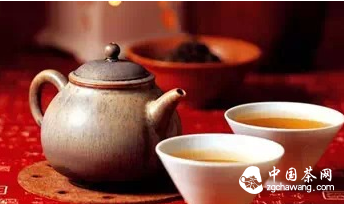
Of course, drinking a small amount of cold beverages occasionally is harmless. However, consuming large quantities of cold drinks over a prolonged period can affect the digestive tract, disrupting its function and reducing appetite. Moreover, under the scorching sun, with blood pumping vigorously, the heart rate increases and blood flow speeds up to dissipate heat. If a large amount of cold drink is consumed immediately at this time, it will cause the heart rate and blood flow to slow down relatively, acting like a "brake" on the heart.
If this "braking" occurs frequently, it wears down the organs themselves. While "braking," the slowed blood flow reduces oxygen supply, leading to discomfort. In contrast, although hot tea feels warm when consumed, shortly after drinking, the heat is expelled through sweat, providing an extremely cool sensation that lasts for a long time. This is because in summer, when the ambient temperature is close to or exceeds body temperature, the body can only dissipate heat through sweat evaporation. When hot tea enters the body, the "heat" stimulates the body's temperature receptors—central thermosensitive neurons. Through a series of neural reflex regulations, the pores of skin capillaries rapidly expand, blood flow increases significantly, sweat gland secretion strengthens, and sweat volume increases, carrying the deep body heat out of the body to achieve cooling. Experiments show that after drinking a cup of hot tea, each gram of sweat produced can carry away 0.58 calories of heat, reducing body temperature in about 9 minutes. Drinking hot tea does not stimulate heart rate or alter blood flow speed, while the nutrients in the tea can also be absorbed by the body.