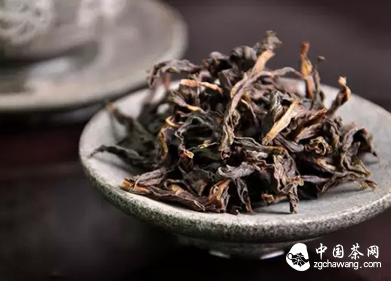
The taste of tea is inseparable from the correct brewing method. Anyone can brew tea, but to perfectly bring out the color, aroma, taste, and charm of a tea is no easy task. Tea, utensils, water, and the brewer are all indispensable, especially the need to understand how to brew according to the unique characteristics of each tea.
I. Brewing Rock Tea
Wuyi Rock Tea, with its unique charm and mellow taste, is a favorite of many tea enthusiasts. Its rich variety and complex production process make brewing Rock Tea more讲究. Appreciating Rock Tea is even more of a study. This article can only briefly share some basics on brewing and appreciating Rock Tea.
Utensils For brewing Rock Tea, purple clay pots and white porcelain gaiwans are excellent choices. White porcelain gaiwans, due to their fast heat conduction and good tea-releasing properties, have become the preferred brewing vessel for many. Other colored or different material gaiwans are also fine to use as long as they are comfortable and don't absorb flavors.
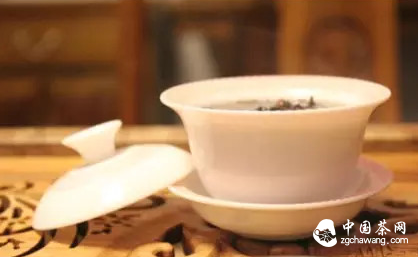
The biggest advantage of using a gaiwan is the authenticity of the tea flavor. If the tea is good, the liquor and aroma will naturally reveal themselves. Conversely, if the tea quality is poor, the gaiwan won't overly掩饰 its shortcomings. Moreover, gaiwans are relatively easy to purchase, affordable, and allow for flexible control during brewing.
Water Lu Yu's "Classic of Tea" states, "Water is the mother of tea; fine tea still requires good water to brew." This highlights the importance of good water for tea. Without good water, you cannot brew good tea. Using different water sources can cause significant differences in the aroma and taste of Rock Tea, with clear variations in quality.
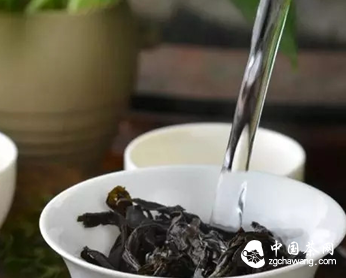
Among the many waters for brewing tea, local mountain spring water is considered the best, with distilled water being the most neutral. Tap water with high hardness or明显的chlorine is not suitable. Water temperature should be freshly boiled for immediate brewing. Water below 95°C or water boiled continuously for a long time is slightly inferior.
Brewing The success of brewing Rock Tea also crucially depends on the person. Whether the brewer sufficiently understands the characteristics of the tea and chooses an appropriate brewing method is paramount.
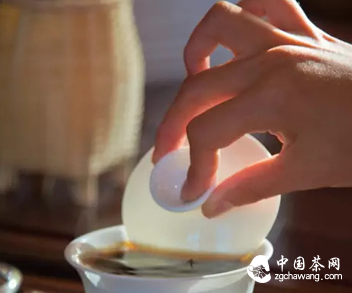
First, understand the amount of Rock Tea leaves. The amount is related to personal taste preference, whether stronger or lighter, with no hard rules. When brewing Rock Tea, the amount can be adjusted according to personal drinking habits. Since Rock Tea leaves are relatively粗壮, the amount is generally not less than three-fifths of the gaiwan's capacity.
The steeping time is also讲究. For the first two infusions of Rock Tea, the steeping time should not exceed 20 seconds, preferably controlled within 10 seconds. For each subsequent infusion, the sitting time increases by 10~30 seconds accordingly. Traditionally fired Rock Tea with heavier roasting can have slightly shorter brewing times compared to lightly roasted Rock Tea. Well-aged old tea and ordinary aged tea require even more讲究brewing methods. Ultimately,一切应以自身口感为准.
II. Appreciating Rock Tea —— Every Infusion Has Its讲究
Rock Tea has a mellow, rich taste with a special "rock rhyme" (Yan Yun). The characteristics of the tea plant variety can be reflected in the taste. The aroma can be high or long-lasting—high means浓郁, long means幽远—with diverse aroma types such as floral, fruity, milky, honey, etc. When tasting tea, first smell its aroma, then taste its flavor, carefully savoring each infusion layer by layer.
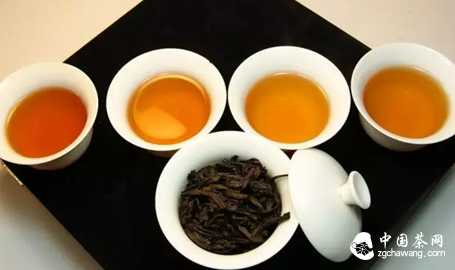
Smelling the aroma includes smelling the dry leaves, the lid aroma, the water aroma, the cup-bottom aroma, and the wet-leaf aroma. When tasting, let the tea汤fully contact all parts of the mouth and tongue, repeating several times to细细感觉the醇厚度and various characteristics of the tea汤, comprehensively judging the tea's features and grade. The aura of the tea's mountain origin (山场气息) is even more profound.
Each infusion of Rock Tea changes, with the first three to four being the most crucial.
First Infusion Appreciate the tea by first observing if the liquor is清澈艳丽,橙黄色, and has three distinct layers. Having a "golden ring" on the surface is considered superior. Then smell its aroma; a pure, unadulterated,幽香清透aroma is best. Third, taste its flavor, letting it徐徐入口, appreciating whether the water aroma and飘香harmonize.
Second Infusion The focus should be on the tea's taste. Is it醇厚? Is there a noticeable bitterness, astringency, or杂味? After swallowing the tea汤, see if there's a lingering sensation in the mouth, a feeling of substance compared to before. Many tea drinkers seek that "bone-like" quality (骨气)顶在嘴底喉间.
Third Infusion Focus on the concept of "charm" (韵). Does the tea汤have a鲜爽感in the mouth? Is there a natural depth of flavor (况味)? Is there a润滑辛爽之快感in the throat? When swallowing, is it smooth with a sensation of气感直下,指向脾肺? Wuyi Rock Tea highly emphasizes "rock bone" (岩骨), where喉韵and岩韵interact and promote each other. The changes in热香and冷香at the bottom of the cup are非常丰富.
III. Sharing Good Tea
There are three states of mind for drinking good tea.
The first is closing the eyes. Closing the eyes can produce幻想. Su Dongpo said fine tea is like a beautiful woman. My understanding is that good Rock Tea is very雄壮, reminiscent of a great man, a seasoned general on the battlefield, or perhaps a military strategist capable of commanding vast armies.
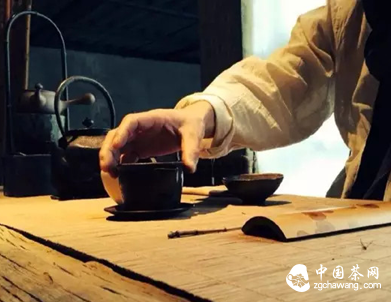
The second is to turn the gaze inward,微闭the eyelids, concentrating energy on the tea's flavor.
The third way is to direct one's gaze towards the无限远的地方. At this moment, perhaps the misty mountains and茶乡风光brought by a good tea will unfold before one's eyes.
The Taoist concept of "先天而天弗远" is about finding the法则for respecting and interacting with nature. In reality, humans are quite弱小in the face of nature. Tea is too奥妙; in its flavor, one can fully体会the relationship between humans and nature. Just as the "I Ching" says, "与天地合其德" (harmonizing virtue with heaven and earth).