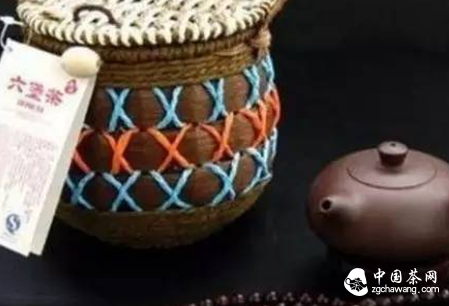
Liubao Tea and Pu-erh Tea are both well-known health-preserving teas. Many people consider them to be dark teas, but under strict definition, they belong to different categories of tea. Although they may look quite similar, a detailed understanding reveals the distinctions and differences between Liubao Tea and Pu-erh Tea.
[Different Raw Materials]
In terms of raw materials, Liubao Tea uses Guangxi large-leaf varieties and the Cangwu group species. Its unique environment and climate, characterized by "high mountains with short sunlight, thick fog and ample rainfall, and significant temperature differences between day and night," allow the tea leaves to fully ferment after absorbing sufficient sunlight and moisture. This results in a significant difference in the internal composition of Liubao Tea compared to other teas, giving it more diverse components. Pu-erh Tea, on the other hand, is primarily made from Yunnan large-leaf sun-dried raw tea. Its raw materials are classified by cultivation method into wild-type wild tea, cultivated wild tea, abandoned tea, and terrace tea, among others. Using Yunnan large-leaf varieties to process Liubao Tea yields concentration but lacks briskness. Therefore, there is opposition to using other varieties as substitutes for Liubao Tea.
[Differences in Attributes and Characteristics]
Liubao Tea is produced in the Liubao mountain area northwest of Cangwu County, Guangxi Zhuang Autonomous Region. It is graded into special grade and first to sixth grades.
Pu-erh Tea is produced in Yunnan Province. It is named after the former Pu'er Prefecture (now Pu'er City) in Yunnan. Nowadays, it generally refers to tea produced in the Pu'er tea region, which is made from the recognized Yunnan large-leaf sun-dried raw tea of the Pu'er tea area, processed into loose tea and compressed tea through post-fermentation.
[Differences in Processing]
Although both belong to the dark tea category, there are many differences in their production processes. The steps in Liubao Tea processing include fixation, rolling, pile-fermentation, re-rolling, and drying. The characteristic technique of Liubao Tea lies in its "double-steaming and double-pressing" technology. This involves the first "steaming" after pile-fermentation, followed by the first "pressing." After the pressing, the tea leaves are loosened and undergo a second "steaming." After the second steaming, part of the tea is pressed into specially made bamboo baskets with a square bottom and round body shape, then placed in storage to air-dry naturally before undergoing aging, and finally finished according to quality standards. Another portion of the tea undergoes a second "pressing" before entering the aging process. The production process of Pu-erh Tea includes fixation, rolling, sun-drying, pile-fermentation, air-drying, and final drying. The methods of pile-fermentation also differ between the two. Liubao Tea undergoes pile-fermentation during its making process, while ripe Pu-erh tea undergoes pile-fermentation on the basis of raw tea.
[Differences in Tea Appearance and Internal Quality]
Liubao Tea has a stout, thick strip appearance with a blackish-brown, glossy color, sometimes interspersed with "golden flowers" (yellow fungal spores). The liquor is red and thick, embodying the unique "Chinese red" color characteristic of Liubao Tea. Its aroma is aged and mellow, with its distinctive betel nut fragrance placing Liubao Tea among China's famous teas. The taste is strong, mellow, refreshing, sweet, and smooth, with a cool, sweet aftertaste. The brewed leaves are reddish-brown. Therefore, Liubao Tea is renowned for its four unique qualities: "redness, richness, aged aroma, and mellow taste." Pu-erh Tea has a plump, tightly knotted strip appearance with a blackish-brown or brownish-red color. The liquor is bright, red, and thick, with a deep red color being normal. The aroma is aged and mellow, and the taste is mellow, smooth, and sweet with a returning sweetness. The brewed leaves are soft, tender, reddish-brown, and glossy.
[Differences in Effects]
The quality of Liubao Tea is characterized by its redness, richness, mellowness, and aged aroma. The finished basket-packed compressed tea is tightly compacted into lumps, with a blackish-brown, glossy color sometimes mixed with yellow flowers; the finished loose tea is stout, nearly blackish-brown, sometimes with white mold. The liquor is red and thick, the taste is sweet, smooth, and refreshing with a betel nut fragrance, improving with age. Liubao Tea has the effects of dispelling dampness and relieving stuffiness, as well as cooling and relieving summer heat. It feels particularly cool and comfortable to drink on hot, humid summer days.
The quality of Pu-erh Tea is characterized by its redness, richness, and mellowness, with a wide variety of finished product styles. The liquor is red and thick, the taste is strong and rich, and the tea aroma is pronounced. Pu-erh Tea is more effective in cutting grease and aiding digestion.
Liubao Tea liquor is red and thick, with a strong, mellow, and harmonious taste containing a betel nut aroma, giving it a unique flavor. It has the effects of clearing heat, moistening the lungs, and relieving stagnation and accumulation.
Pu-erh Tea has a blackish-brown or brownish-red color, with a bright, red, and thick liquor. The taste is mellow with a sweet aftertaste, possessing a special aged aroma. It stores well and is famous for becoming more aromatic with age, suitable for brewing and drinking.