What kind of tea is Anji White Tea?
——White Tea!
If that's your answer, it will only invite a chorus of merciless laughter... "Ha ha ha ha..."
What kind of tea is Anji White Tea?
Anji White Tea is green tea! Anji White Tea is green tea! Anji White Tea is green tea! Important things must be said three times!
Now, a beginner might ask...
It's called White Tea, so why isn't it a white tea?
This primarily depends on the tea processing technique. Green tea involves "fixation — rolling — drying"; whereas white tea only involves "withering — drying," with no pan-firing or rolling. Different techniques create different quality characteristics.
Why isn't it called Anji Green Tea?
Anji White Tea was initially bred from a local albino tea plant variety in Zhejiang. The "Anji White Tea cultivar," also known as "Daxi White Tea" or "White Leaf Tea No. 1," is a rare asexual reproduction variety of the tea plant. The Anji White Tea cultivar is commonly used to produce green tea.
The term "White Tea" is used because the cultivar is sensitive to temperature. In the cooler temperatures of spring, its newly sprouted buds and leaves appear white, while the main and lateral veins remain green. The tea plant produces "white leaves" for a very short period, typically only about a month.
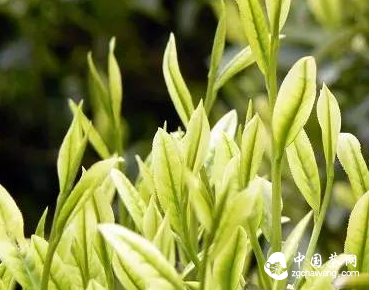
Taking its place of origin, Anji, Zhejiang as an example: In spring, due to a lack of chlorophyll, the tender buds sprouting before Qingming (around early April) are white. Before Guyu (Grain Rain, around mid-late April), the color gradually pales, mostly appearing jade-white. From after the rain until before the summer solstice, they gradually turn into variegated leaves with white and green patches. By summer, the buds and leaves revert to fully green, no different from ordinary green tea.
Precisely because the miraculous Anji White Tea is picked, processed, and made during this specific albino period, the brewed tea leaves also show a jade-white color, which is a unique characteristic of Anji White Tea.
Origin of Anji White Tea
Anji White Tea naturally originates from Anji!
Anji, known as the "Bamboo Town of China," is located on the northern foothills of the Tianmu Mountains. Here, rolling hills, interwoven trees and bamboo, lingering clouds and mist, abundant rainfall, and fertile soil create an ideal environment. The vegetation coverage rate is 60%, and the connection between tea and bamboo is worth savoring.
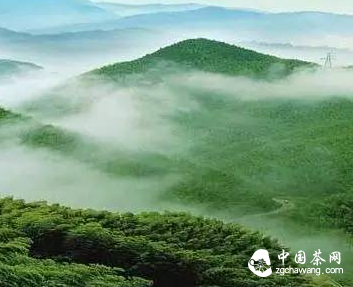
"Five hundred li of rivers and sources, with bamboo forests covering half the area," Anji enjoys a mild climate year-round, a short frost period, long periods of low winter temperatures (absolute low temperatures generally below 10°C), 81% relative air humidity, and less direct blue and violet sunlight. The soil contains relatively high amounts of trace elements like potassium and magnesium.
These specific conditions provide an excellent ecological environment for the albino process and material metabolism of Anji White Tea, facilitating the formation and accumulation of nitrogen compounds like amino acids and other nutrients, laying the foundation for the tea's fragrant aroma and fresh taste.
Appreciating Anji White Tea
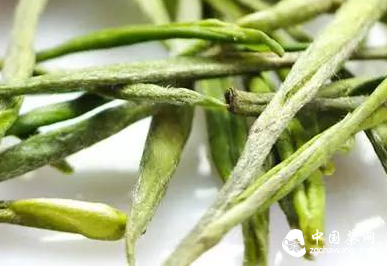
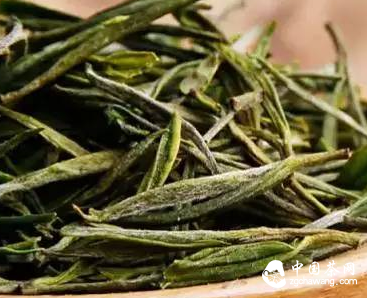
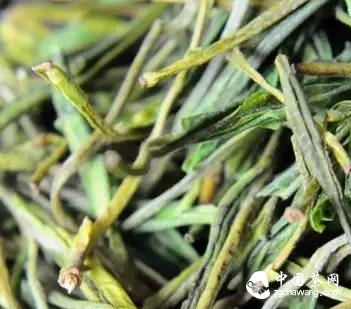
Anji White Tea has straight strips showing buds, buds that are robust and evenly sized, shaped like orchid flowers; its color is emerald green with visible white pekoe; the leaf buds are like gold-inlaid green sheaths wrapping silver arrows, very lovely. The leaf veins are emerald green, and the leaf surface is jade-white. After brewing, white leaves with green veins are the identifying mark of Anji White Tea.
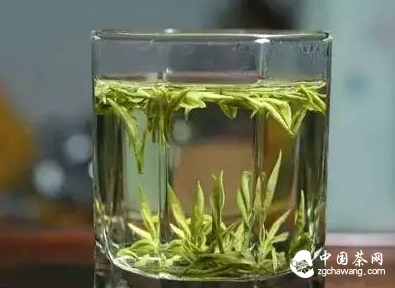
After brewing, the clear fragrance is high, lingering, and lasting. The taste is fresh and brisk. After drinking, a pleasant aftertaste remains in the mouth, with a sweet sensation that promotes salivation. The brewed leaves are tender green and bright, with each bud and leaf clearly distinguishable. Anji White Tea also possesses a unique charm different from other green teas—a hint of a clear, cool, and extraordinary aroma like "light bamboo accumulating snow." The higher the tea grade, the purer this fragrance, which might be the "terroir charm" of Anji, the tea hometown.
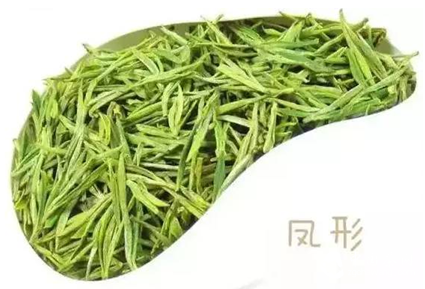
"Phoenix-shaped" Anji White Tea has straight strips showing buds, robust and evenly sized; the color is tender green, vivid with golden edges.
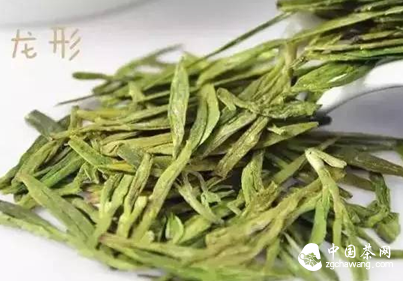
"Dragon-shaped" Anji White Tea is flat, smooth, upright, and sharply pointed; tender green showing a jade color, evenly sized. It is worth mentioning: "Dragon-shaped" Anji White Tea is produced using the processing technique of West Lake Longjing (Dragon Well) tea. From the perspective of pursuing the "perfect" drinking experience, this somewhat "compromises" the "jade-like delicacy" of Anji White Tea, suppressing the advantages possessed by the "Phoenix-shaped" Anji White Tea. Because of this, "Dragon-shaped" Anji White Tea currently cannot keep pace with "Phoenix-shaped" Anji White Tea in terms of consumer recognition, market share, or tea price.
The liquor of both types of tea is tender green and bright, with a fresh, tender, and lasting aroma; the taste is either fresh and mellow or rich and fragrant, clear, moist, and pleasantly sweet, with white leaves and green veins.
Anji White Tea varies from one bud with one leaf just unfurling to one bud with three leaves depending on the grade, with higher grades having buds longer than the leaves.
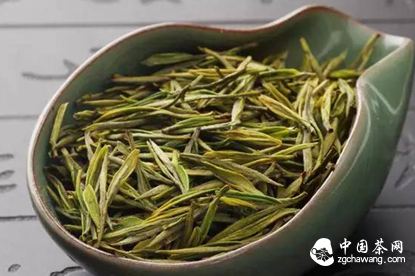
Additionally, premium Anji White Tea has dry leaves with a golden color hidden within the green (especially pre-Qingming tea, a characteristic shared by many green teas).
Brewing Anji White Tea
Tea Selection:
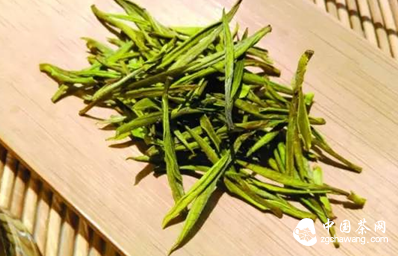
Choose high-quality Anji White Tea with one bud and two leaves just unfurling, dry leaves that are emerald green, vivid, slightly golden-yellow, with a clear, high, fresh, and brisk aroma, and a slender, elegant, and even appearance.
Water for Brewing:
Use high-quality water to brew Anji White Tea. Since the raw material of Anji White Tea is tender and the leaves are relatively thin, the water temperature should not be too high when brewing, generally controlled between 80-85°C.
Teaware:
Use a transparent glass cup or a transparent glass lidded bowl (gaiwan) to brew Anji White Tea. Through the glass, you can fully appreciate the various postures of Anji White Tea in the water, savor its taste, smell its aroma, and better observe its unique character of white leaves with green veins.
Brewing:
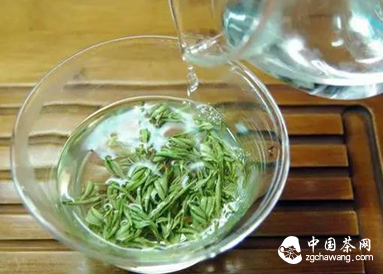
Pour water along the inner wall of the cup into the cup, about one-quarter full. The purpose is to moisten the tea leaves, allowing them to initially unfurl. Support the bottom of the cup with your left hand, hold the cup with your right hand, and gently rotate the cup clockwise, allowing the tea leaves to further absorb water and fully release their aroma. Enjoy the aroma for about 0.5 minutes.
When infusing, use a swirling water-pouring method. You can appreciate the tea leaves swirling up and down in the cup. The amount of water added should be about two-thirds of the cup. Let it steep for 2 minutes after infusion.