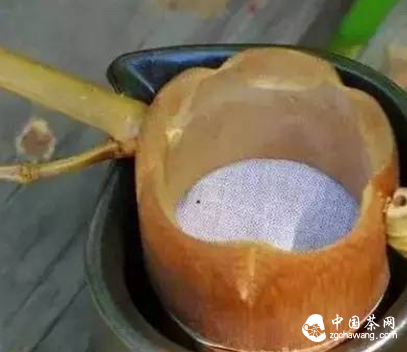
Some veteran tea drinkers, who have extremely high demands for the quality of tea soup, can study the impact on the tea soup by experiencing tea strainers made of different materials. Choosing a suitable tea strainer is more conducive to the performance of the tea soup.
Not Using a Tea Strainer
In actual brewing, some tea friends do not like to use a tea strainer. The advantage of not using a tea strainer is that it is convenient and completely and truly presents the true appearance of the tea soup. For some loose teas with complete strips, strict tea making, and cleanliness, it is also normal not to use a tea strainer, or to use a tea strainer for the first few brews and then not use it when there are fewer tea fragments later.
However, the disadvantages are also obvious, because most Pu'er teas are difficult to avoid fragmentation during pressing or tea breaking, and the water outlet gaps of general Gaiwan or purple clay pots are not enough to block these broken tea leaves or impurities, which affects both aesthetics and drinking.
Metal Materials
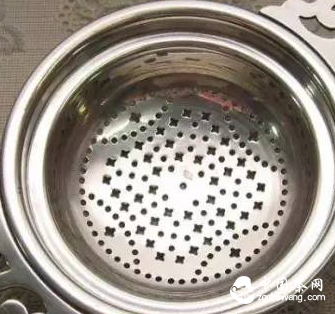
This type of tea strainer mainly includes pure silver, stainless steel, etc. Pure silver is more easily oxidized and is not commonly used in daily life. Stainless steel tea strainers should be the first to become popular. The advantages are durability and affordability. The disadvantages are, first, that after long-term use, it is difficult to avoid rusting; second, the metallic smell may slightly affect the tea; third, the mesh holes are not fine enough, and small particles can often still be found at the bottom of the tea soup.
Although stainless steel tea strainers are unbreakable and durable, they are prone to accumulating tea stains and developing rust spots after long-term use, making them difficult to clean and maintain hygiene.
Animal and Plant Materials
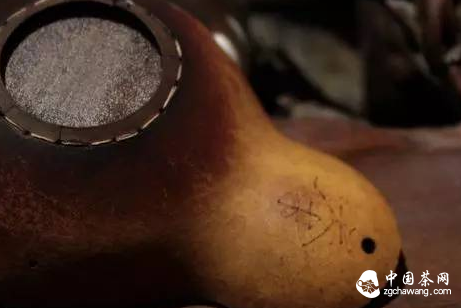
This type of tea strainer is commonly seen on the market, such as gourd tea strainers, and even tea strainers made from conch shells and seashells. The advantages are that they are eco-friendly and green, and may not be cheap. The disadvantages are that they are prone to odors, not durable, and容易 accumulate tea stains which are difficult to clean.
Ceramic
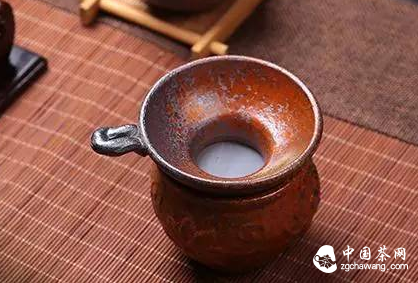
Currently quite common on the market. The advantages are fine mesh, durability, and easy cleaning. The disadvantage is that after long-term use, they容易 accumulate tea stains which are difficult to clean. Ceramics inevitably have some adsorption properties, absorbing some tea flavors, which may have a slight mutual influence between different tea products.
Purple Clay Material
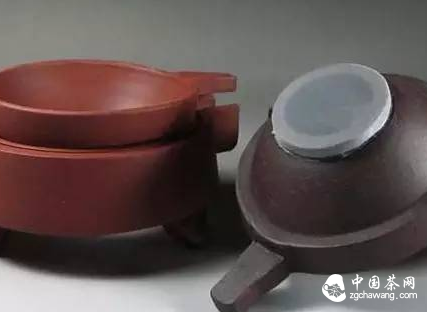
Purple clay tea strainers have already appeared on the market with some exquisitely made and carefully selected materials. Purple clay tea strainers have many similarities with general ceramic tea strainers, but purple clay tea strainers can be nurtured. Like purple clay pots and cups, they can become smoother and more lustrous with use. As long as they are cleaned promptly after use, purple clay tea strainers offer an additional pleasure of appreciation.
However, purple clay tea strainers are generally not suitable for use in testing tea products during brewing. After all, purple clay has some effect of absorbing tea aroma and flavor, which may slightly affect the tea product.
Porcelain
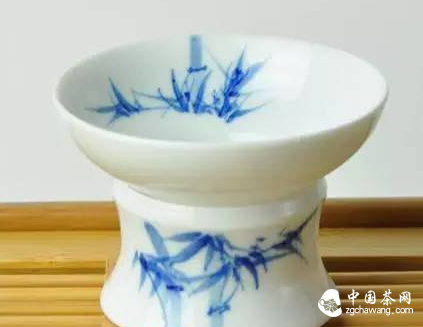
Porcelain tea strainers range from generally practical ones to those with artistic观赏性, having developed into blue and white, famille rose, Ru ware, Ge ware, celadon, etc., endowing the tea strainer with more interest. The advantages of porcelain tea strainers are easy cleaning, fine mesh holes, and no impact on the tea's aroma and taste. The filtered tea soup will be more transparent and bright. Some exquisitely made porcelain tea strainers even possess a certain artistic观赏性和把玩 value and are currently the most ideal type.