I. Origin of Narcissus Tea
Narcissus tea originated in Dahu Village, Xiaohu Township, Ouning County, Fujian Province (present-day Xiaohu Town, Jianyang City), discovered during the Daoguang period of the Qing Dynasty. According to Volume 25 of the Jian'ou County Annals: "Narcissus tea is produced on Yancha Mountain in Dahu Village, Xiaohu Township, Heyi Li. On the mountain is the Zhutaoxian Cave. A woodcutter from Xiqian Factory, while gathering firewood on the mountain, happened upon the cave and found a tree resembling tea but fragrant, so he transplanted it to his garden. When it grew, he picked its leaves and processed them using tea-making techniques; indeed, its extraordinary fragrance surpassed all other teas." Thus, the original place of Narcissus tea is in front of the Zhutaoxian Cave on Yancha Mountain in Dahu Village. In the Xiaohu dialect, "Zhuxian" sounds similar to "Shuixian" (Narcissus), so people called it "Shuixian." Some also say the tea carries a subtle, gentle fragrance of narcissus flowers, hence the name "Narcissus Tea."
II. Narcissus Tea Tree Variety
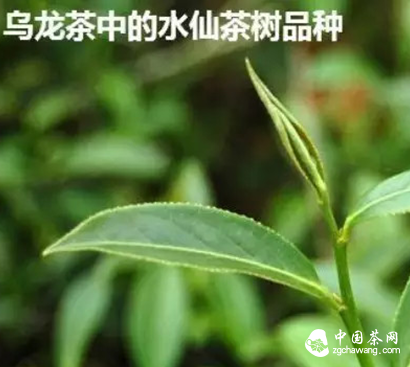
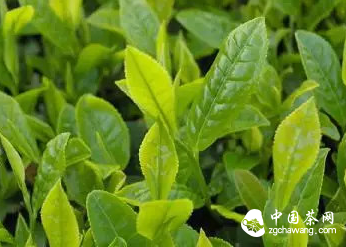
A nationally recognized superior tea tree variety in China. Clonal, small arbor type, large leaf category, late-ripening variety, triploid. The plant is tall with a semi-open tree posture, obvious main trunk, sparse branching, and leaves growing horizontally. Leaves are long elliptical or elliptical, dark green in color, glossy, flat leaf surface, flat leaf margin, flat leaf body, acuminate leaf tip, sharp and dense serrations, thick, hard, and brittle leaf texture. Buds and leaves are light green, downy, relatively plump, with long internodes. Suitable for making black tea, oolong tea, and green tea. For oolong tea, spring tea is mostly picked and processed in May, resulting in plump, tightly wound strips, dark green color, high and lasting aroma, mellow and thick flavor, with a sweet and refreshing aftertaste.
III. Categories of Narcissus Tea
1. Minbei (Northern Fujian) Narcissus
Wuyi Narcissus: Rock Narcissus such as Zhengyan, Banyan, Zhoucha Narcissus; High-mountain Narcissus such as from Wusandi, Zhukeng, Tongmuguan, etc.
Jianyang Narcissus: Xiaohu Narcissus, Shuangshili Narcissus, Shufang Narcissus, Zhangdun Narcissus White Tea.
Jian'ou Narcissus: Beiyuan Narcissus, Nanlu Narcissus, Xiaoqiao Baizhangyan Narcissus.
2. Minnan (Southern Fujian) Narcissus
Yongchun Narcissus, Zhangping Narcissus
3. Fenghuang (Phoenix) Narcissus
Chaozhou Fenghuang Narcissus and Fenghuang Dancong.
IV. Minbei Narcissus
(I) Zhengyan Narcissus within the Wuyi Mountain Scenic Area
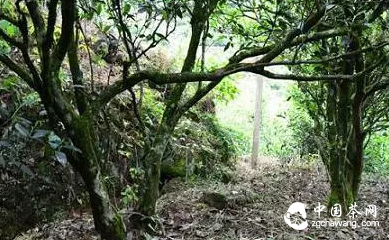
The greatest characteristic of rock tea (Yan Shang) Narcissus is its "rock rhyme" or "rock bone floral aroma," with a smooth, thick, and heavy texture,平和优雅, sweet, cool, and refreshing. As most rock tea is distributed along both banks of the Nine Bend Stream, there are terms "North of the Stream" and "South of the Stream." "North of the Stream" includes the well-known "Three Pits and Two Ravines," namely "Dakengkou, Huiyuan Pit, Niulan Pit," "Liuxiang Ravine (commonly known as Daoshui Pit) and Wuyuan Ravine." Narcissus tea from here commands prices several times higher than from other areas, especially the century-old bush Narcissus within, which is naturally hard to come by.
1. Around Huiyuan Pit Area
Places like Zhangtang Ravine, Swallow Peak, Ruiquan Rock, Huiyuan Pit, Ghost Cave, Eagle Beak Rock, Huiyuan Temple, Huiyuan Rock, Maple Tree Hollow, etc., all have Narcissus growth, especially in Maple Tree Hollow where old bushes are particularly appealing. Northeast of Huiyuan Pit is Water Curtain Cave, which also naturally has old bush Narcissus. Northwest of Huiyuan Pit are Huanggua Rock, Luxiu Peak, Zhongchang Rock, Liuguanzhai, etc., where Narcissus tea quality is also very good.
2. Around Niulan Pit
The Niulan Pit area is very small, only a few dozen acres. As cinnamon tea from here is famous, the so-called "Beef" (Niurou) among tea enthusiasts is extremely luxurious. There are not many Narcissus tea trees here.
3. Around Dakengkou
Maitreya Stone is in the center, with Green Dragon Rock on the left and Crouching Tiger Rock on the right. Passing Maitreya Stone leads near the entrance of the Dahongpao Scenic Area. On the right is Elephant Trunk Peak, where the mother tree of Bantianyao (Half-Sky Demon) is located. On the left is the ancient temple Tianxin Yongle Chan Temple. Going forward reaches Nine Dragon Hollow, then passing through "No-See-Sky," one sees the Dahongpao mother trees. There are also Narcissus tea trees in this nearby area.
Further ahead, past Qingliang Gorge, heading west to the highest peak is Sanyang Peak, heading south is Tianyou Peak, heading north is Liuxiang Ravine.
4. Around Wuyuan Ravine
Heading south from the Dahongpao ticket entrance, climbing several slopes, one first sees Horse Head Rock, resembling several galloping horses. Everyone takes many photos here. The cinnamon from here,俗称"Horse Meat" (Marou), has many Narcissus tea trees below the rock. Looking down from Horse Head Rock, there is a place called "Leishi Jingshe." If fortunate, one might see only one Taoist priest living there, living a very carefree and自在 life, enviable.
Continuing forward, there are Maosi Hollow, Ruosi Hollow, etc., with old bush Narcissus. Then proceeding further, one can only pass along a narrow stone path to reach the three characters "Wuyuan Ravine" carved on a stone wall, surrounded by tea gardens.
5. Around Liuxiang Ravine
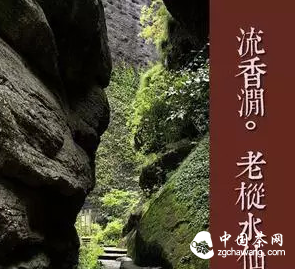
At the confluence of Qingliang Gorge and Liuxiang Ravine, from west to east is the source of Liuxiang Ravine, commonly known as Daoshui Pit. In ancient times, this stream flowed from west to east. Later, a landslide occurred at Niulan Pit and Dakengkou, blocking the path. The stream water reversed, flowing from east to west into Liuxiang Ravine, then north into Zhangtang Ravine, making a large S-curve before turning east again. There are old bushes hidden in the mountain hollows.
6. Around Zhu Hollow
Heading west from Liuxiang Ravine over several mountain peaks leads to Zhu Hollow Rock, where there are many old bush Narcissus trees.
7. Around Lotus Peak and Foguo Rock
The northernmost part north of Nine Bend Stream, from west to east, includes White Cloud Rock, Lotus Peak, Mituo Rock, and Foguo Rock. This area abundantly produces Narcissus tea. Historically, Foguo Rock and Mituo Rock were major sources of exported Narcissus tea. Green Lion Rock and Water Curtain Cave also have old bush Narcissus.
8. Double Lions Playing with a Ball
Near Nine Bend, two stone peaks on the north and south of the stream夹着 the river, facing each other across a large rock in the middle, vividly called "Double Lions Playing with a Ball." There are many Narcissus tea gardens on the south bank of the stream.
9. Around Tiger Roaring Rock
On the south bank of the Fourth Bend is the Yuan Dynasty Imperial Tea Garden; further south is Tiger Roaring Rock. South of Tiger Roaring Rock is the highest peak on the south bank of Nine Bend Stream, Horse Pillow Peak. This peak faces Sanyang Peak across the stream to the north.
10. Around Lion Peak
Following Nine Bend downstream past the Third Bend,绕行 Jade Maiden Peak and Great King Peak, leads to the First Bend water area. On the south bank of the First Bend are Yan Tea Village and Lion Peak. There are many tea gardens around Lion Peak, with不少 Narcissus tea trees, including many high-bush Narcissus tea trees.
(II) Dan Rock and Zhou Tea Narcissus by the Riverside
We should not否定 the quality of tea from here just because it's Dan Rock or Zhou Tea. In fact, even within Zhengyan, not all tea is necessarily good, and Zhou Tea can also produce good tea with good environment and craftsmanship. Tea drinkers should have this basic常识.
Narcissus from around Qiyun Peak, Narcissus from Caodun Huang Village upstream of Nine Bend, Narcissus from Chishi Town, Xiaowuyi Narcissus from Zhangshu Village, etc. This area also has no shortage of high-bush and good-bush Narcissus tea. Many tea friends may prefer tea from here, largely due to good性价比.
(III) Wusandi Century-Old Bush Narcissus
Wusandi is a natural village in Jiangxi Village, Yangzhuang Township, Wuyishan City, at an altitude of about 1300 meters. The old bush Narcissus tea from here is already highly sought-after and hard to find among tea enthusiasts, having been heavily hyped.
V. Minnan Narcissus
The more well-known ones here mainly include Yongchun Narcissus and Zhangping Narcissus tea.
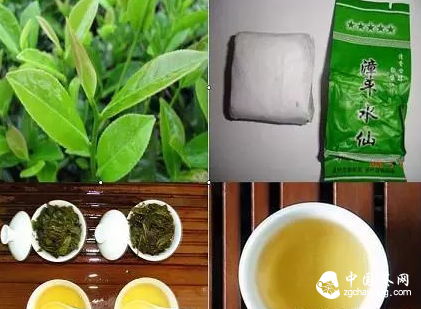
Yongchun was one of the earlier areas in Minnan to introduce Narcissus tea. Yongchun Narcissus tea comes in two different shapes: straight-strip type and rolled/包揉 type.
Zhangping Narcissus tea has an even more unique appearance. It is pressed into small square cake tea using wooden molds, then baked dry and wrapped in paper, called "paper-wrapped tea." The main工艺 difference lies in the "shaping and pressing."
VI. Fenghuang Narcissus
Fenghuang Narcissus and Fujian Narcissus share many similarities: both are small arbor type, medium-to-large leaf varieties, both used to make oolong tea, both possess orchid fragrance, and both regions have She ethnic communities residing. The differences are that Wuyi Narcissus emphasizes water quality and has a simpler aroma, while Fenghuang Narcissus has a more complex aroma and slightly more bitter/astringent water. Wuyi Narcissus is triploid and requires vegetative propagation, while Fenghuang Narcissus is diploid and reproduces sexually. However, the exact渊源 remains to be researched and verified by everyone.
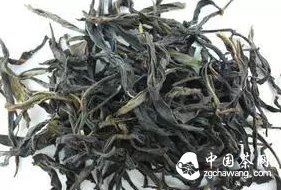
Fenghuang Narcissus, sexual reproduction system, large leaf category, early-ripening variety,相传已有 cultivation since the Southern Song Dynasty. Because the tea leaves are large,呈 long elliptical or elliptical shape, mostly flat or slightly rolled towards the leaf surface, green in color, glossy, or light green lacking gloss, tips often突尖, leaf tips drooping, somewhat resembling a bird's beak, local farmers call it "Bird Beak Tea." It was officially named "Fenghuang Narcissus" in 1956. After processing into tea, based on the quality of raw materials and the精细程度 of production, the quality is divided into three grades: Fenghuang Dancong, Fenghuang Langcai, and Fenghuang Shuixian. High-quality products made from selected单株 tea trees from the Narcissus population belong to the Dancong grade. Therefore, Fenghuang Dancong tea is named after being单株 selected from the Fenghuang Narcissus population,单株 cultivated over数百 years by generations of tea farmers, and单株 picked and processed.
Currently, Fenghuang Dancong often has ten major fragrance types: Huangzhixiang (Gardenia), Zhilanxiang (Orchid), Milanxiang (Honey Orchid), Guihuaxiang (Osmanthus), Yulanxiang (Magnolia), Jianghuaxiang (Ginger Flower), Molixiang (Jasmine), Xingrenxiang (Apricot Kernel), and Rouguixiang (Cinnamon).