Dark tea has a relatively deep color and its shape is not particularly attractive, so it doesn't catch the eye easily. Naturally, one might think drinking dark tea is no big deal and requires no special skills. However, this netizen meticulously explains from various aspects how to drink dark tea and how to identify the soup color of aged dark tea. Come and learn!
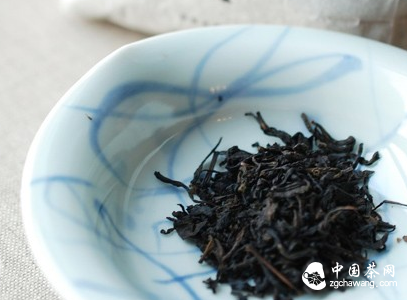
1. Tips for drinking Anhua dark tea
Evaluating Anhua dark tea should pay attention to three issues: first, using the tongue reasonably; second, controlling the temperature of the tea soup; third, avoiding stimulating foods before tasting tea.
The human taste organ, the tongue, has taste buds in different parts that sense different tastes differently. The tip of the tongue mainly evaluates the sweetness of tea leaves; the front sides of the tongue mainly assess the mellowness of the tea; the back sides of the tongue mainly judge if the tea taste is sour; the center of the tongue mainly feels the astringency of the tea; the base of the tongue focuses on experiencing the bitterness of the tea.
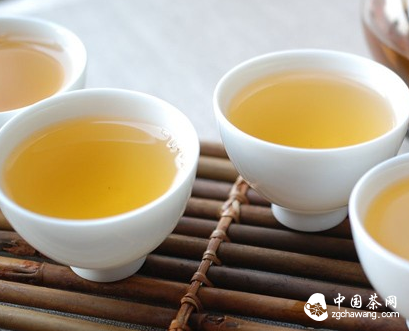
Because different parts of the tongue sense tastes differently, when tasting Anhua dark tea, after the tea soup enters the mouth, it should swirl on the tongue to fully experience the condition of various taste substances. Only in this way can one correctly and comprehensively discern the taste of Anhua dark tea.
Evaluating Anhua dark tea is generally more suitable at around 50°C-70°C. If the tea soup is too hot, the taste buds become numb due to high temperature stimulation, affecting normal evaluation; if the tea soup temperature is too low, the flavors may shift from potentially harmonious to discordant, affecting the accuracy of the assessment.
Before tasting Anhua dark tea, it's best not to consume foods with strong, stimulating tastes, such as chili peppers, onions, garlic, tobacco, alcohol, candy, etc., to maintain the sensitivity of taste and smell.
2. How to examine the leaf base
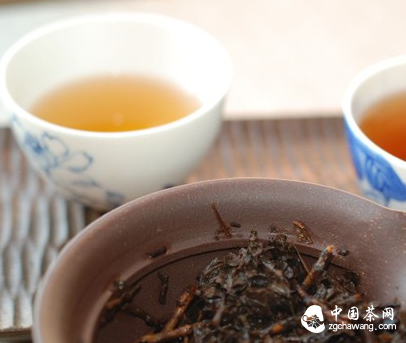
The soaked tea leaves (leaf base) can truly reflect the actual quality of the tea.
Evaluating the leaf base relies firstly on smell to distinguish aroma, and secondly on the eyes to judge the tenderness, uniformity, color, and degree of unfurling of the leaf base, while also observing if any other foreign matter is mixed in.
The method is to pour the brewed tea leaves into a dedicated tea tray (or a flat object like a cup lid). When pouring, be careful to pour out all the fine, broken leaves stuck to the cup wall, bottom, and lid. Pay attention to mixing evenly, spreading out, and pressing flat. Observe the tenderness of the tea leaves, whether they are uniform and neat, their color condition, and feel the softness or hardness of the leaves when pressed.
3. How to look at dark tea soup color
Common soup colors include:
Green-brilliant: Emerald green with a hint of yellow, clear and bright, light green and luminous tea soup. Common in spring tea. With continuous aging of dark tea, this green-brilliance disappears, gradually evolving into an apricot-yellow bright soup color.
Yellow-green: A soup color that is green with a hint of yellow, typical of medium to high-grade raw tea. Yellow-green tea soup often appears in spring tea, achievable only with timely rolling and drying during processing.
Green-yellow: A soup color with more yellow than green, similar to light yellow. Often seen in raw tea around the Qingming to Guyu period, often accompanied by a "grassy smell" or "stuffy taste".
Light yellow: A yellow but light soup color, also called pale yellow, typical of low-grade raw tea with less substance.
Orange-yellow: Tea soup yellow with a hint of red, resembling orange or tangerine color. In new tea, this color often indicates leaf cell rupture during processing or low kill-green temperature, often accompanied by a "red tea aroma" or "raw astringency". Dark tea aged 3-5 years shows this color, but with high brightness.
Deep yellow: A dark yellow soup color, deep and lacking luster. In new tea, this color often results from processing tea leaves combined over several days or prolonged lack of drying during rolling. Aged tea can also have this color, but aged tea with yellow soup must have good brightness.
Red soup: Aged tea showing red soup must be crystal clear and transparent, a rare and excellent tea.
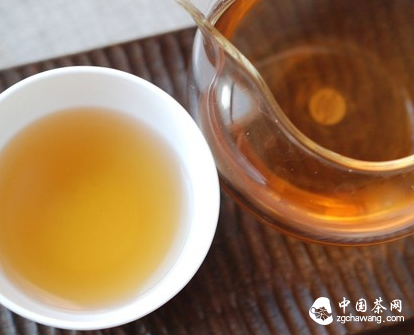
4. How to look at the soup color of aged dark tea
Common soup colors include:
Red-brilliant: Soup is red and brilliant but lacks brightness. Indicates lighter fermentation. Observing the leaf base, it often appears dark red with a hint of green, and the taste is often more bitter and astringent.
Red-bright: Tea soup not very strong, red, transparent, and glossy. Called "red-bright"; if the luster is faint, called red-clear. Observing the leaf base, it often appears dark red with a hint of yellow, and the taste is stronger.
Red-thick: Soup color is red and dark, slightly blackish, lacking brightness. Observing the leaf base, it often appears reddish-brown and soft, and the taste is mellower.
Reddish-brown: Soup color is red and thick, red with a hint of purplish-black, even and bright, with a lively feel. Observing the leaf base, it often appears brownish and not very soft, and the taste is mellower.
Brown: Tea soup is black with elegant purple, red and bright, with a lively feel. Observing the leaf base, the color often appears dark brown and hard, and the taste is mellower.
Blackish-brown: Tea soup appears dark black, with a lively feel. Observing the leaf base, the color often appears blackish-brown, hard, and the taste is mellower.
Yellow-white: Tea soup is slightly yellow, almost colorless. Observing the leaf base, the color is black, hard, and brittle like "charcoal strips," the taste is flat. This indicates over-fermentation where the tea has already "burnt heart."