If we say "Banzhang is the King, Yiwu is the Queen, then Jingmai is the Imperial Concubine"—Jingmai must be the intoxicating Fragrant Concubine!
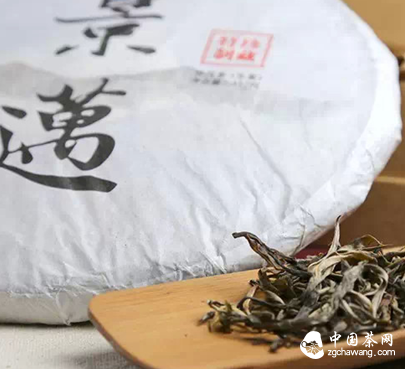
Jingmai Dazhai Village is nestled within the vast ancient tea gardens spanning Jingmai and Mangjing, covering an area of 28,000 mu. Alongside villages like Banggai, Longbang, Nanzuo, Nanai, Nuogan, Mengben, Manggeng, Mangjing, Manghong, Wengwa, Wengji, and Laojiufang, it forms this extensive tea-growing region. The fresh tea leaves from Jingmai Dazhai are sold under the name "Jingmai Mountain Pu'er Tea."
Growing Environment of Jingmai Pu'er Tea:
Jingmai Dazhai sits at an altitude of about 1400 meters, located on one side of the Tropic of Cancer—considered the optimal altitude and region for producing high-quality tea leaves. Mangjing, located 9 kilometers from Jingmai Dazhai, has ancient tea gardens connected to those of Jingmai, forming the largest contiguous area of ancient tea gardens in Yunnan.
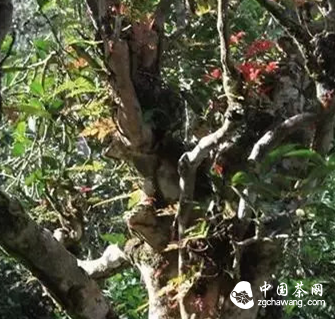
The Jingmai tea mountains primarily consist of mixed forest tea gardens where various plants coexist. Clustering plants, mixed woodlands, bamboo forests, and tea trees create a pleasing landscape with a reasonable shading canopy, abundant scattered sunlight, a healthy ecological environment, and many parasitic plants. The most famous of these, "Crab Feet" (reply 32 for details on Crab Feet), often originates here.
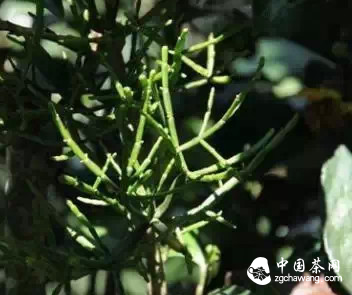
Characteristics of Jingmai Ancient Tree Tea:
1. Ancient Tree Age: The tea trees in the Jingmai Mountain ancient tea gardens are primarily several hundred years old.
2. Excellent Ecological Environment: The tea trees in the Jingmai Mountain ancient tea gardens have not been artificially dwarfed and all grow mixed with the mountain's native ancient trees. Within the ancient tea gardens, trees so large that one person cannot wrap their arms around them are common. This mixed growth is precisely the source of Jingmai tea's unique and intense aroma.
3. Diverse Leaf Types: Jingmai Mountain ancient tree tea includes both large-leaf and small-to-medium-leaf varieties, presenting diverse leaf characteristics.
4. Prominent Aroma and Strong Wild Character: Due to growing mixed within the forest, Jingmai tea possesses a strong wild, mountain character—the most pronounced wild essence among arbor ancient tree teas. It also has a special, rich, and enduring tea fragrance.
People often use "honey fragrance" to describe Jingmai's aroma, which is inaccurate. The fragrance of Jingmai tea should be described using the highest realm of Pu'er tea aroma—floral fragrance, specifically the fragrance of orchids.
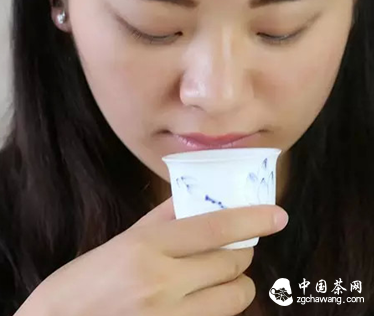
Authentic Jingmai Tea Possesses 'Three Aromas':
First: Dry Leaf Aroma. Smelling the tea cake reveals a very distinct orchid fragrance. Only high-quality wild teas, like Qianjiazhai wild tea, can produce an aroma of such intensity.
Second: Prominent and Enduring Tea Soup Fragrance. In pure Jingmai tea, one can taste the orchid fragrance in the tea soup, and it can persist for over ten infusions.
Third: Base of the Cup Aroma. The aroma left at the base of the cup is the most direct expression of the wild essence of ancient arbor tea. Because Jingmai tea grows mixed in mountain forests, its wild character is strong, resulting in a powerful and lasting cup base aroma that can still be detected after more than ten infusions.
Aroma is the greatest advantage of Jingmai tea, the main reason people love it, and also what makes it relatively easier to authenticate. The intensity of Jingmai tea's fragrance is related to the picking time: spring tea has a strong fragrance, summer tea weak, and autumn tea also weak. It is also related to the tenderness of the leaves—Jingmai tea is more fragrant the tenderer it is. If "Jingmai is the Imperial Concubine," she must be the Fragrant Concubine!
5. Pronounced and Persistent Sweetness. This is another characteristic that makes Jingmai tea difficult to counterfeit. Generally, the sweetness of tea is a returning sweetness after bitterness, but the sweetness of Jingmai tea is direct, arrives quickly, and is also persistent. When drinking Jingmai tea, sweetness is apparent as soon as the tea soup enters the mouth and lasts a long time. With good Jingmai tea, if drunk in the morning and no strongly flavor-affecting food is consumed at noon, the sweet sensation can still be felt on the tongue after a midday nap.
6. Weak Bitterness, Strong Astringency. Jingmai tea is an astringent-base tea. Bitterness is present but not strong, while astringency is quite noticeable.
7. Thick Soup Texture Yet Thin Mouthfeel. This is a difficult-to-explain paradoxical phenomenon. Brewing pure Jingmai tea reveals a very viscous soup texture; sometimes, bubbles even float in the middle of the soup without moving towards the cup wall—a phenomenon occurring only with viscous soup. However, this viscous Jingmai tea soup produces a sensation of "thinness" in the mouth, which may be because the astringency masks the sense of mellowness and thickness.