Liupu tea is divided into raw tea and ripe tea, with ripe tea being the main type. The intensity of aroma and taste varies with different years and grades, but the "betel nut aroma" is its most unique characteristic.
Raw tea: Divided into wild raw tea and regular raw tea. Wild raw tea has a pure taste, strong broth flavor, amber to golden liquor color, and a simple yet intense aroma. Compared to wild raw tea, regular raw tea has a slightly more 'pungent' aroma and a somewhat 'astringent' taste, with a similar liquor color. The longer the aging of raw tea, the smoother the taste and the more pronounced the sweet aftertaste; shorter aging results in more bitterness and astringency.
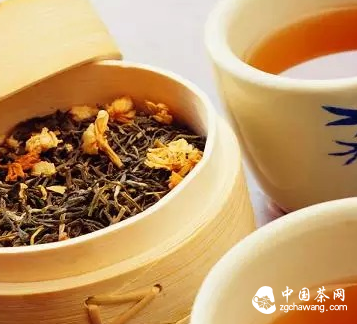
Ripe tea: Ripe tea varies greatly depending on the year and grade. New ripe tea is relatively difficult to drink, being somewhat bitter and astringent with a strong 'green' odor. A truly well-aged, high-quality Liupu ripe tea should have no off-flavors, no "cellar" odor, but carry an aged aroma. This aged aroma should not be overpowering but persistent and沉稳. Upon entering the mouth, it should have a softening sensation, with no obvious astringency on the tongue or in the mouth. The tea flavor should be mellow, with a long-lasting "tea energy" emerging from the醇厚. Depending on the individual tea, one might perceive different nuances of aged aroma, lingering subtly at the back of the mouth and throat. Generally, an eight-year-old Liupu tea has a crystal-clear, yellowish liquor color with an aged taste, yet still reveals a youthful青涩. A sixteen-year-old Liupu tea has a bright red liquor color and a rich aged aroma, exuding a mature and沉稳 flavor. Usually, older Liupu tea is more expensive than younger tea, but this is not absolute; the quality of the tea itself is very important.
Besides relying on taste for identification, one can also use other visual辨别 to confirm whether it is truly aged tea. However, one should not rely solely on these external appearances for认定. After all, many current "aging" techniques are aimed precisely at manipulating external感官.
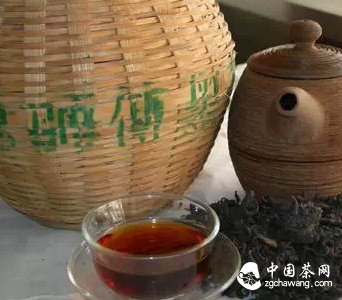
1. Determining the Production Year from the External Packaging
This method is most common and also最容易做伪. Many artificially aged teas deceive consumers by aging the packaging or imitating old packaging from the past.
The packaging of Liupu tea from several manufacturers in Wuzhou has undergone decades of development and changes. Some包装 with distinct时代 characteristics can serve as a reference for judging the tea's age. For example, the earliest black box Liupu tea packaging once read "六保茶." However, tea friends should know that this "old" packaging does not necessarily mean the Liupu tea inside is "old."
2. Observing the Dry Tea, Weighing It, and Assessing Its "Fluffiness"
Comparing some Liupu teas from different years, such as 5–6 years old and around ten years old, one will feel that over time, the tea becomes looser,散开, and lighter, noticeably lighter in hand than newer tea. Due to long-term storage and natural aging/fermentation, old tea becomes increasingly "fluffy." The dry tea appearance will have a natural layer of gray "frost" (Note: Storage in humid environments can also produce a white frost, but artificially aged tea in humid conditions tends to turn black, with a surface frost that appears "dead" and lacks vitality. The white traces seen on the surface of so-called普洱 "old brick" tea on the market can be used for reference.) The dry tea color will偏向褐红, even brown. The dry tea appearance should be clean, with no signs of mold.
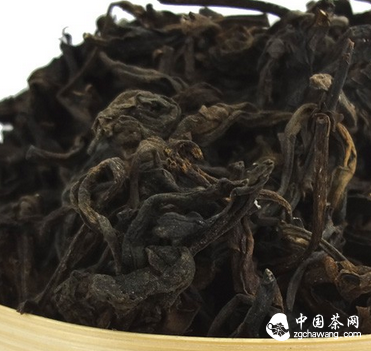
3. Smelling the Aroma of the Dry Tea
There is a common practice of "exhaling breath onto the dry tea and then smelling it," but this method is unhygienic and not recommended. Moreover, the "aged smell" detected this way can often be deliberately伪造, making it不太准确. On the contrary, one should be more cautious with teas whose dry leaves have a so-called "aged smell" when smelled this way.甚至, some teas with a明显刺鼻的 "aged smell" are precisely the effect of "artificial aging," and should raise more警惕, and it's better not to drink them.
4. Observing the Liquor Color
Generally speaking, due to raw materials and processing reasons, some new Liupu teas can sometimes be浑浊, or remain浑浊 for the first year or two. However, over time, the liquor becomes澄亮明净. The older the tea, the redder and more translucent the liquor becomes,越体现出 the "red" and "浓" characteristics of Liupu tea. If the tea was stored后期 with excessive humidity,受潮,淋水, or was artificially aged, the liquor color will become晦暗,发哑, even浑浊, often referred to by tea friends as "soy sauce soup." When encountering such "aged tea," one must be加倍小心.
5. The Aged Taste of the Liquor
This "aged taste" in the liquor is很容易做假的. Moreover,某些不良茶商更喜欢以此 "指鹿为马," describing a "cellar" odor as an "aged taste." Many tea friends with limited exposure to aged tea are often误导, mistakenly thinking that aged Liupu tea is supposed to be "cellar-like." Artificially aged tea, apart from having a "cellar" odor, often lacks the醇厚,顺和口感 of truly aged tea. Furthermore, after drinking it, one might feel a slight tightness in the throat, an uncomfortable sensation茶友们称之为 "锁喉." This is also a means of辨别 fake aged tea.
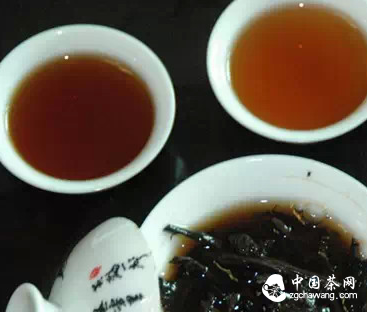
6. Observing the Vitality of the Wet Leaves
A common手法 for artificially aging Liupu tea is to人为加大湿度 to accelerate its post-fermentation, achieving a "陈" effect. However, after such high-humidity "陈化," the茶叶's own fibers inevitably change. The wet leaf color becomes dead and black, lacking elasticity. Some wet leaves may become sticky,稀烂如泥. Such "aged tea" requires格外小心. The wet leaves of a well-stored,陈年 Liupu tea would绝对不会 be霉烂发黑的.
Only by synthesizing multiple感官 aspects can we analyze whether a tea is truly aged. But in the era of the planned economy, how much aged tea could have been流传下来? We can all make an estimate in our hearts. Therefore, being able to drink truly陈年 Liupu tea requires a share of "tea缘分."
Liupu tea is graded into特级,一级,二级,三级, with四级 and五级 being less common.特级 has the best茶质, and通常 those graded by manufacturers are considered the best.