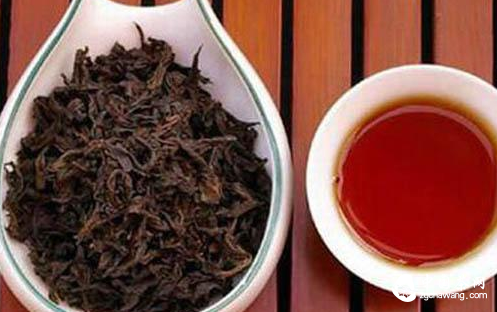
The origin of black tea is in China. The world's earliest black tea was invented by Han Chinese tea farmers in the Wuyi Mountain tea region of Fujian during the Ming Dynasty in China, named "Zhengshan Xiaozhong". The Jiang family in Tongmuguan, Wuyishan City, is a tea family that has been producing Zhengshan Xiaozhong black tea for over 400 years.
Black tea is a fermented tea, made from suitable new tea leaves and buds through typical processes such as withering, rolling, fermentation, and drying. It is named black tea because the dry tea leaves and the brewed tea liquor are predominantly red. Black tea is one of the traditional six major tea categories and has long accumulated numerous enthusiasts. Especially among some female friends, black tea holds a special preference, mainly because black tea has a noticeable sweet aroma compared to other tea types. When black tea was first created, it was called "black tea" (乌茶). During processing, a chemical reaction centered on the enzymatic oxidation of tea polyphenols occurs, significantly changing the chemical components of the fresh leaves. Tea polyphenols are reduced by over 90%, producing new components such as theaflavins and thearubigins. Aromatic substances increase noticeably compared to fresh leaves. Therefore, black tea is characterized by black tea leaves, a reddish liquor, reddish leaves, and a sweet, mellow taste.
Five Health Benefits of Black Tea
1. Diuretic Effect
Under the combined action of caffeine and aromatic substances in black tea, kidney blood flow increases.
It enhances the glomerular filtration rate, dilates renal microvessels, and inhibits the reabsorption of water in renal tubules, thereby promoting increased urine output.
This helps eliminate excess lactic acid, uric acid (related to gout), excessive salt (related to hypertension), etc., from the body, while also alleviating edema caused by heart disease or nephritis.
2. Anti-inflammatory and Bactericidal
The polyphenolic compounds in black tea have anti-inflammatory effects. Catechins can bind to single-celled bacteria, causing protein coagulation and precipitation, thereby inhibiting and eliminating pathogenic bacteria.
Drinking black tea is quite beneficial for patients with bacterial dysentery and food poisoning. It is also commonly used in folk remedies to apply black tea to wounds.
3. Refreshing and Relieving Fatigue
The caffeine in black tea stimulates the cerebral cortex to excite the nerve centers, achieving a refreshing effect, thereby making thinking and reactions more acute.
Memory is enhanced; it also excites the vascular system and heart, strengthening the heartbeat, thus accelerating blood circulation to promote metabolism [1].
4. Promoting Saliva Production and Clearing Heat
Drinking black tea in summer can quench thirst and relieve heat. This is because polyphenols, sugars, amino acids, pectin, etc., in the tea react with saliva, stimulating saliva secretion and moistening the mouth;
Meanwhile, caffeine controls the body's temperature center in the hypothalamus, regulating body temperature, and also stimulates the kidneys to promote heat emission, maintaining physiological balance in the body.
5. Detoxification Effect
The theine in black tea can adsorb heavy metals and alkaloids, precipitating and decomposing them. This is a boon for modern people whose drinking water and food are contaminated by industrial pollution.