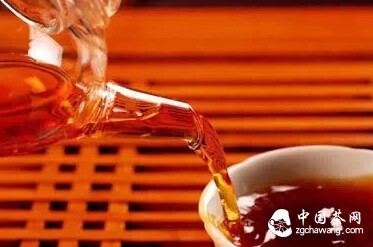
Ripe Pu-erh tea, a type of Pu-erh tea produced through artificial fermentation. In the early days of Pu-erh tea, some regions popularized drinking tea that was 'red in color and glutinous in soup,' which was naturally fermented during storage, and it had a relatively large number of drinkers. With this demand, some began researching techniques to accelerate this process. During the development of this technology, another technique distinct from ripe tea, imitating aged raw tea, was also evolving. The advent of ripe Pu-erh tea provided the public with an additional choice. So, how can one learn to appreciate ripe Pu-erh tea? Regarding the tea itself, I still look at the three most basic attributes: year, quality, and price.
Year
In ripe Pu-erh tea, the year is a relatively important attribute. Newly pressed ripe tea, once it undergoes the pressing process, involves steps like softening before pressing and drying after pressing. These steps more or less introduce the dissipation of 'water taste and fire taste' as well as 'pile fermentation taste.' Resolving these issues requires time. The length of time depends on how you store it. Another aspect of year is the storage duration; as long as a physical substance exists, it undergoes dissipation. That is to say, ripe tea reaches its peak quality after a certain number of years of storage, after which it will decline.
Quality
When it comes to quality, many people find it headache-inducing because everyone's standards differ. However, I believe a normal ripe tea product should be: clean in taste, glutinous (smooth) in soup, and sweet. Clean taste means no off-flavors (ashy taste, earthy fishy taste, burnt taste, sour spoiled taste, etc.). Glutinous (smooth) soup is like the feeling of drinking rice porridge—oh, right, modern people rarely get to drink rice porridge. And sweetness is like sugar water, directly sweet. Among the ripe teas I've tasted, some have bitterness and astringency. Some feel 'gritty' on the tongue (a granular sensation). Some produce noticeable bodily sensations when drunk.
Price
The price of ripe Pu-erh tea is even more complex than that of raw Pu-erh tea. Generally speaking, spending two to three hundred yuan can buy a good 3-5 year aged ripe tea to drink, which is relatively not expensive; but if a new tea from the current year costs two to three hundred yuan, that is expensive. Ripe Pu-erh tea has never been a low-cost product because of its numerous processing steps and stringent requirements. Although the raw materials are cheaper compared to raw tea, the loss rate is high, material usage is large, and the cycle is long. So, never think of ripe tea as cheap, especially good ripe tea. In Menghai County, there are many factories fermenting hundreds of tons of ripe tea annually, but the amount of good ripe tea produced each year is almost as rare as phoenix feathers and unicorn horns. The reason is that tea factories cannot wait; they sell it as soon as it's fermented. And the merchants who take over are even more impatient to sell it quickly. Because ripe Pu-erh tea is fermented every year, only good ripe tea has the concept of scarcity.
Beyond these three basic attributes, one must also consider one's own body. Many people, when asked to drink ripe tea, say that all ripe teas taste the same and aren't particularly enjoyable. This is precisely a major characteristic of ripe Pu-erh tea. For the average person, it all seems to taste the same. Only by earnestly entering the world of ripe Pu-erh tea can one experience its charm. Then one discovers that behind this 'single taste' lies a barrier, testing each individual. Without breaking through this barrier, one will never truly understand ripe tea.
Whether one can discern different flavors within the 'single taste' also has some relation to age. Young people often dislike ripe tea because it is too平淡 (flat/plain) and too 'complex and difficult to understand.' Only after reaching a certain age and experiencing life's sour, sweet, bitter, spicy, and salty flavors do one's body or mindset change. It is then that you realize, so that's how it is.