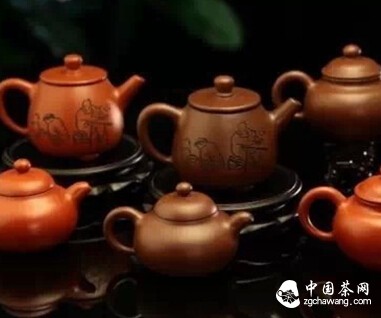
When prices soar and capital pours in, even the calmest market becomes turbulent, let alone purple clay, which entered the market as a dark horse! Currently, the purple clay market is flooded with counterfeit phenomena such as passing off inferior products as high-quality ones, faking famous brands, and selling new items as antiques. How to identify the authenticity of purple clay, and distinguish between old and new teapots? Based on the experiences of multiple collectors, here are some tips for choosing a good teapot.
Step One: Look at the Color
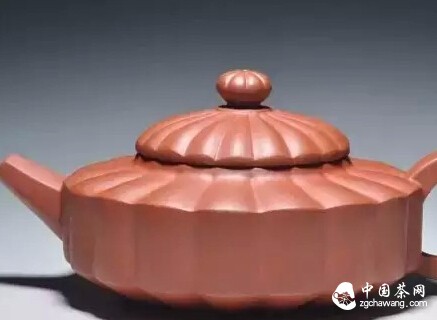
Yixing purple clay boasts a rich variety of colors. Besides the common chestnut purple, there are red-purple, brown-purple, and dark purple, among others. So-called "purple clay" from regions other than Yixing produces items with a single color, usually orange, giving a subtle impression of containing yellow clay. Yixing purple clay teapots come not only in various shades of purple-red but also in green, yellow, black, and other colors. It can be said that no two pieces share exactly the same hue. Non-Yixing purple clay colors are monotonous, rigid, and lack variation.
Some collectors believe that purple clay should not be overly bright, as overly vibrant clay often contains added chemical agents. Natural purple clay is famously called the "five-colored earth" because the clay itself contains a high proportion of metallic elements. Using raw mineral clay to create various color patterns, if fired at the right temperature, can result in a myriad of appearances.
Step Two: Observe the Form and Style
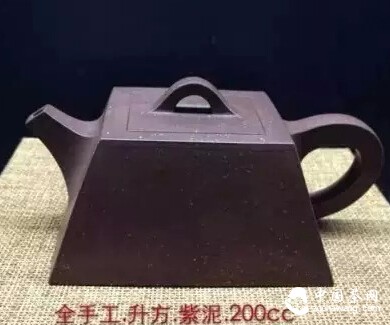
Beyond its material, the category, form, and character of purple clay are also crucial. Purple clay teapots have the richest variety of shapes among all types of vessels in existence, often described as "square but not uniform, round but not identical." How to evaluate these diverse forms is a matter of personal opinion. As an art form, purple clay can satisfy different psychological needs of collectors—grand, elegant, or rustic teapots each have their merits. However, many collectors consider the ancient, rustic style to be the best, followed by the grand and elegant.
"Compared to high-quality purple clay teapots, inferior ones have dull, rigid shapes. Because they are not handmade, attention to details like lines and proportions is lacking, making them appear crude and vulgar." Purple clay teapots are part of tea culture, pursuing an artistic conception of "tranquility, peace, and transcendence from worldly affairs." The rustic style harmonizes most with this atmosphere.
Step Three: Feel the Texture
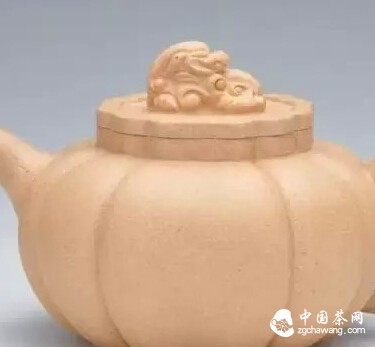
When picking up a purple clay teapot, besides looking and examining, use your hands to touch it, and if necessary, press it against your cheek. Because Yixing purple clay contains a considerable proportion of sandy particles, it feels comfortable to the touch, "feeling warm and smooth against the skin. Teapots made from non-Yixing purple clay may look smooth, but in essence, they feel rough and sticky when held." A collector explained the texture of purple clay this way. "Generally, good clay combined with good craftsmanship should result in a pleasant feel. If sand is added, it depends on the grain size; holding it should not give a rough sensation," the collector added.
Purple clay teapots are highly functional artworks, especially requiring frequent touching of their surface to enhance the tactile pleasure. Moreover, compared to other types of pottery clay, a distinctive feature of purple clay is its unique texture. Touching a purple clay object is like touching red bean paste—fine but not greasy. Therefore, in the industry, the feel of a teapot's surface is particularly important when evaluating it.
Step Four: Listen to the Sound
Yixing purple clay is handmade. The clay body undergoes repeated pounding and pressing, followed by multiple processes, accumulating countless fingerprints from the maker. After firing, when tapped, it produces a relatively clear, crisp sound. Non-Yixing teapots are formed by spinning clay on a wheel or molding, without the clay being compressed or undergoing manual techniques like pushing, pinching, smoothing, or scraping by the artisan. Therefore, they lack charm and produce a dull sound when tapped. "The sound of a purple clay teapot depends on many factors, directly related to the age and thickness of the body. If the sound is too sharp, it's likely a new teapot. If it's extremely sharp and clear, it might be made from chemically treated clay," said collector Chen Xiao.
Step Five: Look Inside
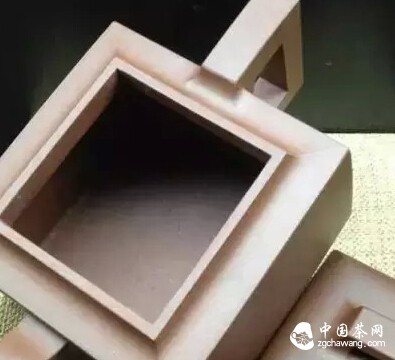
After going through numerous production steps, it's difficult to see traces of handwork on a purple clay teapot. However, careful observation and touching of the interior can reveal some clues. "For example, at the joint where the spout meets the body, if it was manually attached, there will always be some trace visible at the intersection because it's challenging for the maker to polish the interior perfectly smooth, and there's no need to make it completely flat." Regarding this, collectors suggest that judging a teapot requires calm objectivity. To understand purple clay art, one should appreciate historical pieces to grasp the development of purple clay materials and understand the fundamental language of purple clay pottery. This way, one can learn to evaluate teapots properly, and many confusions will naturally be resolved.