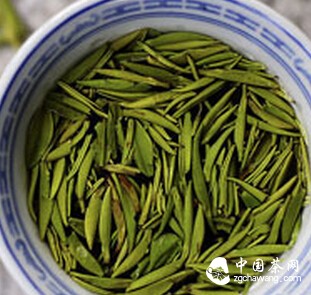
One of China's famous yellow teas. Junshan tea originated in the Tang Dynasty and was designated as a tribute tea during the Qing Dynasty. Junshan is an island in Dongting Lake, Yueyang County, Hunan Province. In the Qing Dynasty, Junshan tea was divided into two types: "Jiancha" and "Rongcha." "Jiancha," resembling tea swords with white hairs, was offered as tribute and commonly called "Gongjian."
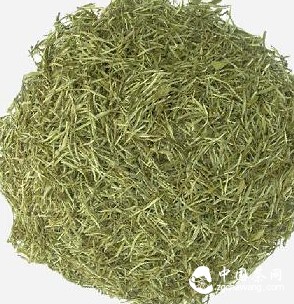
Junshan Silver Needle tea has a clear, high aroma, a mellow and refreshing sweet taste, a bright yellow liquor, plump buds with abundant fine hairs, and straight, uniform strips covered in light yellow fuzz. After brewing, the buds stand vertically in the liquor, rising to the surface, then slowly sinking, rising and sinking again—three ups and three downs—creating an interesting spectacle. Junshan Silver Needle tea is harvested three to four days before Qingming Festival, using the first flush of spring buds. Only plump, hairy buds measuring 25–30 mm in length are selected, and uniformly sized robust buds are used to produce Silver Needle. The production process involves eight steps: fixation, spreading and cooling, initial baking, re-spreading and cooling, initial wrapping, re-baking, re-wrapping, and drying.