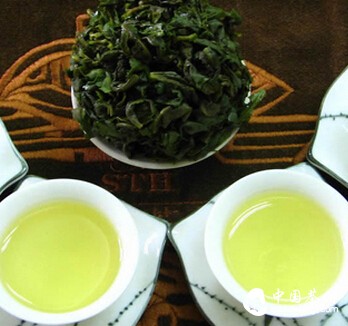
Belonging to the green tea category, it is one of China's famous Oolong teas. Anxi Tieguanyin tea is produced in Anxi County, Fujian Province. Anxi Tieguanyin tea has a long history and is traditionally known as the King of Tea. According to records, Anxi Tieguanyin tea originated during the Qing Dynasty's Yongzheng period (1725-1735). Anxi County is predominantly mountainous, with a warm climate and ample rainfall, leading to lush tea tree growth. The area boasts a wide variety of tea tree species, vibrant and diverse, ranking top in the country.
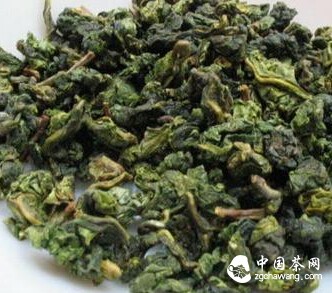
Anxi Tieguanyin tea can be harvested four times a year, divided into spring tea, summer tea, summer-autumn tea, and autumn tea. The manufacturing quality is best for spring tea. The production process of Tieguanyin is basically the same as that of general Oolong tea, but it involves more turning during the shaking (摇青) stage and shorter withering (凉青) times. Typically, sun-withering (晒青) is done before evening, followed by overnight shaking and withering. Fermentation is completed by the next morning, after which it undergoes frying, rolling, and baking, taking about a full day and night. Its production process is divided into nine steps: sun-withering, shaking, withering, fixation (杀青), cutting and rolling, initial baking, wrap-rolling, re-baking, and drying. High-quality Anxi Tieguanyin tea features tightly rolled, thick strips that are heavy as iron, with a distinct sandy-green color (芙蓉沙绿). It has green stems (青蒂绿), bright red spots (红点明), a high, sweet floral aroma, and a rich, fresh, and mellow taste with a unique character. The aftertaste is sweet and strong, and it can be brewed up to seven times while still retaining fragrance. The liquor is golden in color. The brewed leaves are thick, soft, bright, and even, with red spots on the edges and a characteristic 'green heart with red border' (青心红镶边).