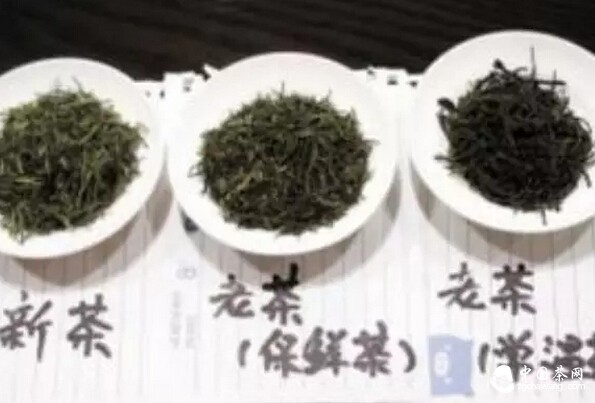
The rarity of aged tea lies in its aging time. By selecting tea leaves of excellent quality and storing them scientifically, you can savor a premium aged tea with an oily, clear liquor, delicate aged aroma, smooth and soft texture, and a mellow, sweet taste.
New tea and aged tea are relative terms. Conventionally, tea made from the first few batches of fresh leaves picked in spring of the current year, or from leaves picked and processed within the year, is called new tea. Tea processed from leaves picked in the previous year or even earlier, even if stored scientifically and in good condition, is generally referred to as aged tea. Lin Yongjun, the owner of Boyunxuan in Zhangzhou Xincheng Tea Market, whose family has excelled in storing and using aged tea for three generations, believes that tea stored for 1-5 years is called new tea; 5-10 years is old tea; 10-20 years is aged tea; and over 20 years is vintage aged tea or simply old tea.
For many tea varieties, new tea is naturally considered better than aged tea. "Drink tea when it's new, and wine when it's old" is a long-standing summary of drinking culture. However, not all teas are better when new. Some tea varieties actually improve when stored for a period. Aging is a process where substances transform over time, suppressing negative aspects and enhancing benefits, leading to changes more beneficial to humans. For example, Wuyi Rock Tea has a custom of "aged drinking." Traditionally, Wuyi Rock Tea is highly roasted. If drunk immediately after roasting, the unresolved fire energy can cause a dry sensation. Therefore, it is generally stored for a while before drinking, resulting in a mellower taste. Moreover, roasted tea not only stabilizes and improves quality but can also be stored for long periods. Especially after five, ten, or more years of aging, Rock Tea's quality does not decline; instead, its flavor becomes richer and more profound. Similarly, teas like Hunan's Fu Brick Tea, Hubei's Qing Brick Tea, Guangxi's Liupao Tea, and Yunnan's Pu'er Tea can improve in quality if stored properly. This is because during storage, two main aromas develop: one from the slow aging process (aged aroma) and a slight mustiness from minimal mold growth. These two aromas blend harmoniously, creating a new fragrance welcomed by many.
When selecting aged tea, pay attention to the following: 1. The tea plant's growing environment (including ecology, climate, soil). A superior natural environment is the foundation for good tea quality; only tea with good initial quality is worth aging. 2. Excellent tea plant varieties. Besides dark tea and Pu'er, varieties like Tieguanyin, Shuixian, and Dancong are also suitable for making aged tea. 3. Scientific and reasonable production and processing techniques, especially traditional methods, make tea more durable for storage and less prone to flavor changes. 4. Scientific storage methods. With these four prerequisites and years of proper aging, you can enjoy a premium aged tea with an oily, clear liquor, delicate aged aroma, smooth and soft texture, and a mellow, sweet taste.
The rarity of aged tea lies in its aging time, which is difficult to authenticate. Relying solely on tasting—judging by color, aroma, taste, strip shape, and leaf bottom—is subjective and varies from person to person, making it unconvincing. More crucial are the original factory records and the seller's integrity. Additionally, the drinker's discernment is important, though this requires experience. Driven by profit, some merchants might use an electric oven for high-temperature roasting once or twice to mimic aged tea. Such tea lacks an aged aroma and only tastes charred.
"One can drink tea all their life yet not remember all the tea names." Chinese tea is incredibly diverse. In fact, every type of tea has its merits. Whether new or aged, each has its own characteristics. The tea that suits your personal taste is the good tea.