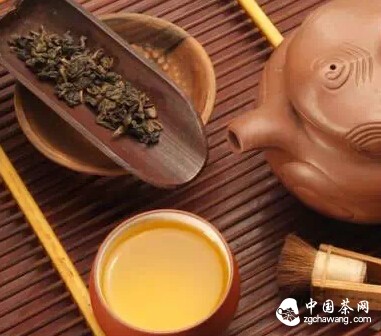
Black Tea can be categorized into Gongfu Black Tea, Souchong Black Tea, and Broken Black Tea. The quality identification for these types is as follows:
I. Gongfu Black Tea: Quality is assessed in the following aspects:
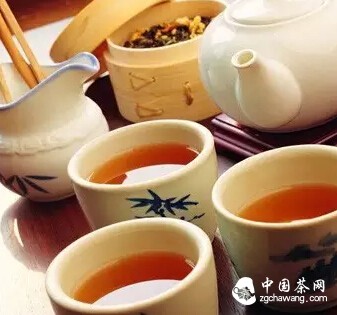
① Appearance: Tight, fine, and even strips indicate good quality. Conversely, coarse, loose, and uneven strips indicate lower quality.
② Color: A glossy, blackish-brown ("wu run") color is good. Inconsistent color with dull, grayish, or withered leaves indicates lower quality.
③ Aroma: A rich and fragrant aroma is good. An impure aroma with grassy notes is lower quality, and a dull, stuffy aroma is poor.
④ Liquor Color: A bright, reddish liquor with a golden ring at the edge of the tasting cup is excellent. A less bright color is lower quality, and a deep, turbid color is poor.
⑤ Taste: A mellow and full taste is excellent. A bitter and astringent taste is lower quality, and a coarse, bland taste is poor.
⑥ Infused Leaves: Bright infused leaves indicate good quality. Leaves with a bluish-purple tinge are lower quality, and dark leaves with many blackish strips are poor.
II. Souchong Black Tea:
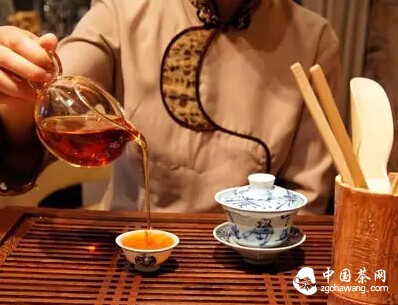
Souchong Black Tea is produced exclusively in Fujian. Its strips are robust and even, with a blackish-brown color. It possesses a distinctive pine-smoky aroma, a mellow taste, a bright red liquor, and infused leaves of a bronze color. The tea produced in Xingcun, Chong'an, Fujian, is of the highest quality, known as "Xingcun Souchong" or "Zhengshan Souchong". Others include "Tanyang Souchong" and "Zhenghe Souchong".
① Appearance: Tight, fine, and even strips indicate good quality. Conversely, coarse, loose, and uneven strips indicate lower quality.
② Color: A glossy, blackish-brown color is good. Inconsistent color with dull, grayish, or withered leaves indicates lower quality.
③ Aroma: The distinctive pine-smoky aroma is key. An impure aroma with grassy notes is lower quality, and a dull, stuffy aroma is poor.
④ Liquor Color: A bright red liquor is good. A less bright color is lower quality, and a deep, turbid color is poor.
⑤ Taste: A mellow and harmonious taste is excellent. A bitter and astringent taste is lower quality, and a coarse, bland taste is poor.
⑥ Infused Leaves: Even, bronze-colored infused leaves indicate good quality. Leaves with a bluish-purple tinge are lower quality, and dark leaves with many blackish strips are poor.
III. Broken Black Tea (Red Broken Tea): For Broken Black Tea, the internal qualities of taste and aroma are particularly emphasized, with appearance being secondary.
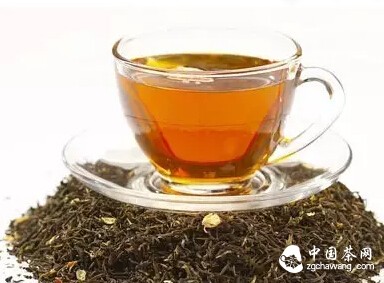
Broken Black Tea has a granular appearance, being tight, heavy, and solid. Its color is blackish-brown or an oily brown. The taste is strong, rich, brisk, and stimulating. The aroma is fresh and rich. The liquor is bright red, and the infused leaves are evenly red and bright. Broken Black Tea is an important export category for China. Excellent representatives include Yunnan's "Dianhong" and Guangdong's "Yinghong".
① Appearance: Broken Black Tea should have a uniform and consistent appearance. Broken tea particles should be tightly curled; leaf tea should have tight, straight strips; flake tea should be wrinkled and thick; dust tea should be sandy and granular. All should feel heavy and solid. The categories of broken, flake, leaf, and dust should be distinct. Broken tea should not contain flake or dust; flake tea should not contain dust; dust tea should not contain ash. The color should be blackish-brown or reddish-brown, avoiding grayish-dull or yellowish hues.
② Taste: Evaluating the taste of Broken Black Tea特别强调汤质 (emphasizes the liquor quality). Liquor quality refers to the degree of浓、强、鲜 (thickness/body, strength, and freshness/briskness). Thickness is the foundation of Broken Black Tea quality, while strength and freshness define its style. The liquor should possess thickness, strength, and freshness. If it is淡、钝、陈 (thin, dull, or stale), the quality is lower.
③ Aroma: High-grade Broken Black Tea has a particularly high aroma, featuring fruity, floral, and jasmine-like sweet notes. The aroma should still be perceptible when tasting. Yunnan's Broken Black Tea in China possesses such aroma.
④ Infused Leaves: The color of the infused leaves should be bright red, with dull and mixed colors being inferior. The tenderness should be soft and even, with coarse, hard, and mixed leaves being inferior. For Broken Black Tea, the emphasis is on the brightness of the red color, with adequate tenderness being acceptable.
⑤ Liquor Color: A bright, brilliant red is superior; a dark and turbid color is inferior. The depth and brightness of the liquor color reflect the quality of the tea liquor. The main components determining liquor color are theaflavins and thearubigins. Cream down ("leng hou hun" or cold-induced turbidity) is an indicator of good liquor quality.
International blenders习惯采用加牛乳审评的方法 (habitually use a milk-tasting method): Add fresh milk to each cup of tea liquor, approximately one-tenth the volume of the liquor. Adding too much is not conducive to discerning the tea taste. After adding milk, a粉红明亮或棕红明亮 (bright pinkish or bright brownish-red) liquor color is good; a淡黄微红或淡红 (light yellowish-red or light red) is acceptable;暗褐、淡灰、灰白 (dark brown, light gray, grayish-white) are not good. After adding milk, the taste should still allow a clear perception of tea flavor, which indicates good liquor thickness. Upon entering the mouth, an immediate,明显的刺激性 (obvious stimulating sensation) on both sides of the cheeks indicates good liquor strength. If only a pronounced milk taste is felt with weak tea flavor, the tea quality is poor.