New tea and old tea are relative terms. Conventionally, tea processed from the first few batches of fresh leaves picked from tea plants in spring of the current year is called new tea. However, sometimes any tea processed in the current year is considered new tea. Tea processed in the previous year or even older, even if well-preserved and in good condition, is collectively referred to as old tea. For most tea varieties, new tea is naturally considered better than old tea. "Drink tea when it's new, and wine when it's old" is a summary of people's long-term experience with tea drinking.
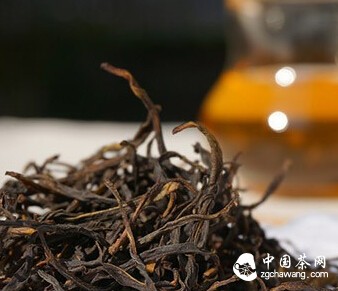
[Definition of New Tea and Old Tea]
New tea and old tea are relative terms. Conventionally, tea processed from the first few batches of fresh leaves picked from tea plants in spring of the current year is called new tea. However, sometimes any tea processed in the current year is considered new tea; while tea processed in the previous year or even older, even if well-preserved and in good condition, is collectively referred to as old tea.
For most tea varieties, new tea is naturally considered better than old tea. "Drink tea when it's new, and wine when it's old" is a summary of people's long-term experience with tea drinking.
[Formation of New Tea and Old Tea]
Song Dynasty poet Tang Geng mentioned in "Dou Cha Ji": "I hear that for tea, regardless of its form, freshness is valued; for water, regardless of its source, liveliness is valued."
The color, aroma, taste, and appearance of new tea give a fresh feeling, described as "bright, fresh, and fragrant."
Old tea from the previous year, whether in color or taste, always has a sense of "dull aroma and muted flavor." This is because during storage, under the influence of light, heat, moisture, and air, some acids, esters, alcohols, and vitamins in the tea slowly oxidize or condense, forming other compounds unrelated to tea quality. Meanwhile, the content of effective quality components desired by people relatively decreases, eventually causing the tea's color, aroma, taste, and appearance to develop in a direction unfavorable to its quality, resulting in stale odor, stale taste, and dull color.
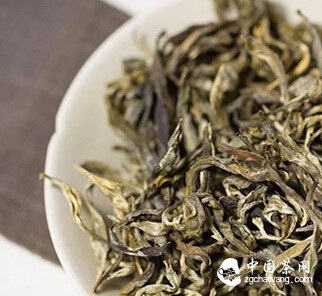
[Taste of New Tea and Old Tea]
However, not all teas are better when new. Some tea varieties actually improve when stored for a period. For example, some newly processed famous teas, such as West Lake Longjing, Qiqiang, Dongting Biluochun, Mogan Huangya, Guzhu Zisun, etc., if stored in a lime jar for 1-2 months, will still have clear and bright soup color, fresh and mellow taste, and green, moist, and vibrant leaves. Moreover, unstored tea may have a slight grassy smell, while short-term stored tea has a pure and clean fragrance.
Another example is Wuyi Rock Tea, abundant in Fujian; tea from the previous year often has a more intense aroma and mellower taste. Teas like Hunan's Dark Tea, Hubei's Brick Tea, Guangxi's Liupao Tea, Yunnan's Pu'er Tea, etc., not only do not deteriorate if stored properly but can even improve in quality. This is because during storage, these teas develop two main scents: one is the aged aroma formed during slow aging, and the other is a moldy aroma produced by a small amount of霉菌. The two scents blend harmoniously, resulting in a new aroma welcomed by people.
[Identifying New Tea and Old Tea]
1. Color: During storage, due to the action of oxygen and light in the air, some pigment substances that constitute the tea's color slowly decompose automatically. For example, the decomposition of chlorophyll in green tea causes the color to gradually change from the vibrant green of new tea to a dull, yellowish-green. The oxidation of ascorbic acid (vitamin C), which is relatively abundant in green tea, produces theaflavins, turning the tea soup yellowish-brown and unclear. For black tea, the oxidation, decomposition, or polymerization of theaflavins, which greatly affect black tea quality, along with the automatic oxidation of tea polyphenols, causes black tea to change from the dark, glossy color of new tea to a grayish-brown.
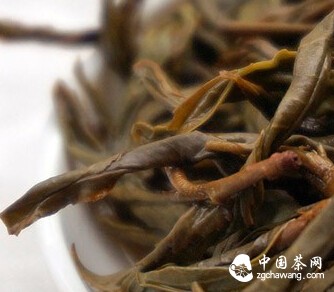
2. Taste: In old tea, due to the oxidation of ester substances producing a volatile aldehyde or water-insoluble condensate, the water-soluble effective components decrease, making the tea taste change from mellow to bland. Simultaneously, the oxidation, deamination, and decarboxylation of amino acids in the tea weaken the fresh, brisk taste, making it "sluggish."
3. Aroma: In old tea, due to the oxidation, condensation, and slow volatilization of aromatic substances, the tea's fragrance changes from clear and fragrant to low and dull.
The above differences apply to most tea varieties. Moreover, if storage conditions are excellent, these differences become relatively smaller. As for some teas whose quality does not decrease after storage, that is another matter.
Editor: Xiaogiao from Tea Bubble Network