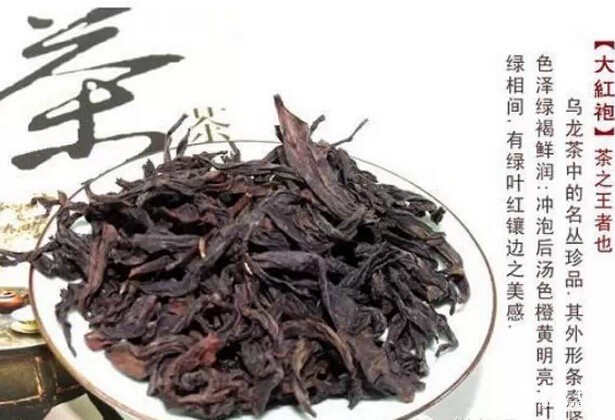
For beginners of Wuyi Rock Tea, how to accurately describe the characteristics of Rock Tea? What aspects should one start with to appreciate Rock Tea?
1. Five Indicators for Describing Rock Tea
To study a tea, one should start from five aspects: its appearance, aroma, liquor color, taste, and infused leaves. Wuyi Rock Tea is no exception.
To precisely grasp the quality characteristics of a tea, one must remember the professional descriptive vocabulary related to this tea. The following are the five professional descriptions for Wuyi Rock Tea:
Appearance: Curved strip shape, dark brown in color, sometimes with hints of ink-green, sandy-green, bluish-brown, or precious color; the strips are tightly rolled, finely tight, or robustly tight.
Aroma: Floral and fruity aroma type, which can be sharp, strong, and long-lasting, or clear, delicate, and far-reaching; aromas may resemble peach, orchid, osmanthus, milky notes, etc.
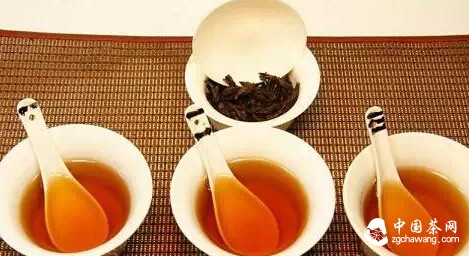
Liquor Color: Orange-yellow to golden-yellow, clear and bright.
Taste: Mellow, smooth, rich, and sweet with a refreshing finish, carrying the distinctive "rock rhyme" (Yan Yun).
Infused Leaves: Soft and bright, showing green leaves with red edges ("green leaves with red镶边"), or red spots along the leaf margins, or a toad-skin-like appearance.
2. Three Major Characteristics of Rock Tea Appreciation
Appreciating Wuyi Rock Tea emphasizes "rock bone and floral fragrance" (Yan Gu Hua Xiang). Many beginners feel they can't grasp the essentials. Actually, by understanding the three major characteristics of Wuyi Rock Tea, one can gradually gain further insight into its appreciation.
Cultivar Characteristic: The common characteristics possessed by a specific cultivar when processed correctly according to oolong tea techniques, regardless of the specific growing location. Rock tea with pronounced cultivar characteristics indicates a certain level of processing skill. Cultivar characteristics should be common traits, such as the "cinnamon bark aroma" and "spicy sensation" of Rougui.
Processing Characteristic: Features formed due to the processing techniques, including those resulting from mishandling in certain processing stages. For example, the intensity of roast aroma and floral/fruity aroma, specific aroma types, and potential flaws like green astringency, over-fermented flavor (similar to black tea), stuffiness (from not drying promptly after rolling or prolonged initial baking), smoky taste, grassy taste (insufficient fermentation or fixation), sour/rancid taste, high-fire taste, over-fired taste, burnt taste (from pan-frying or baking), etc.
Environmental Characteristic (Rock Rhyme / Yan Yun): Refers to the aroma and taste of tea formed by fine oolong tea cultivars grown within the Wuyi Danxia landform and processed using traditional Wuyi Rock Tea cultivation and production techniques. "Rock Rhyme" is the unique quality characteristic of Wuyi Rock Tea. The presence of "rock rhyme" depends on the tea tree's growing environment, while its strength is influenced by the tea cultivar, cultivation management, and processing techniques. Refined roasting is an important process for enhancing the rock rhyme.
3. Five Key Points for Brewing Rock Tea
Wuyi Rock Tea has numerous varieties and rich connotations. Terms like "rock bone," "throat feeling," and "cup-bottom fragrance" can be dazzling, making many feel they "don't understand how to drink Rock Tea."
In essence, Rock Tea is still tea. Palatability is important—brew it in the way that tastes best. The following summarizes five conditions for brewing good Rock Tea.
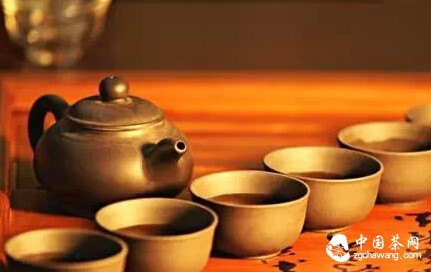
Prepare Utensils: Mineral water or purified water meeting tasting requirements, a complete set of oolong tea brewing utensils: tea tray, lidded bowl or purple clay pot (preferably 100~150ml), fairness cup, several small cups, a kettle or induction cooker for boiling water, etc.
Tea Quantity: About 1/2 the volume of the brewing vessel. Adjust according to personal preference for strength: less for those preferring lighter tea (or first-time drinkers), about 1/4~1/2 of the vessel's volume (5~7g tea per 100ml); more for those preferring stronger tea, about 1/2~3/4 of the vessel's volume (10~15g tea per 100ml).
Water Temperature: Use freshly boiled water. The optimal temperature is above 95°C.
Steeping Time: Steep for 10~20 seconds for the first 1 to 3 infusions. For each subsequent infusion, increase the steeping time by 30%~50%. The adjustment principle is to achieve a basically consistent liquor color for the first 3~5 infusions, allowing for 7~10+ infusions in total.
Adjusting Strength: It's best to adjust using the tea quantity. Steeping time can also be used for adjustment. If the tea becomes too strong due to over-steeping, it can be diluted directly with hot water before drinking. The number of infusions is related to the steeping time; longer steeping times generally result in fewer total infusions.