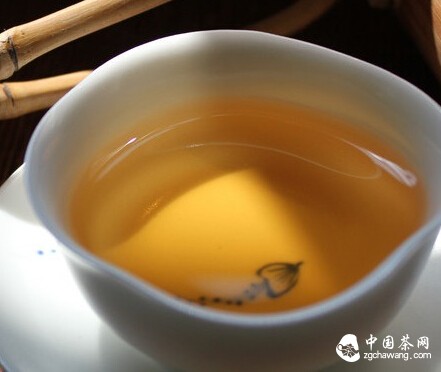
Tea soup becomes turbid after cooling. Why? Some tea soups even taste sour after cooling. Why?
Both questions arise after the tea soup cools.
Cooling Turbidity
First, the color of the tea soup, whether raw or ripe tea, is primarily determined by the theaflavins and thearubigins, as well as theabrownins in the tea leaves. As the names suggest, the color of the tea soup is determined by the color of these tea pigments. For both raw and ripe tea, a moderate tea color with uniform brightness is considered superior. When a tea has an appropriate content of theaflavins and thearubigins, the tea color naturally appears moderately deep and translucent. Excessive theabrownins result in an inappropriate depth of color. Only good tea can achieve a good soup color. From this explanation, it is not difficult to see that good tea essentially contains theaflavins and thearubigins.
Tea leaves also contain caffeine, which affects the taste and flavor of the tea soup. In a tea that can be considered relatively good, the complex formed by thearubigins, theaflavins, and caffeine in the tea soup will dissolve in water or precipitate as the temperature changes. Immediately after brewing and pouring, the tea soup is clear. When the tea soup cools and becomes turbid, it is because the complex does not dissolve and precipitates when the water temperature falls below 40°C.
This is why it is said that turbidity after cooling is a sign of good tea.
Cooling Sourness
In terms of the normal taste of Pu-erh tea, sourness and rancidity have always been undesirable descriptors. There are two situations regarding sourness here:
Sourness in ripe tea and cooling sourness in raw tea. Ripe tea undergoes fermentation. Excessively high temperatures during fermentation can cause undesirable transformations of tea polyphenols and enzymes, producing acidic substances. This indicates a problem during fermentation.
As for cooling sourness in raw tea, what is the reason? Raw tea does not undergo fermentation, yet it develops a sour taste. This is because when the fresh leaves are picked, many tea farmers do not handle the initial harvest properly. Typically, farmers use bamboo baskets or cotton/linen bags to carry the fresh leaves while picking, which allows the leaves to breathe.
However, some farmers use woven bags. After picking, the fresh leaves are pressed and stored for a long time, making it difficult for them to breathe. Combined with high temperature and the release of their own moisture, the fresh leaves undergo a degree of slight fermentation.
Alternatively, after the tea is made into dry leaves, when the dry leaves still contain more than 4%–6% moisture, many tea farmers also use woven bags to store the tea. The lack of airflow, coupled with moisture regain, can easily lead to slight fermentation. These are all possible reasons for the development of cooling sourness in raw tea.
Editor's tip: The transformation of tea is essentially the transformation of polyphenols and enzymes. Normal transformation results in the tea's normal taste, flavor, and aroma. Abnormal transformation leads to some strange or off-flavors upon drinking. No matter how good the raw material is, every step after the fresh leaves are picked has an important impact on the quality of the final tea product.
To explain exactly which substances and how they transform falls within the realm of chemistry. In reality, tea drinkers need to understand which flavors are undesirable and which are abnormal or off-flavors.