The origins of Chinese tea drinking are widely debated: some trace it back to the ancient legendary figure Shennong, others to the Zhou dynasty, and there are also theories suggesting it began in the Qin, Han, or Three Kingdoms periods. A primary reason for these differing views is that before the Tang Dynasty, the standard character for 'tea' was '荼'. Lu Yu, the author of The Classic of Tea in the Tang Dynasty, reduced one stroke from '荼' to write it as '茶', leading some to believe tea originated in the Tang era. However, this was merely a simplification of the character, as '茶' was already in use during the Han Dynasty. Lu Yu primarily summarized the history and culture of tea drinking inherited from his predecessors; the history of tea itself predates the Tang Dynasty by many years.
Written records indicate that our ancestors began cultivating and utilizing the tea plant over 3,000 years ago.
The question of the origin of the tea plant in China has long been contentious. With advances in research techniques and new discoveries, a consensus has gradually emerged: China is the place of origin of the tea plant, with the mountainous regions of Southwest China, including Yunnan, Guizhou, and Sichuan, confirmed as the center of its origin. Due to geological changes and human cultivation, the tea plant spread from there across the country and gradually throughout the world.
Appreciation
As tea gradually became an indispensable companion in people's lives, the practice of tea drinking evolved to a higher level, forming tea culture. In China, only the tea plant is so profoundly linked with the elusive concept of the 'Dao' (Way), permeated with an aura of peace, tranquility, and emptiness. The term 'Tea Dao' first appeared in the Tang Dynasty text 'Fengshi Wenjian Ji': "...the Tea Dao flourished greatly. All nobles and officials drank it." The founder of 'Tea Dao' is precisely Lu Yu, author of The Classic of Tea, later revered as the Sage of Tea. Simultaneously, the Tea Dao was transmitted to Japan, where tea drinking became a nationwide practice. Within the spiritual pursuits of practitioners, the Tea Dao was further refined into a Zen art embodying 'harmony, respect, purity, and tranquility'—where Zen and tea share the same essence, and the Dao is practiced through tea.
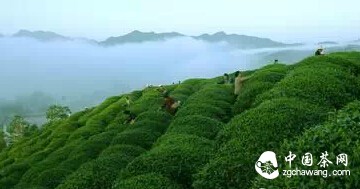
The tea plant grows on sacred mountains, nourished by rain, dew, sunlight, and moonlight, its pure and harmonious essence passed down through generations, earning it the name 'immortal sprout beyond the mundane world.' Once a tea leaf is plucked, it must undergo processes such as rolling, firing, and pressing before it becomes tea ready for brewing. In this sense, the life of tea is akin to undergoing a phoenix涅槃 (rebirth from ashes), gaining new life amidst its subtle, fresh fragrance.
Superior tea leaves possess a mellow taste and elegant aroma, yet they must grow in harsh conditions. The Classic of Tea records: 'The best grows on rocky, weathered soil; the medium grows on gravelly soil; the inferior grows on yellow earth.' One who savors tea over time naturally learns to appreciate its rich nuances, from the leaf's quality to the water temperature, water quality, and steeping time—all crucial to the tea's final aroma. Generally, if brewed with lukewarm water, the leaves merely float stiffly, releasing no fragrant scent. However, tea brewed with boiling water, tumbling and sinking repeatedly in the infusion, unfurls continuously, eventually blooming like clouds and mist. It releases waves of delicate fragrance—sometimes as fresh and moist as spring rain, sometimes as exuberant as summer, sometimes as mellow as autumn wind, sometimes as penetratingly cool as winter snow. The charm of tea through the four seasons is forever回味无穷 (endlessly evocative)!