Compression involves steaming processed tea until soft and then pressing it into block shapes. Tea produced this way is called compressed tea. Besides facilitating transportation and storage, the processes of steaming, pressing, and aging impart another mature and robust flavor to the tea. Steaming reheats and rehydrates the tea, increasing its viscosity; pressing uses the tea leaves' own gums to tightly bond the leaves together, stabilizing the rate of moisture absorption and aging during subsequent storage; aging allows for the continued degradation and maturation of some components (Figure 1-50), making the tea quality more mellow. The aging period of compressed tea is a very important factor in determining its market price, and of course, aging conditions are also crucial.
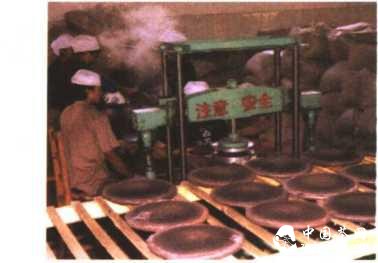
Compressed Tea Factory
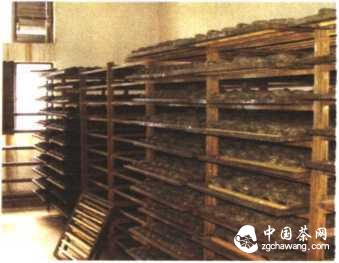
Aging is a very important process for compressed tea.
Compressed tea comes in various shapes: round cakes, square bricks, bowl shapes, balls, columns... The degree of compactness also varies. Some compressed teas can be broken apart by hand, while others require tools. The degree of compactness also affects the aging outcome. Highly compacted teas undergo slower post-oxidation, resulting in a sturdy tea character. Less compacted teas undergo faster post-oxidation, resulting in a bolder tea character.