
Black tea belongs to the category of fermented tea. It is made from one bud and two or three leaves of the tea plant, refined through typical processes including withering, rolling (cutting), fermentation, and drying. It is named 'black tea' because the color of its dried leaves and the brewed tea soup is predominantly red. China has many varieties of black tea with widespread production areas, including China's unique Gongfu black tea and Souchong black tea, as well as black broken tea similar to that from India and Sri Lanka. In English, it is called Black tea. During processing, a chemical reaction centered on the enzymatic oxidation of tea polyphenols occurs, significantly changing the chemical composition of the fresh leaves. Tea polyphenols are reduced by over 90%, producing new components like theaflavins and thearubigins. In disease prevention: black tea has strong antibacterial properties; gargling with black tea can prevent colds caused by filterable viruses, prevent tooth decay and food poisoning, and lower blood sugar and hypertension. Aroma substances increase significantly compared to fresh leaves. Therefore, black tea is characterized by black leaves, red soup, reddish leaves, and a sweet, mellow flavor. Among Chinese black tea varieties, Qimen Black Tea is the most famous. As China's second largest tea category, its export volume accounts for about 50% of China's total tea production, with customers in over 60 countries and regions. The largest sales volumes are to Egypt, Sudan, Lebanon, Syria, Iraq, Pakistan, the United Kingdom and Ireland, Canada, Chile, Germany, the Netherlands, and Eastern European countries.
When black tea was first created, it was called 'black tea.' During processing, a chemical reaction centered on the enzymatic oxidation of tea polyphenols occurs, significantly altering the chemical composition of the fresh leaves. Tea polyphenols are reduced by over 90%, while new components like theaflavins and thearubigins are produced. Aroma substances also increase noticeably compared to fresh leaves. Therefore, black tea is characterized by black leaves, red soup, reddish leaves, and a sweet, mellow flavor. Among Chinese black tea varieties, Qimen Black Tea is the most famous. As China's second largest tea category, its export volume accounts for about 50% of China's total tea production, with customers in over 60 countries and regions. The largest sales volumes are to Egypt, Sudan, Lebanon, Syria, Iraq, Pakistan, the United Kingdom and Ireland, Canada, Chile, Germany, the Netherlands, and Eastern European countries.
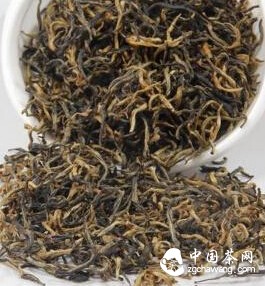
Effects of black tea: Black tea can help with gastrointestinal digestion, promote appetite, act as a diuretic to eliminate edema, and strengthen heart function.
In disease prevention: Black tea has strong antibacterial properties; gargling with black tea can prevent colds caused by filterable viruses, prevent tooth decay and food poisoning, and lower blood sugar and hypertension.
The American Heart Association once concluded that black tea is 'one of the beverages rich in flavonoids that eliminate free radicals and have antioxidant effects, which can reduce the incidence of myocardial infarction.'