
Why does drinking Pu'er tea make you feel hungry?
Pu'er tea is known as the crown of weight-loss teas. Pu'er tea effectively stimulates your metabolism, helps digest greasy food, and accelerates fat decomposition, so you feel hungrier than usual after drinking it.
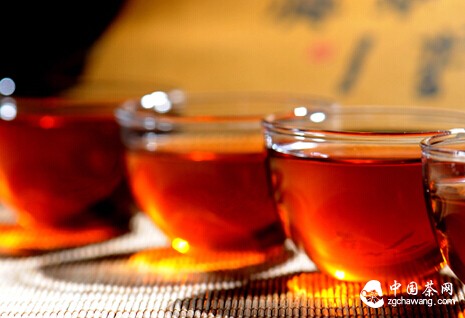
Many friends often ask about Pu'er tea for weight loss, such as how to drink it for slimming effects and how to choose the right Pu'er tea. In response, Mingyu Tea Gift Editor has collected some knowledge related to Pu'er tea for weight loss, hoping everyone can achieve their dream of beauty and slimness! Pu'er tea has long been hailed as the crown of weight-loss teas. One cup of Pu'er tea after each meal can effectively stimulate your metabolism and accelerate fat decomposition.

I. Key Points for Weight Loss with Pu'er Tea:
1. Find a method that suits you, lose weight healthily, and slim down gradually. Weight loss with Pu'er tea requires persistence; results are not seen overnight, but moderate tea drinking is definitely beneficial to health without harm, so I recommend it. After all, beauty always comes with health as the prerequisite.
2. During weight loss, while drinking tea, you should also practice corresponding "dinner control." You can eat normally during the day, but dinner must be controlled. When maintaining your figure, you can gradually resume your normal diet; just insist on drinking tea to help you easily maintain your body shape.
3. It is best to add moderate exercise, as life lies in movement. If possible, try to walk briskly for at least half an hour every day—this will yield better results.
In the initial stage of drinking tea, you may feel very hungry. When hungry, eat some fruit and try to avoid snacks. Gradually, as your gastrointestinal tract adapts to the tea, you will no longer feel hungry after drinking.
Why does drinking Pu'er tea make you hungry? This is because different food components have different gastric emptying times: carbohydrates are the fastest—1 hour; proteins take 2 hours; fats are the slowest—3-4 hours. This means that if you consume oils and fats, they will keep you full longer. Pu'er tea accelerates gastric emptying, especially raw tea, allowing fatty substances less time to be absorbed before reaching the colon, which mainly absorbs water and some vitamin K in preparation for excretion into the rectum. The weight-loss mechanism of Pu'er tea is comprehensive, and its effect on fatty foods is one aspect. Feeling hungry after drinking Pu'er tea indicates that your body is already consuming internal fat. At this point, you should still eat three meals, but control your portions. If you eat a huge meal again, no matter how much fat is broken down, it will all be replenished.

To summarize the above functions, Pu'er tea accelerates the metabolic cycle. At this time, if you reduce your food intake or maintain your usual amount without overeating, you will, with the help of tea, unknowingly lose weight—slowly but absolutely safe and effective. If appropriately combined with diet and exercise to help consume excess body fat, your beauty goal is not far away!
II. Methods for Boiling Pu'er Tea:
1. Break off a small piece of Pu'er tea (thickness of the tea cake, about the size of half a piece of gum), add 800-1000ml of cold water, bring to a boil over high heat, then simmer on low heat for 5 minutes, and pour out the tea liquor.
2. Add another 800-1000ml of cold water, bring to a boil over high heat, then simmer on low heat for 10 minutes, and pour out the second batch of tea liquor.
3. Mix the two batches of tea liquor together and discard the tea leaves. When ready to drink, pour some out and heat it in a container or microwave. Be careful not to dilute an already weak tea liquor by adding boiling water, as this will weaken the tea and reduce its effect. Of course, if your tea liquor is very strong, it is acceptable to add some hot water.
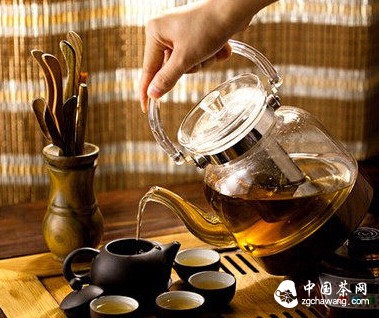
III. Methods of Drinking Tea:
1. For those who want to maintain their figure and weight: Brew Pu'er tea daily to replace all other beverages, using tea instead of soup or water, and avoid other drinks. Eat all other meals normally.
2. For those who want to lose weight: In addition to the above, brew a cup and let it sit overnight. Drink it on an empty stomach in the early morning. This method can quickly reduce weight.
3. For social engagements or other meals where you don't want to absorb too many calories, drink Pu'er tea with your meal. If it's inconvenient to do so outside, drink it as soon as possible after the meal—preferably within two hours; the sooner, the more effective. If dining at a tea house, it is best to order Pu'er tea.
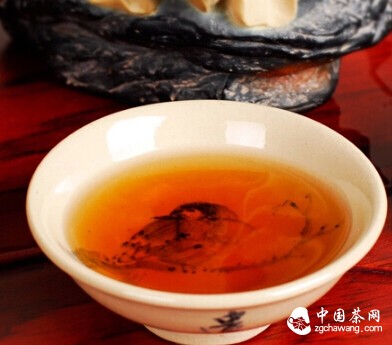
IV. Daily Methods of Drinking Pu'er Tea:
Morning: One cup on an empty stomach after waking up (about 500ml)
Note that the tea should be light; otherwise, drinking it on an empty stomach may cause dizziness. The tea should be warm. Those with a strong stomach can drink it at room temperature. (Do not drink raw tea on an empty stomach in the morning; only light ripe tea is acceptable.)
Effect: Moistens the intestines, promotes bowel movements, and boosts metabolism.
Noon: Half an hour after lunch (about 500ml)
The tea concentration should be moderate. Be sure to drink it hot, preferably sipping it slowly as you finish this cup.
Effect: Cuts through grease.
Evening: Half an hour after dinner (about 500ml)
Same as the noon cup—moderate concentration and hot.
Effect: Cuts through grease.
V. Pu'er Tea Weight-Loss Meals
Maintaining health and staying slim every day is not difficult. Besides a normal routine and moderate exercise, diet is also crucial. Take the very popular Pu'er tea as an example: using Pu'er tea weight-loss meals can help you achieve a well-proportioned figure.
For breakfast, choose one from sandwiches, steamed buns, bread, buns, or boiled eggs. Steep 10 grams of Pu'er tea in 250cc of hot water for 5 minutes, then add 500cc of fresh milk, and add sugar as needed according to personal preference.
For lunch, steep 37.5 grams of Pu'er tea in 1500cc of hot water. Drink 500cc before the meal, have a small normal meal (if not hungry, you can eat less), and drink 500cc after the meal. Drink the remaining 500cc when thirsty or hungry. For dinner, have a small normal meal, and after the meal, steep 20 grams of Pu'er tea in 500cc of hot water for consumption. It is best to avoid late-night snacks for optimal results.
Since noon is when the gastrointestinal tract absorbs nutrients most strongly, food consumed is fully absorbed. To lose weight, it is best to reduce lunch portions. If you feel hungry, you can drink Pu'er tea, which aids digestion and breaks down fat. However, drinking tea alone is not very effective for weight loss; combining it with regular exercise and a normal routine can help you achieve a balanced figure.
VI. Pu'er Tea Helps Reduce Waist Fat
Both Pu'er tea and oolong tea have functions that aid fat metabolism, especially Pu'er tea, which has a deeper connection to fat metabolism. According to research data, those who want to reduce waist fat are most suitable for drinking Pu'er tea. Due to its unique fermentation process, it can enhance the enzyme's ability to break down waist and abdominal fat.
Note: If using it for weight loss, the timing of drinking is crucial. Drinking it at the wrong time may not help you lose weight but could instead cause weight gain. To lose weight, remember to drink Pu'er tea half an hour after meals. This is because Pu'er tea can cut through grease from greasy meals and promptly eliminate excess body fat. On the other hand, drinking Pu'er tea half an hour before meals will have the opposite effect of promoting weight gain. At that time, Pu'er tea dissolves accumulated fat and clears the stomach and intestines, making you hungrier during the meal and more likely to become obese.
Of course, if you drink Pu'er tea at different times of the day, replacing all other beverages and using Pu'er tea as water, the weight-loss effect will be most pronounced. If you hope to achieve a flat belly just by drinking tea, Pu'er tea may be the only one that can help you.
VII. How to Choose the Right Pu'er Tea for Yourself?
For those prone to heatiness, constipation, or acne (deficient heat constitution), raw tea or lightly fermented Pu'er tea is suitable. If you don't like the bitterness and drink ripe tea, remember to add some white chrysanthemum or honey, or add some lotus leaf.
Raw tea, like green tea, is cold in nature and should not be consumed by those with cold stomachs or poor gastrointestinal health! Only ripe tea has the effect of nourishing and protecting the stomach.
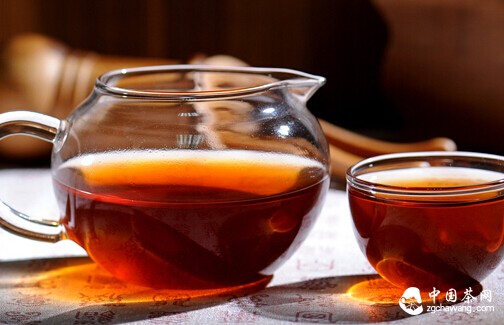
Speaking of weight-loss effects, Pu'er tea indeed has slimming properties. Whether it is effective varies from person to person. You should be rational about Pu'er tea's slimming effect; after all, Pu'er tea is not a weight-loss pill, and no one can guarantee that drinking Pu'er tea will make you lose a certain number of pounds! But it is undeniable that Pu'er tea does have weight-loss benefits, though the effects vary by individual. More importantly, losing weight with Pu'er tea is healthy—it will never make you sickly thin or turn you into Lin Daiyu! Pu'er tea will only eliminate excess body fat, not all fat. The weight-loss effect of Pu'er tea primarily comes from regulating the stomach and intestines, thereby enhancing the digestion and absorption of fat, and then consuming fat—commonly known as "scraping oil." However, for those who are not actually overweight but merely feel they are, or those who are "sturdy" rather than "puffy," the effect may be less pronounced! If you are the "puffy" type, the effect will be more obvious! Since abdominal obesity is usually caused by fat, which is a type of puffiness, the effect on reducing the belly is relatively noticeable. At the same time, drinking Pu'er tea requires long-term persistence; there will not be significant results in a short period, so don't easily assume it's ineffective and give up. To draw a less appropriate analogy, taking weight-loss pills and drinking Pu'er tea is like getting an IV drip versus taking traditional Chinese medicine: the IV drip works quickly but may not address the root cause and has side effects, while traditional Chinese medicine regulates your body slowly but can improve your constitution with few or no side effects.
Because Pu'er tea regulates gastrointestinal function, thin people can also drink Pu'er tea, and it may even improve their absorption and digestion, making them stronger! In summary, drinking Pu'er tea will make you healthier, provided you do it correctly over the long term.
VIII. Comparison of Weight-Loss Effects Between Ripe and Raw Pu'er Tea
To compare which has a better weight-loss effect, raw or ripe, we must first analyze the mechanism of Pu'er tea's weight-loss action. The weight-loss and lipid-lowering effects of Pu'er tea mainly come from two factors: first, the combined action of various effective components such as tea polyphenols, chlorophyll, and vitamin C; second, the combined action of various beneficial bacterial groups formed during the fermentation process (bacterial action can reduce the small intestine's absorption of triglycerides and sugar, and enhance the enzyme's ability to break down waist and abdominal fat).
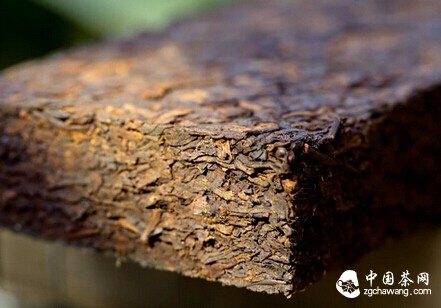
The weight-loss effect of raw tea in its early stage (produced for 1-2 years without significant fermentation transformation) comes from factor one. As it undergoes natural fermentation transformation during storage (this transformation occurs quickly in southern high-humidity environments; a cake stored naturally for one year shows noticeable changes), its weight-loss effect gradually involves both factors. Artificially fermented ripe Pu'er tea has its weight-loss and lipid-lowering effects contributed by both factors simultaneously.
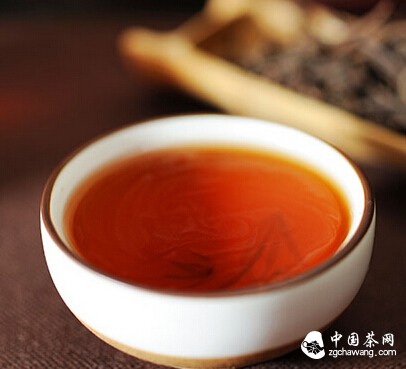
Therefore, overall, fermented Pu'er tea (whether artificially fermented ripe tea or naturally fermented raw tea) has a better weight-loss and lipid-lowering effect than newly produced, unfermented raw tea.
IX. Don't Blindly Believe in "Aged Pu'er Tea"
Tea experts warn that blindly trusting in "aged" tea involves many misconceptions. With the increasing popularity of Pu'er tea in recent years, the word "aged" has multiplied its value many times over. But how old exactly is "aged Pu'er tea"? Even experts find it hard to define. Currently, retail stores can only rely on experience to judge. Because most consumers lack understanding of Pu'er tea, unscrupulous merchants take advantage, passing off one- or two-year-old tea as old aged tea. In fact, truly "10-year-aged" tea is extremely rare on the market! Pu'er tea is more resistant to storage than other teas, but only under certain conditions. It does not mean that the longer it is stored in any environment, the better it becomes or the more it appreciates. If stored improperly, such as becoming moldy, it completely loses its drinking and collectible value. Consumers should not blindly believe in "aged tea."
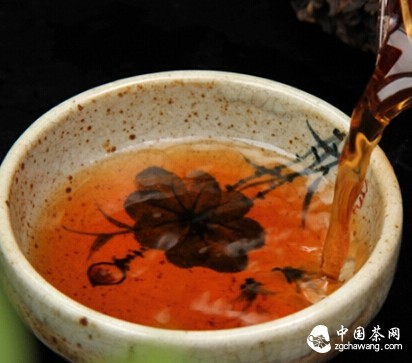
Some also say that aged Pu'er tea has better weight-loss effects. However, according to the latest research results from Professor Shao Wanfang of Yunnan Agricultural University and Senior Agronomist Yang Liuxia of Simao Tea Plant Improvement Station, the quality characteristics of Pu'er tea processed using the "post-fermentation pile" (artificial aging) method (ripe tea) have no significant difference from "aged Pu'er tea." Therefore, there is no need to deliberately pursue "aged Pu'er."
Those with some understanding of Pu'er tea know that in the past, ripe tea was also raw tea that gradually turned ripe through long-term aging. Modern ripe tea only accelerates this process through artificial fermentation. Due to different market demands and consumer levels, the grades and types of Pu'er tea products on the market are diverse, with significant price differences. You should choose based on your own consumption capacity and not blindly follow trends. Moreover, many Pu'er teas are counterfeit and artificially aged. Common counterfeiting methods include using wet storage to accelerate the aging of raw tea, creating so-called "old aged tea," or aging the packaging to give a worn-out look. Given the great difficulty for ordinary consumers to identify the authenticity and quality of aged Pu'er tea, it is recommended that beginners do not buy old tea to avoid being deceived. Additionally, it is advised to buy small quantities and taste more before purchasing, as Pu'er tea from different manufacturers varies in flavor. Choose one that suits your taste, and after buying, consult knowledgeable people or invite them to taste together.
X. Methods of Drinking Pu'er Tea
How to brew a good pot of Yunnan Pu'er tea? It is both a skill and a technique, accumulated through the drinker's experience. Through proper brewing, the tea nature, beauty, and customs of Pu'er tea are fully displayed, allowing the drinker to achieve the purpose of cultivating sentiment, physical and mental pleasure, and health preservation and longevity. Brewing Pu'er tea is also an art—it is full of variation, personality, and creativity, not a fixed "formula." This article discusses the "tips" to pay attention to when brewing Pu'er tea, presenting my views and methods for readers' reference.
XI. Preparations Before Drinking Tea
Choosing Water: The relationship between water and tea has many insightful views from ancient people. For example, "Without water, tea cannot be discussed" and "Tea nature must emerge from water; with eighty percent tea and perfect water, the tea becomes perfect; with eighty percent water and perfect tea, the tea is only eighty percent."
Yunnan has abundant water resources for tea, with many mountain springs. There are also many good mountain springs near Kunming, such as "Miaogao Temple" in the western suburbs, "Western Hills," "Baohong Temple" in Yiliang, "Xilongtang" in Chengjiang, etc., all providing good water for tea. Mountain spring water exhibits different characteristics for tea: some enhance aroma, some enhance richness, some sweetness, and some activity; some combine multiple features. Ideal water is generally sweet, clean, fresh, clear, does not produce astringency when brewing tea, and maintains stable tea soup color. Nowadays, many tea enthusiasts or lovers in Yunnan go outdoors to fetch water, using living water to brew tea, achieving the perfect combination of fine tea and beautiful water. Fresh mountain spring water positively enhances the activity and aroma of tea leaves, but for aged Pu'er tea, using mountain spring water that has been "nurtured" in a ceramic jar before brewing can better highlight the "aged charm" of Pu'er tea.
XII. Choosing Utensils:
1. Teapot: The preferred brewing vessel for Pu'er tea is the Yixing purple clay teapot. The good breathability and adsorption of purple clay pots help improve the richness and brightness of Pu'er tea soup. Ideally, choose pots made of red clay mixed with sand or purple clay mixed with sand to enhance breathability.
The teapot volume should be relatively spacious to facilitate the expansion of tea leaves and the extraction of flavor. This is the opposite of oolong tea, where "small pots are considered better." For two or three people drinking Pu'er tea together, a 250ml purple clay pot is generally used; for more people, a 300-400ml teapot can be used. A newly purchased pot should be boiled with tea water to remove the "kiln smell" and earthy taste. After a period of use (commonly known as "nurturing the pot"), it can be used to brew good tea, achieving the effect of "ripe pot and fragrant tea." Additionally, porcelain pots or porcelain gaiwan sets can also be used to brew Pu'er tea.
2. Water Heater: Nowadays, "instant boiling water dispensers" are commonly used for convenience. When brewing some higher-quality Pu'er teas, it is better to use a copper pot or clay pot to boil water over an open flame to maintain the activity of the spring water and increase water temperature.
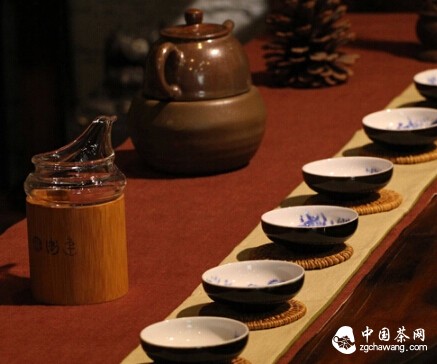
3. Tea Cups: White porcelain or celadon cups are generally preferred for observing the beautiful tea soup color of Pu'er tea. Cups should be larger than those used for gongfu tea (oolong tea). Using thick-walled, large cups to drink tea in big mouthfuls suits the rich and sweet characteristics of Pu'er tea and is closer to Yunnan's rustic tea-drinking customs.
4. Fairness Pitcher: A transparent glass pitcher of good quality is preferred. Pu'er tea is famous for its crystal-clear, bright, and multicolored tea soup. People often compare the tea soup color of Yunnan Pu'er tea to "aged red wine," "amber," "garnet red," "ruby red," etc. Observing the color has become a unique feature of Pu'er tea art. The beauty and quality of Pu'er tea soup vary depending on the tea's origin, production process, storage environment, and aging years. Observing the color is also an important aspect of appreciating the quality of the soup.
5. Tea Pick: Shaped like a screwdriver, made of hardwood or hard bamboo, used to break apart compressed tea. By peeling the tea layer by layer, you can keep the tea strips intact, reduce the amount of broken tea, and ensure a proper mix of surface tea and inner tea, accurately reflecting the quality of compressed tea. Preparing Tea: For Pu'er compressed tea, the tea nature varies between the outer and inner layers. Even if a compressed tea uses the same material for both layers, the outer and inner tea will differ as storage time increases. Therefore, before drinking, the compressed tea should be broken apart and placed in a clay pot to allow it to air out, and to mix the surface tea and inner tea evenly. For tightly sealed small packets of loose tea, it is also advisable to let them air out before drinking. After such treatment, the quality is better than breaking apart or opening the package and brewing immediately. This is somewhat similar to tasting red wine—generally, you should avoid opening and drinking immediately; you should let it sit for a while after opening to "activate" the wine's character.
XIII. Familiarizing Yourself with the Tea's Character
Yunnan Pu'er tea comes in loose and compressed forms, new and old, green tea and ripe tea; fermentation levels include light, moderate, and heavy, each with different characteristics. Every Pu'er tea has its unique personality. Only by becoming familiar with the character of the tea you are brewing and applying skillful techniques can you bring out the beauty of its individuality. The tea's character determines the choice of teaware, the amount of tea leaves, water temperature, brewing rhythm, and even the type of water used. There are many subtle relationships between tea character and brewing methods. For Yunnan Pu'er tea brewing techniques, rough-aged tea differs from tender young tea, green cakes differ from ripe cakes, aged tea differs from new tea, and light-fermented tea differs from heavier-fermented tea. "Bitter-bottom" tea (with a stronger bitterness and astringency) differs from "sweet-bottom" tea. Therefore, a certain Pu'er tea should be test-brewed to familiarize yourself with its character and determine the key brewing points.
In practice, we often experience that some Pu'er teas require a longer brewing time to release flavor, while others can produce a strong soup quickly. This is due to the production process and raw materials of Pu'er tea. Whether traditional green tea or artificially fermented tea, the base material is Yunnan sun-dried green tea. Traditional sun-dried green tea is mostly hand-rolled by tea farmers, with shorter rolling time and lighter rolling intensity compared to black tea, green tea, and oolong tea, so the extraction of tea flavor is relatively slower. Such Pu'er teas always give a feeling of "lasting flavor and lingering charm" during brewing. Of course, there are also sun-dried green teas made using mechanical rolling. These teas extract flavor relatively faster. Additionally, most bulk Pu'er compressed teas, besides using a small amount of tender surface tea, mainly use medium-grade tea, and even some coarse and old leaves. These mature and coarse leaves play an important role in forming the special style of Pu'er tea. The flavor extraction of these leaves is also slower than that of tender tea leaves, so rapid brewing is not suitable. From the perspective of the impact of fermentation degree on the extraction speed of Pu'er tea flavor, lightly or moderately fermented Pu'er tea extracts flavor slower than heavily or over-fermented tea.
XIV. Brewing Methods
1. Wide-Pot Tea-Leaf-Retaining Steeping Method: For higher-quality Pu'er tea, the "wide-pot tea-leaf-retaining steeping method" is used. "Retaining leaves" means that after "rinsing the tea," some of the brewed tea soup is left in the pot from start to finish, rather than pouring it all out. Generally, the practice is "retain four parts, pour out six" or "retain half, pour out half." After each pour, fill the pot with boiling water again until the tea flavor fades.
"Steeping" refers to a relatively longer time, focusing on a "slow" rhythm. "Retaining leaves" and "steeping" reflect the tea nature of Yunnan Pu'er tea. This method regulates the tea soup flavor from start to finish and allows sufficient time and space for the flavor to develop, achieving the optimal state of "ripe tea and warm fragrance."
2. Medium-Pot "Gongfu Tea" Brewing Method: This involves brewing and drinking immediately, pouring out all the tea each time without retaining leaves. The teapot volume depends on the number of drinkers. This method can also brew Yunnan Pu'er tea well. For some relatively new Pu'er teas or teas with a slight off-flavor, using a medium pot for immediate brewing can remove the new or off-flavor in the first few infusions and improve the purity of later infusions. For some heavy-fermented teas, a fast pour-out method can prevent the tea soup from turning dark. For teas with strong bitterness and astringency, a medium pot with fast brewing can reduce the bitterness. For some Pu'er teas made with mechanical rolling (sun-dried green), which extract flavor quickly, this method is also suitable. In practice, some Pu'er teas that have been stored improperly but have good leaf quality—either slightly damp or with off-flavors—may have an impure tea flavor when first brewed but still have good sweetness and thickness. For such teas, the wide-pot steeping method is used, but the first two infusions are not retained; from the third infusion onward, the tea leaves are retained and steeped.
3. Gaiwan Brewing Method: This method helps increase the brewing temperature and enhance the tea's aroma, making it suitable for brewing coarse Pu'er teas. However, for some tender teas, the brewer must be skillful to avoid "steamed aroma" or scalding the tea leaves. The gaiwan method somewhat reduces the positive impact of the vessel on the richness of the tea soup, making it more suitable for tea evaluation.
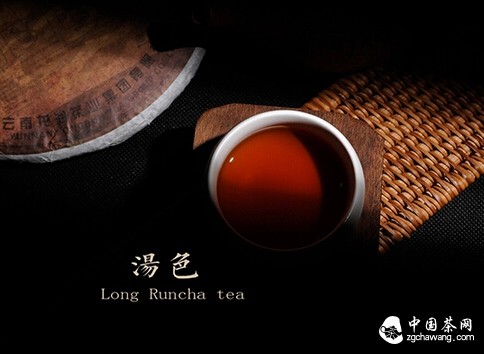
XV. Issues to Note During Brewing
1. Tea Amount: When brewing Pu'er tea, the amount of tea leaves is closely related to drinking habits, brewing methods, and the tea's character, making it highly variable. In terms of drinking habits, tea lovers in Hong Kong, Taiwan, Fujian, and Guangdong prefer strong tea. Yunnan locals also drink strong tea, but with slightly less tea than the former. People in Jiangsu, Zhejiang, and the north prefer lighter tea. From the perspective of Yunnan drinking habits, when using the tea-leaf-retaining steeping method with normal-quality tea, the ratio of tea to water is generally 1:40 or 1:45. Consumers from other regions can use this as a reference and adjust the amount of tea to control the soup's strength. If using the "gongfu" brewing method, the tea amount can be increased appropriately, and the soup's strength can be adjusted by controlling the brewing rhythm. In terms of tea character, the amount of tea also varies. For example, ripe tea and aged tea can be increased, while raw tea and new tea should be reduced, etc. Avoid being rigid.
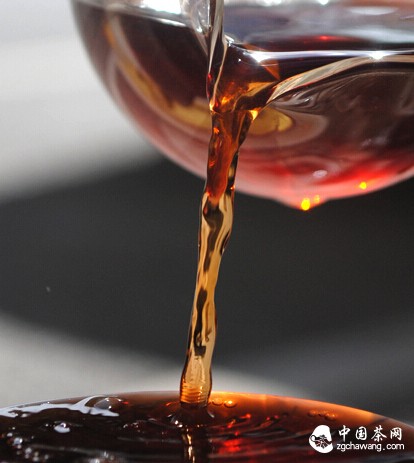
2. Water Temperature: Mastering water temperature plays an important role in expressing tea character. High temperatures help release aroma and quickly extract flavor. However, high temperatures can also bring out bitterness and astringency and may scald some high-grade teas. The appropriate water temperature should be determined based on the tea. For example, teas made from coarser materials, such as brick tea, compressed tea, and aged tea, are suitable for boiling water; high-grade tender bud teas (such as newer palace-grade ripe tea) and high-grade green cakes are suitable for slightly lower temperatures. Avoid high temperatures that can scald tender tea leaves and turn them into "vegetable tea." Most areas in Yunnan are plateaus, where boiling water temperatures are lower than in coastal and plain areas. For example, the boiling water temperature in Kunming is around 94°C, suitable for brewing most ripe teas directly. For green teas, except for some high-grade teas, most can also be brewed directly with boiling water. When brewing some high-grade new green teas, besides directly lowering the temperature, you can also reduce the temperature by not covering the pot or pouring water from a height to avoid scalding the tea leaves and producing a "steamed aroma."
3. Brewing Time: Controlling the length of brewing time aims to fully and accurately display the aroma and flavor of the tea leaves. As mentioned earlier, the special production process and raw material selection of Yunnan Pu'er tea determine the brewing methods and time. In terms of rules: aged tea and coarse tea require longer brewing times, while new tea and tender tea require shorter times; hand-rolled tea requires longer times, while machine-rolled tea requires shorter times; compressed tea requires longer times, while loose tea requires shorter times. Specific control should be based on the tea's characteristics. For example, when using a 350ml purple clay pot with the "wide-pot tea-leaf-retaining steeping method" to brew a medium-grade ripe seven-cake tea "7572" (produced in Menghai) from the 1980s, use 6-8 grams of tea. After "rinsing the tea," pour in boiling water, steep for 5 minutes, then pour out half for drinking. Using the same method to brew a medium-grade green cake from the same period, use 5-7 grams of tea, rinse, pour in boiling water, and steep for about 5 minutes before drinking. When using this method to brew compressed tea from the "Republic of China" period, increase the amount of tea appropriately and extend the steeping time to 5-7 minutes. For some new teas with strong bitterness and astringency, control the amount of tea and shorten the brewing time to improve the flavor.
4. About "Rinsing Tea": The concept of "rinsing tea" appeared in the Ming Dynasty. "The Classic of Tea" (Ming Dynasty) records: "When brewing tea, first wash the tea leaves with hot water to remove dust and cold air, then brew for a better result." For Pu'er tea, the "rinsing" process is essential. This is because most Pu'er teas are consumed after being stored for a year or even several years. The longer the storage, the more likely it is to accumulate fallen tea powder and dust. "Rinsing tea" achieves the purpose of "cleaning dust and moistening the tea." For higher-quality Pu'er teas, pay attention to the rhythm during rinsing, avoid multiple rinses or high-temperature rinsing for a long time, to minimize flavor loss.
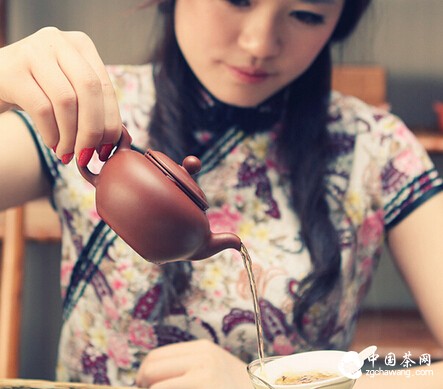
XVI. Simplified Version Below
Is this your first time brewing Pu'er tea? But you want to brew a very good cup of Pu'er tea? No problem, don't worry. Among all types of tea, Pu'er tea has the most diverse brewing methods and is the easiest to operate. So today, let's choose one of the easiest methods to teach you. First, know that brewing a good cup of tea depends on only two basic elements: water temperature and steeping time. Water temperature? The water temperature for Pu'er tea is the easiest to master: 100°C. Isn't that easy? Unlike Longjing at 85°C or Biluochun at 75°C, which are hard to control, Pu'er tea only requires water to be fully boiled. Steeping time? The first infusion of tea water can be discarded, and the second infusion is for drinking. The steeping time for the second infusion can be short, such as 10-20 seconds. The third infusion can be slightly longer, such as 30-40 seconds, and so on. As the tea becomes weaker, the steeping time can be extended. See the demonstration below:
1. Place about 10 grams of Pu'er tea leaves into a filter cup (enough to cover the bottom of the cup, slightly higher).
2. Pour freshly boiled water into the filter cup until the tea leaves are submerged.
3. After a moment, remove the filter cup and discard the first infusion of tea water.
4. Pour boiling water again to submerge the tea leaves, cover the cup, and let it steep for about 20 seconds.
5. Open the cup lid, invert it, take out the filter cup, let the tea liquor drip slightly, and place it on the lid.
6. There you have it—a cup of aromatic, rich, and mellow Pu'er tea is brewed.
7. While enjoying, don't forget the tea leaves in the filter cup. Pu'er tea is very resistant to steeping. When you finish the first cup, you can put the filter cup back into the cup, pour water again, cover, and let it steep for a short while. Your second cup of Pu'er tea is ready.