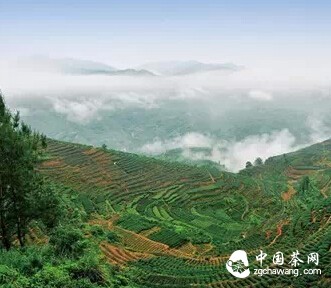
Fujian is known as “eight parts mountains, one part water, and one part farmland.” The Wuyi Mountains stretch across northwestern Fujian, the Daiyun Mountains stand tall in central Fujian, and the Jiufeng Mountains run through northeastern Fujian, all with steep terrain. Where there are mountains, there is tea, making Fujian a land rich in famous teas. Due to differences in geographical location, eastern, southern, western, and northern Fujian each have their own renowned teas, which not only have a long history and enjoy worldwide fame but also possess unique geographical characteristics.
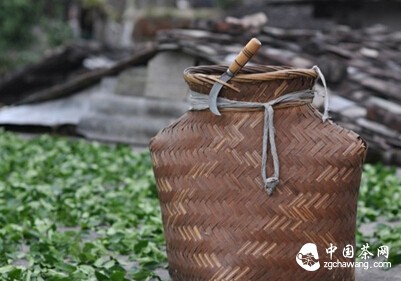
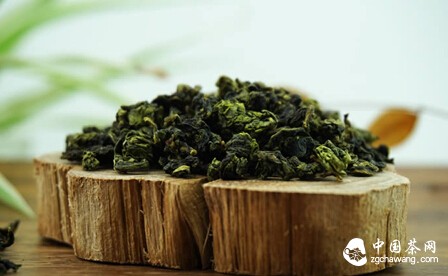
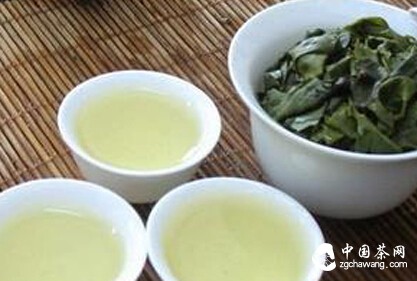
Although I enjoy drinking tea, I do not truly understand how to taste it. I drink all kinds of tea and cannot discern which is superior, but I prefer Tieguanyin. Tieguanyin is between black tea and green tea, with leaves curled into pellets like green snails. Compared to the sharp-edged Longjing, it has a more gentle charm. Before being steeped, its color is a vivid green, and when brewed, it yields a clear green soup that easily captivates at first sight. When freshly harvested Tieguanyin autumn tea is steeped in boiling water, the tea color seeps out strand by strand. It absorbs the warm morning sun, the un-dried morning dew, the moonlight and starlight it has bathed in, as well as the mountains and waters of southern Fujian, the green tea gardens, and the rural girls carrying tea baskets—all of these, at this moment, give rise to a clear, elegant, and refreshing autumn fragrance that penetrates the heart. The tea soup is as clear as a spring under an ancient cypress in a deep autumn mountain, looking like the clear eyes of a child. Inhale deeply, take a sip, and it leaves a lingering fragrance on the lips and teeth, with an endless aftertaste and a lasting charm. Its soup exudes the spirit of a gentleman, and its fragrance dissolves a thousand worries. The previously stagnant blood vessels become unblocked, and you can feel the blood flowing smoothly in your veins. The turbid energy in your body disperses, and your heart suddenly opens up. Truly, nothing can relieve worries like Tieguanyin.
The main production area of Tieguanyin is in the “Inner Anxi” region, west of Anxi County in Quanzhou City, Fujian. This area is located on the southeastern slope of the Daiyun Mountains, surrounded by mountains with rolling peaks and misty clouds. The average annual temperature is 15–18°C, and most of the soil is acidic red soil with deep layers, particularly suitable for tea tree growth. I cannot remember exactly which year it was, but I once stayed in the tea region for a day. On the misty mountain ridges, rows of tea trees were stacked layer by layer on the slopes, and tea-picking girls in red and green danced among the misty peaks, a truly delightful sight. As the sky gradually darkened, distant valleys and ridges were dotted with twinkling lights, making it impossible to tell where the stars ended and the lights began. It was so serene and distant, as if one could hear the whispers between the twilight and the tea trees. The evening breeze carried the fragrance of tea, giving a genuine sense of hazy poetry, which permeated the mountain wilderness and could dilute the deep-seated restlessness brought from the city. Gazing at the distant starlight and savoring the tranquility, I finally understood what it means to have a heart as calm as autumn water. Growing in such peaceful landscapes, Tieguanyin is truly blessed. In this misty and far-reaching atmosphere, weariness crept in, and I fell asleep in the world of tea.
Tieguanyin—what a strange name. I have always been curious about how it got its name. I have heard several explanations, some of which are almost mythical. I prefer one story: In the spring of the first year of the Qianlong reign (1736), an Anxi-born official named Wang Shirang, when summoned to the capital, brought some famous tea from his hometown of Nanyan as a gift to Minister Fang Bao. After tasting it, Fang Bao found it to be a rare treasure among teas and presented it to Emperor Qianlong. The emperor summoned Wang Shirang to ask about the tea’s origin. After carefully observing the tea’s shape—resembling the face of the Goddess Guanyin, with a dark, glossy color and heavy as iron—the emperor named it “Nanyan Tieguanyin.”
Regardless of how it got its name, this autumn tea’s clear and fragrant quality interprets the essence of autumn in such a mysterious and enduring way that it truly intoxicates. Though I cannot reach the profound Zen principle of “just drink tea,” as long as I can pick up a piece of tea fragrance and listen to the endless, heartfelt whispers, giving rise to a sense of unity between heaven, earth, and humanity, then I need not care how splendid the scenery along the way is, nor how much I have gained. This autumn becomes even more vast and profound.