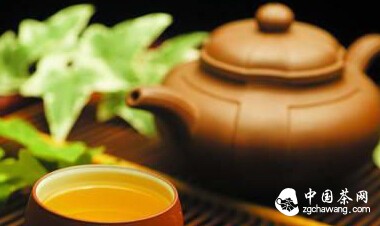
Xiehouyu is a uniquely Chinese linguistic form created by the people in daily life, full of humor and distinctly national characteristics. It is often hailed as "a bouquet of wisdom flowers" in the garden of Chinese folk art.
It typically consists of two parts: the first half is a vivid metaphor, like a riddle, while the second half provides an explanation or punchline, much like the answer to a riddle—natural and apt.
Notably, among the vast array of xiehouyu, many fine examples are related to tea.
This is because the distinctive national flavor, strong life atmosphere, humor, and enduring appeal of xiehouyu align seamlessly with the characteristics of tea culture.
Tea-related xiehouyu can be mainly divided into the following categories.
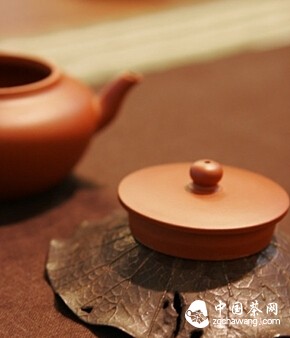
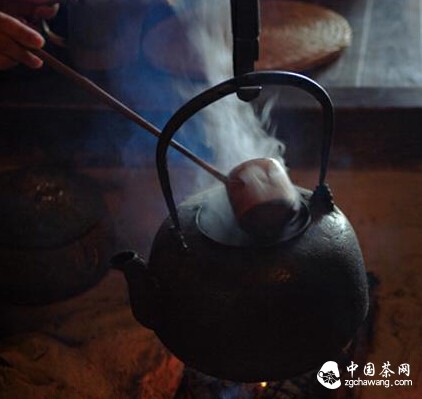
First, stories hidden in the teapot.
Among tea-related xiehouyu, a large number are built around the "teapot" as a vehicle.
For example:
Crying out grievances in a teapot — making a fuss (homophonic pun on "pot" and "fuss")
Cooking noodles in a teapot — no wonder (twisted)
Opening a dyehouse in a teapot — impossible to manage
Sticking pancakes in a teapot — no way to get a grip
Bathing in a teapot — can't spread out
A teapot without a belly — nothing left but a spout (meaning: all talk)
Holding a teapot to drink tea — mouth to mouth (meaning: intimate)
Teapot and lid — inseparable
Second, xiehouyu related to teahouses.
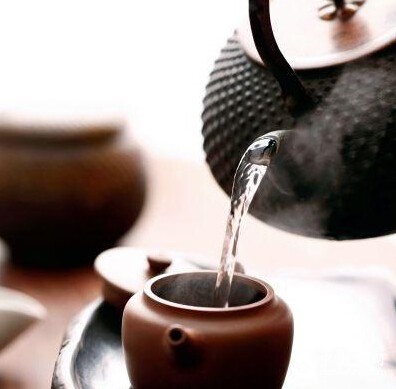
These xiehouyu are rich in everyday life. Everything in a teahouse or tea shop—water, waiters, casual chats, tea trays, and even the fictional character Sister Aqing—is used creatively to add wit and flavor.
For example:
Water in a teahouse — boiling hot
Chatting in a teahouse — saying whatever comes to mind
Reaching out in a teahouse — coming (from the pot) casually
A waiter serving tea — offering everything (pot and tray together)
Sister Aqing pouring tea — not a drop spilled (meaning: meticulous)
Meeting a tea seller when thirsty — just right
Third, general tea-related xiehouyu.
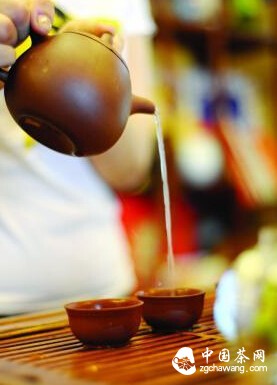
These xiehouyu are characterized by using various tea activities—making tea, brewing tea—to convey deeper meanings.
For example:
Making tea with popcorn — it's all gone (ruined)
Brewing tea in a glass cup — seeing through to the bottom
A roly-poly toy making tea — no skill (no level)
Drinking wine from a tea bowl — doesn't care (about the pot)
Spring tea tips — fresh and tender
Boiling water for tea — both strong and fragrant
Cold water for tea — tasteless
Adding salt to tea — unpleasant (salty, homophonic for "annoying")
A tea pastry shop on fire — indeed burning (homophonic for "sure enough")
Putting sugar in a tea cup — life won't last long
Putting an egg on a tea cup lid — unreliable
As tea culture continues to develop, new tea-related xiehouyu will keep emerging—a sign that tea culture is moving toward the people, daily life, and prosperity.