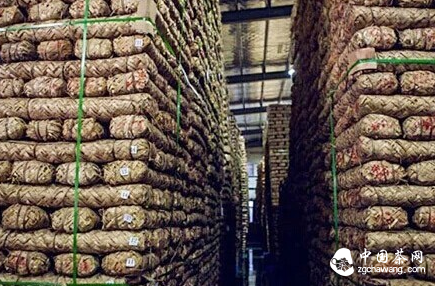
1. Quality is Paramount
No matter how many functions or added values you assign to dark tea, its essence remains that of a food product. Selecting tea of excellent quality is the foundation of collecting. Nowadays, dark tea packaging is very elaborate and increasingly beautiful. Competition in dark tea has devolved into competition in packaging, straying from the basics. Some tea merchants now focus heavily on packaging to please customers. Low-quality tea paired with high-end packaging can still deceive consumers who don't understand tea—this is the proverbial "golden exterior, rotten interior."
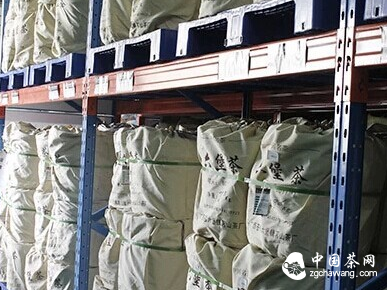
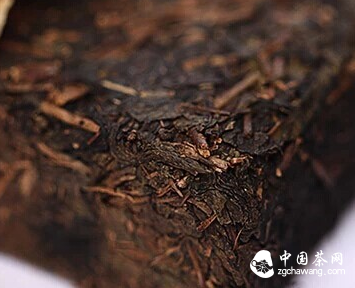
Therefore, to collect dark tea, you must first put in real effort to identify and understand tea. Dark tea quality has objective standards. When holding a piece of tea, first observe its shape—whether the edges and corners are distinct, the strips are dense, and the stem content is moderate.
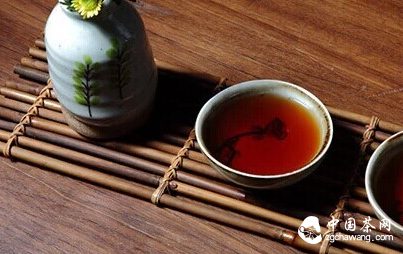
Second, examine its color—whether it is normal, whether it has been over-fermented, whether it is remade from green tea, or whether it has mold. Observe the liquor color; the true nature is revealed upon brewing. Different qualities, varieties, and ages produce different liquor colors. Also, brew it multiple times to check its endurance.
Third, smell its aroma—whether it has the unique fragrance of Anhua dark tea, and distinguish between the mushroom aroma of Fu brick tea and the aged aroma of old tea. Be adept at distinguishing aged aroma from musty smell. Be cautious of teas with unusual odors or overly peculiar fragrances.
Fourth, taste its flavor. A true expert can discern the quality and age of the tea upon tasting with their skilled tongue. To collect dark tea, one must develop this skill.
2. Aged Tea is Good, but a Tiered Collection of New and Aged is More Important
Searching for aged tea is an instinct for every collector. However, Hunan dark tea was historically mainly sold to border regions, with few drinkers in the interior, so the amount of aged tea surviving is limited. Blindly pursuing aged tea narrows the path of collecting. For dark tea, new and aged are relative; today's new tea is tomorrow's aged tea. Unlike celadon or famille rose porcelain, which require centuries to be considered antiques, dark tea aged for over five years can be worth several times the price of new tea. The aging period is relatively short; Fu brick tea tastes good after three years of aging, and Qianliang tea after five years.
Therefore, collect a batch of new tea each year to age. With a five-year cycle, drink the old and store the new, enjoying aged tea every year, creating a virtuous cycle. Moreover, blindly pursuing aged tea easily leads to deception. Many so-called aged teas on the market are problematic: packaging is artificially aged or counterfeited, production dates are pre-dated; they are over-fermented or remade to imitate aged tea; or new and old materials are mixed.
Additionally, dark tea collection must consider quantity. If conditions permit, collect new tea in bulk for aging. Even if you have aged tea at home, without a certain quantity, it is merely for display.
3. Collect in Complete Series Whenever Possible
Try to collect comprehensively to form a complete series—this is a successful strategy for accomplished collectors. The value of a series collection, compared to individual items or random collection, grows not arithmetically but geometrically.
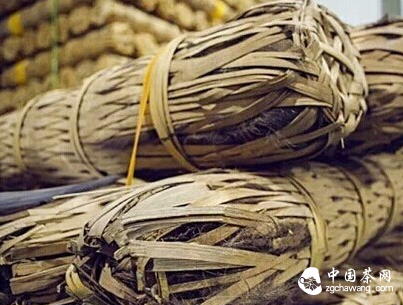
First, try to collect all products from well-known enterprises, or all teas produced by a particular factory within a specific period. Second, categorize your collection. Based on personal preference, choose one or several categories from Anhua dark tea's "Three Bricks, Three Tips, One Roll" (Hei brick, Fu brick, Qing brick; Tian tip, Gong tip, Sheng tip; Huajuan, i.e., Qianliang) to collect.
4. Do Not Miss Teas of Unique Significance or Limited Quantity
First, commemorative teas. Second, award-winning teas. Award-winning teas are mostly high-quality, gaining recognition and acceptance as their reputation rises. Third, discontinued teas. These are gone forever, like the 80-year Monkey stamp; appreciation is inevitable. Fourth, limited-edition teas. The price of collectibles is positively related to their surviving quantity; small quantity means high price. The Yuan blue-and-white jar "Ghost Valley Mountain" sold for 230 million RMB at auction partly due to its rarity. According to authoritative estimates, only about 200 pieces of Yuan blue-and-white exist worldwide. Song Dynasty Ru and Jun wares also repeatedly achieve sky-high auction prices due to scarcity. The same applies to dark tea; limited-edition teas, due to small production, become hard to find after a few years. Such tea "one piece is worth two" or even ten, achieving twice the result with half the effort.
5. Tea Literature and Teaware Collection Are Indispensable
Tea classics document the evolution of China's dark tea, forming its economic and cultural history. They help us study dark tea history and improve our appraisal and collection skills, bridging the past and the future. For example, Mr. Peng Xianze's books "Anhua Dark Tea" (published 1940) and "Anhua Dark Tea Bricks" (published 1950) systematically record Anhua dark tea's origins, types, quality, cultivation, picking, processing, trade, taxes, tea figures, and customs. They are essential reading for dark tea collectors.
Teaware is also a natural extension of dark tea collection. The term "teaware" first appeared in the Han Dynasty; Western Han poet Wang Bao's "Tong Yue" mentions "boil tea and prepare the utensils, cover and store after drinking." Chinese teaware, through centuries of improvement, boasts many types and beautiful forms. Besides practical use, it has high artistic value, renowned worldwide and favored by collectors through the ages. Teaware includes cups, pots, bowls, saucers, plates, and dozens more; materials range from ceramics to bronze, glass, metal, and bamboo. "Yunxi Youyi" says Lu Yu made 24 types of tea utensils. The five famous kilns of the Song Dynasty—Ru, Guan, Ge, Ding, and Jun—all produced large quantities of teaware. Zisha (purple clay) ware, originating in the mid-Ming Dynasty, led Chinese teaware fashion for centuries. In 1979, when Hong Kong began purchasing famous Zisha masterpieces, a pot by Gu Jingzhou cost only about 300 RMB, while pots by Zhou Guihen and He Daohong were around 150 RMB, and others about 75 RMB. By 1982-1985, Gu Jingzhou's pots reached 2,500 RMB; after 2000, they reached 200,000 RMB; and now they exceed 10 million RMB—an increase of tens of thousands of times. This shows the promising prospects of teaware collection.