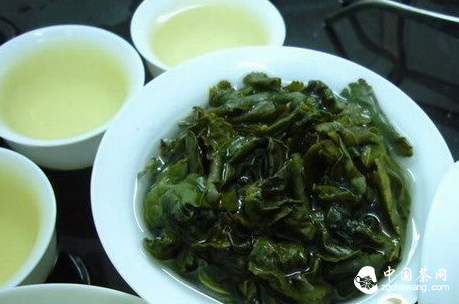
Tieguanyin, with its rich fragrance and deep flavor, is resistant to brewing and is loved by many tea enthusiasts. Right now, it is the season for autumn Tieguanyin to hit the market. Yesterday, I shared how to distinguish good tea from bad. Some tea lovers asked for specific tips on selecting Tieguanyin. Today, I will share how to identify autumn Tieguanyin.
Simply put, it is “observe, listen, smell, and taste”.
Observe: High-quality Tieguanyin tea leaves are curly, firm, and heavy, shaped like a green belly and a dragonfly head. The color is fresh and glossy, with prominent sand green and red spots, and a white frosted surface on the leaves. After brewing, the leaves should be plump and bright (one characteristic of Tieguanyin leaves is that the back curls outward), with a silky luster. Tea with a dark red soup color is inferior.
Listen: Premium tea leaves are more tightly bound and heavier. When a small amount is placed into a teapot, a crisp “clink” sound is heard; a crisp sound indicates high quality, while a dull sound indicates lower quality.
Smell: The soup of premium Tieguanyin has a fragrant aroma. When you lift the lid and gently smell the cup, the unique fragrance immediately fills the air, lasting long and captivating the heart.
Taste: Premium Tieguanyin enters the mouth smoothly. After slowly swallowing, it feels sweet without astringency, and the fragrance lingers, leaving a lasting aftertaste.