A Tibetan saying goes: “Greasy meat cannot be digested without tea; the heat of barley cannot be relieved without tea,” and “One day without tea causes stagnation; three days without tea leads to illness.” For centuries, Tibetan people have discovered the effects of Zang tea in “clearing grease and removing heat toxins.”
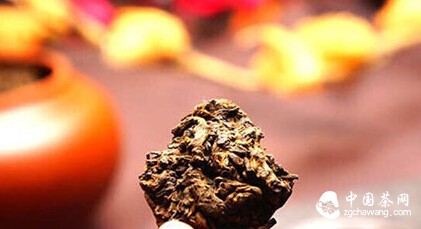
Zang tea grows in the rain-rich region and is produced in the snowy plateau. Its clearing and purging effects are very strong. It is not only old tea that can be regarded as “Tibetan medicine”; the thick brew of Zang tea is also used for excessive drinking, chest tightness, facial acne, headaches and fever, sore throat and hoarseness, gastrointestinal disorders, and more.
However, old tea has a mellow and aged aroma, and its “tea qi” effect is more intense. Tea drinkers often experience a soothing sensation of slight perspiration on the face and a light, buoyant body, which is described as having a medicinal effect. Folklore says that the tea qi of old tea manifests as a medicinal aroma, and many believe in its power to eliminate all kinds of ailments.
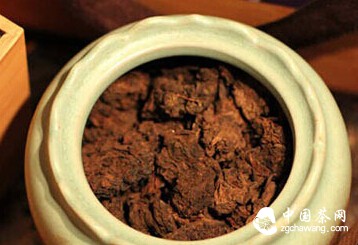
From the perspective of ancient Chinese medical pathogenesis, “qi” is the substance that constitutes the human body and sustains life activities. The movement of “qi” is called “qi movement.” Qi continuously flows through the organs, meridians, and limbs. If the flow of qi is blocked or obstructed, it indicates a blockage along the pathways, leading to illness. Traditional Chinese medicine vividly describes it as: “If it flows smoothly, there is no pain; if it is blocked, there is pain.”
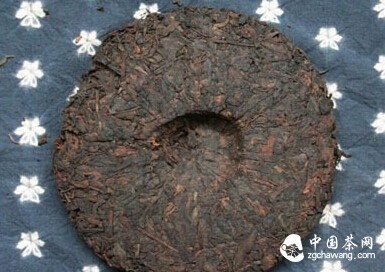
Old Zang tea has a strong tea qi (greater energy to drive qi flow). Through the method of “moving qi,” it can open various kinds of blockages (such as qi stagnation, numbness, blood stasis, food accumulation, stone accumulation, narrow passages, thick blood, and growths or tumors in the passages). Thus, the tea qi of old tea achieves a smoothing and unblocking effect.