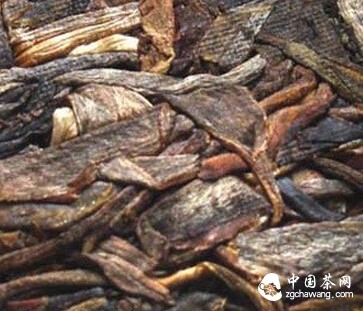
New tea enthusiasts often face the challenge of quickly judging the quality of a tea in front of them. This is not only a matter of face; your tea recognition skill is your capital for making tea friends and the fundamental reason you can consistently drink good tea!
Seriously speaking, recognizing tea requires long-term experience, extensive samples, and cannot be achieved quickly. However, there are always some general rules that allow you to use the elimination method to filter out too many distractions and learn and compare within more standardized samples.
How to judge the quality of tea at a glance?
Below, I have listed my experience in the order of brewing a tea. Remember, you can combine several stages to observe, or under conditions where it is not possible, rely on factors from a single stage to quickly judge. The purpose is to be able to say a few words at any stage of a tea and not be too far off.
Of course, a special reminder: these superficial skills cannot replace true expertise. If you really want to understand tea, you must honestly accumulate experience. Also, do not show off everywhere; experts can easily see through your tricks. The best method is to say a few words appropriately, then humbly seek advice from other tea friends present, absorbing all and steadily growing.
Before Brewing
1. Look at dry tea: Overall—even strips, uniform color, no excessive broken bits or impurities are superior; uneven thickness, obvious color difference are inferior, and may indicate blending.
2. Look at dry tea: Individual—tight strips, oily luster, natural color are superior; loose strips, dull and dark, overly bright color, or particularly dry and lifeless are inferior. Color is a difficulty. Many inferior teas look more glossy than truly good teas. Take West Lake Longjing as an example: counterfeit teas are bright green and eye-catching, while genuine ones are yellowish-green and not so striking. However, upon careful examination, genuine products have a natural and pleasing color, while counterfeits appear overly bright and unnatural.
3. Smell dry tea—pure aroma with strong penetration is superior; any off or miscellaneous smells, or fleeting aroma are inferior. However, not all good teas are very fragrant, especially aged teas, where dry tea may not have a noticeable aroma. Here, one must distinguish between a light aroma and a fleeting aroma. Simply put, it can have no fragrance, but it should not be chaotically fragrant.
When Brewing
1. Look at the lid: If using a gaiwan, pay attention to the foam when rinsing the tea. Little foam that quickly dissipates and a lid basically free of impurities is superior; much foam that does not dissipate easily and a lid with many impurities is inferior. Good tea is treated carefully throughout the entire process of making and storage—this makes sense, right?
2. Smell the lid: First, during hot smell, there should be no unpleasant odors. Additionally, a pure and strong aroma that lingers on the lid after cooling is superior; hot smell with sour, astringent, burnt, or other off odors, a mixed aroma that does not last is inferior.
During Tasting
1. Sip the tea into the mouth—the flavor of the tea soup is rich and difficult to describe fully, but one thing is common: the better the integration of tea and water, the better. Borrowing a tea lover's saying: "This tea makes the water taste good," which is the simplest yet hardest requirement to meet. If this sip of tea truly pleases you, it is certainly not bad!
2. Aftertaste—When the tea goes down the throat, the true test begins. Smooth throat entry, long-lasting fragrance in the mouth and nasal cavity, strong salivation and sweet aftertaste on the tongue or in the mouth are superior; a prickly sensation in the throat, weaker aroma than in the mouth, astringent tongue, a sticky feel like a plastic film in the mouth—such tea soup must have many problems, such as coarse raw material grade, improper processing, or damp and hot storage.
3. Look at the soup color—clear and transparent is superior; muddy and unclear is inferior.
4. Look at the soup color changes—if the brewing method is normal, the change in soup color throughout the tasting process can indicate the tea's quality. Stable soup color that gradually fades is superior; a sharp decline after a few infusions, indicating poor endurance, is inferior. For tea where the quality changes rapidly, be wary of the possibility of "using processing to elevate raw material grade."
After Tasting
Look at the infused leaves—the leaves are like a woman's skin, hiding no secrets. This is a very deep study, and today I will only talk about the simplest points.
Flexibility: Good infused leaves should spread naturally, be soft and elastic (very similar to skin, right?). Being too stiff or too tender is not optimal. Gently knead with fingers; leaves that are not easily broken are better than those that crumble at a touch.
Uniform color: At a glance, the infused leaves should show a uniform color without obvious light and dark patches is superior; mottled with varying shades is a warning sign. If there are burnt spots on the leaves, the processing is not good enough. The "green leaves with red edges" of oolong tea must also be even and natural, with little difference between leaves.
Glossy: After draining water from the leaves and letting them air dry naturally for a few minutes, leaves that quickly lose moisture and become dry on the surface are definitely inferior to those that remain oily and glossy. This is similar to the skin's ability to retain moisture.