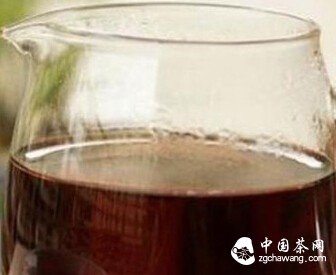
Soup sensation is an important aspect of drinking Pu-erh tea. For those who drink tea for the first time, the soup sensation is often overlooked. One reason is that people who are used to other types of tea focus on the fresh fragrance or the floral notes brought by processing techniques, which are fleeting and leave no lasting impression. Therefore, it is necessary to discuss soup sensation separately, so that tea enthusiasts can develop a deeper impression of it and more objectively recognize and experience all the sensations of Pu-erh tea.
How to experience the viscosity of soup sensation
In daily life, we often see elderly people without teeth eating. They move their upper and lower lips, using their gums to break down food for easier swallowing and digestion. Without teeth, elderly people develop a finer perception of the viscosity, hardness, and even shape of food. Therefore, we can use similar movements—using the upper palate and tongue in the mouth—to develop the ability to feel the viscosity of tea soup.
How to experience the softness of soup sensation
Hold the tea soup in your mouth and silently count for a few seconds, then swallow it after two or three seconds. If bitterness or astringency appears immediately upon entry, the softness of the tea soup is poor. In contrast, tea soup with good softness usually only shows bitterness or astringency slowly after being swallowed.
How to experience the smoothness of soup sensation
Very smooth tea soup often gives people a feeling like “drinking chicken broth,” but it can never reach the same level of oiliness. Especially for fresh raw Pu-erh tea, its smoothness is hard to remember. After swallowing a very smooth tea soup, a sensation similar to a layer of oil film remains in the mouth and deep in the throat. This feeling is easier to notice and remember compared to the smoothness when the tea first enters the mouth.
How to experience the thickness of soup sensation
Thickness is most easily confused with softness and bitterness/astringency. We often hear someone say they drank a thick tea soup, but in fact, they are describing a long-lasting astringent feeling on the tongue and in the mouth after drinking. The thickness of tea soup refers to a solid, full sensation, which is easier to experience when the tea soup flows in the mouth. Therefore, letting the tea soup flow up and down, left and right in the mouth can make this sensation clearer. For soup sensation, judging the type is easy, but evaluating and remembering the degree is more difficult. Only focused and repeated practice can ultimately lead to an objective ability to distinguish.