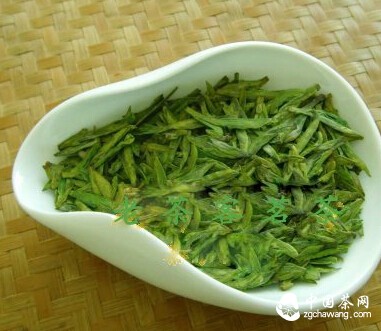
West Lake Longjing, produced in the West Lake area of Hangzhou, Zhejiang, is flat-shaped, with tender leaves, neat strips, consistent width, green-yellow color, smooth to the touch. It has one bud with one or two leaves, with the bud longer than the leaves, generally less than 3 cm in length. The buds and leaves are evenly formed, without stems or fragments, small and exquisite. Longjing tea has a pure fragrance, while counterfeit Longjing tea often has a grassy taste, more stems, and a rough feel.
“The best spring in West Lake is Tiger Run; the finest tea from the two hills is Longjing.” (Ming dynasty, Gao Lian, "Four Seasons Delights") “Longjing tea, Tiger Run water” – this is the renowned dual gem of Hangzhou’s West Lake, a famous tourist destination. The Song dynasty poet Su Dongpo once wrote: “If I compare West Lake to the beauty Xishi,” and “Fine tea is always like a lovely lady.” The first line praises the beauty of West Lake, the second the beauty of tea. West Lake Longjing tea has a long history, produced in the hills surrounding Hangzhou’s West Lake.
During the Qing dynasty, Emperor Kangxi established a “temporary palace” in Hangzhou and designated Longjing tea as “tribute tea.” According to legend, Emperor Qianlong, during his southern tour, visited the Hu Gong Temple at the foot of Shifeng Mountain in Longjing to taste Longjing tea. After drinking it, he praised it endlessly and, inspired, conferred the title “imperial tea” upon eighteen tea trees in front of the temple. These trees still thrive today, attracting tourists.
The main production areas of West Lake Longjing tea include Shifeng Mountain, Meijiawu, Wengjiashan, Yunqi, Hupao, and Lingyin. These places are densely forested, with lush bamboo groves, and tea gardens are often shrouded in mist and deep shade. The ecological conditions here are exceptional, with a mild climate and abundant rainfall. The average annual temperature is 16°C, with annual precipitation of about 1500 mm. During the spring tea season, there is often a fine drizzle, and mountain streams flow steadily. The soil is deep, mostly sandy loam. The tea plant varieties in the Longjing tea region have tender, fine buds and leaves, rich in amino acids and various vitamins. These superior natural conditions and excellent varieties provide a good foundation for the high quality of Longjing tea.
The harvesting and processing techniques of Longjing tea are quite meticulous. Picking has three main characteristics: early, tender, and frequent. Historically, Longjing tea is valued for early picking. Tea farmers often say: “Picked three days early, it’s a treasure; picked three days late, it becomes grass.” High-grade Longjing tea has always emphasized early picking. Longjing tea picked before Qingming Festival is considered the best quality, called Mingqian tea; tea picked before Grain Rain is still of good quality, called Yuqian tea. In addition, the picking of Longjing tea emphasizes tenderness and completeness. Picking only a single tender bud is called “lotus heart”; picking one bud and one leaf, with the leaf like a flag and the bud like a spear, is called “flag and spear”; picking one bud with two newly unfolded leaves, with the leaf shape curling like a sparrow’s tongue, is called “sparrow tongue.” Usually, to produce 1 kg of special-grade Longjing tea, 70,000 to 80,000 tender buds and leaves need to be picked. The picking standard is a complete one bud and one leaf, with the bud longer than the leaf, the total length of the bud and leaf about 1.5 cm. The long-established practice of timely batch picking has been passed down through generations, following the standard of picking larger leaves while leaving smaller ones. Generally, during early spring tea, it is picked daily or every other day; in the middle and later stages, it must be picked every few days. Thus, throughout the tea production season, about 30 batches are picked, a frequency unique to Longjing tea.
The picked fresh leaves are thinly spread indoors to a thickness of about 3 cm; lower-grade materials can be slightly thicker. After 8 to 10 hours of spreading, the leaves lose some moisture, reducing weight by 15–20%, and the fresh leaf moisture content reaches about 70%, which is appropriate. The purpose is to release grassy odor, enhance tea fragrance, reduce bitterness and astringency, increase amino acid content, and improve freshness. It also makes the fried Longjing tea have a smooth appearance, emerald green color, no clumping, and improves tea quality.
The spread leaves are then screened and divided into large, medium, and small grades, which are fried separately. Different grades of raw materials are fried with different wok temperatures and hand techniques to achieve the best results.
High-grade Longjing tea is entirely hand-fried in a smooth, specially made iron wok, using constantly changing hand techniques. The frying techniques include shaking, tapping, pressing, rubbing, flicking, grasping, pushing, pinching, pressing, and grinding, known as the “ten major techniques.” The frying process changes techniques based on the size, tenderness, and forming degree of the tea leaves in the wok, very skillfully. Only those with proficient skills can fry Longjing tea with excellent color, aroma, taste, and shape. Moreover, since it is entirely manual in a hot wok, the labor intensity is considerable. No wonder Emperor Qianlong, after watching Longjing tea frying in Hangzhou, sighed deeply at the great labor and skill involved.
The frying of Longjing tea is divided into three processes: initial frying (qing guo), moisture equalization (hui chao), and final frying (hui guo).
Initial frying: This is the process of killing the green and initial shaping. When the wok temperature reaches about 120°C, a little oil is applied to make the wok surface smoother. About 100 g of spread leaves are added. The process begins mainly with grasping and shaking techniques. After some moisture is released, techniques such as tapping, pressing, shaking, and flicking are gradually used for initial shaping. The pressure increases from light to heavy, aiming to straighten the strips and flatten them. The leaves are removed when they are 70–80% dry, taking about 12–15 minutes.
After removal, the leaves are thinly spread to equalize moisture: after cooling, they are screened. The tea from the screen bottom and the screen top are separately final-fried. The moisture equalization time is generally 40–60 minutes.
Final frying: The purpose is further shaping and drying. Usually, the leaves from four initial frying batches are combined into one batch, about 250 g. The wok temperature is 60–70°C, and frying takes 20–25 minutes. The wok temperature follows a low-high-low pattern. Hand pressure gradually increases, mainly using techniques such as grasping, pinching, grinding, pressing, and pushing. The key is that the hand never leaves the tea, and the tea never leaves the wok. Frying continues until the fine hairs fall off, the tea becomes flat and smooth, the tea fragrance emerges, and a leaf can be snapped off when bent. The moisture content should be 5–6%. The tea is then removed, cooled, and the yellow leaves are winnowed away, and the tea dust is sifted out.
Fried Longjing tea is very prone to moisture absorption and spoilage. It must be promptly wrapped in paper into 0.5 kg packages and placed in a jar with a layer of lump quicklime (unslaked lime that has not absorbed moisture) at the bottom. The jar is then sealed and stored. If stored properly, after about 15–30 days, the aroma of Longjing tea becomes more fragrant and rich, and the taste more fresh and mellow. Properly dried Longjing tea can still maintain its green color, high aroma, and mellow taste after a year of storage.
Longjing tea from the West Lake area, due to differences in ecological conditions and frying techniques, has historically been classified into four types: “Shi,” “Long,” “Yun,” and “Hu.” The Shi type is produced around Shifeng Mountain in Longjing Village; the Long type is from Longjing and Wengjiashan; the Yun type is from Yunqi and Meijiawu; and the Hu type is from Hupao and Siyanjing. Later, based on production development and actual differences in variety styles, the classification was adjusted into three types: “Shifeng Longjing,” “Meiwu Longjing,” and “West Lake Longjing.” “Shifeng Longjing” has a high, persistent aroma, a fresh and mellow taste, and a slightly yellowish color, commonly called “brown rice color.” “Meiwu Longjing” has a neat, flat, and smooth appearance with an emerald green color. “West Lake Longjing” has thick and tender leaves, but its aroma and taste are not as good as those from Shifeng and Meiwu. Among the three types, “Shifeng Longjing” has the best quality.
High-grade Longjing tea has an emerald green color, a flat and smooth appearance resembling a “bowl nail,” a bright green infusion, an orchid-like fragrance, and a sweet, fresh, and mellow taste. It is renowned for its “four绝 (perfections)”: green color, rich aroma, mellow taste, and beautiful shape.
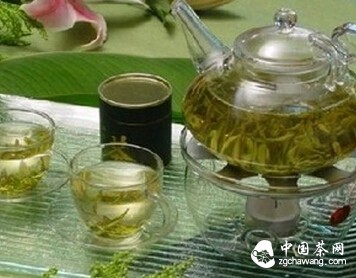
When tasting high-grade Longjing tea, glass cups are often used, with water at about 85°C for brewing. After brewing, the buds and leaves stand upright, one bud and one leaf, clustered in the cup, crisscrossing and complementing each other. The buds and leaves are upright, rising and falling, lifelike, like blue orchids in bloom or green bamboo vying for beauty. Savoring and appreciating it leaves a lasting fragrance and a refreshing feeling. The characteristic of Longjing tea is its rich aroma and mellow taste, not to be intense. It should be savored slowly and gently; its flavor cannot be appreciated without effort. The Qing dynasty tea connoisseur Lu Cizhi once praised: “True Longjing tea is sweet and fragrant but not sharp, tastes light and seems almost flavorless, but after drinking, one feels a harmonious energy lingering between the teeth and cheeks. This flavorless flavor is the ultimate flavor. It greatly benefits people and can even heal ailments, making it as precious as a treasure, rare and hard to come by.”