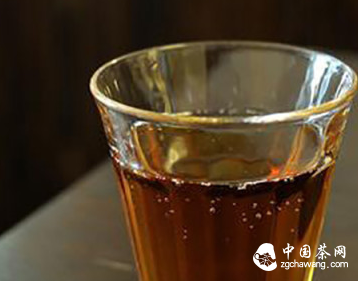
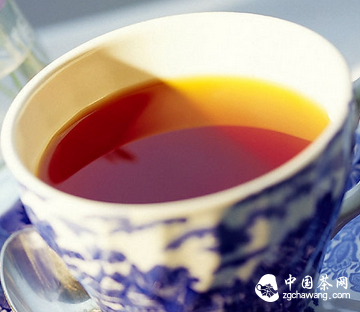
 What kind of water is suitable for brewing tea?
Water with low mineral content
Water with too many minerals is generally called hard water. Tea brewed with such water tends to have a dull color, weak aroma, and reduced refreshing taste, making it unsuitable for brewing tea.
Water with low mineral content is generally called soft water, which easily brings out the true character of tea and is suitable for brewing.
Water without disinfectants
If the water contains disinfectants such as "chlorine", you can use activated carbon to filter it out before drinking. Obvious disinfectants directly interfere with the taste and quality of tea.
Water with high air content
Water with high air content helps release tea aroma and gives a livelier mouthfeel. It is often said that "living water" is good for brewing tea, mainly because it has high air content. Boiling water for too long reduces air content.
Water with low impurities and bacteria
The fewer the better. High-density filtration equipment can remove most impurities, and bacteria can be eliminated by high temperature.
--------------------
Purified water
It has low mineral content, generally called soft water, which easily brings out the essence of tea and is suitable for brewing.
Mineral water
Mineral water contains trace mineral components, and tea brewed with it has a good color, rich aroma, and a refreshing sweet taste.
Tap water
Tap water contains disinfectants like "chlorine", which can be filtered out with activated carbon before drinking. However, disinfectants interfere with the taste and quality of tea.
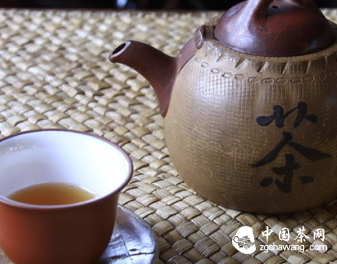
Water with high air content
Water with high air content helps release tea aroma and gives a livelier mouthfeel. It is often said that "living water" is good for brewing tea, mainly because it has high air content. Boiling water for too long reduces air content.
Water with low impurities and bacteria – the fewer the better. High-density filtration equipment can remove most impurities, and bacteria can be eliminated by high temperature.
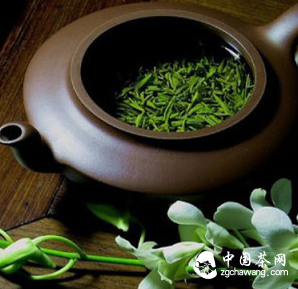
Control of brewing water temperature
Different types of tea require different water temperatures:
Green tea: (80-85°C), Longjing, Biluochun, Huangshan Maofeng, etc.
White tea: (85-90°C), Bai Mudan, Gongmei, Silver Needle, etc.
Yellow tea: (88-93°C), Junshan Yinzhen, Mengding Huangya, Beigang Maojian, etc.
Oolong tea: (95-98°C), Wuyi rock tea, Tieguanyin, Phoenix Dancong, etc.
Black tea: (90-95°C), Lapsang Souchong, Keemun black tea, Jin Jun Mei, etc.
Dark tea: (95-100°C), Pu'er tea, Anhua dark tea, Liubao tea, etc.
Relationship between water temperature and tea quality
In terms of taste, differences in tea character: For example, if green tea is brewed with too high a temperature, its expected lively taste will be reduced. If Tieguanyin or Shuixian is brewed with too low a temperature, the aroma does not develop and its expected robust character does not show.
Differences in extraction rate and speed: Higher water temperature increases the extraction rate and speed, and vice versa. This factor affects the concentration control of the tea. For the same tea-to-water ratio, a higher temperature shortens the time to reach the desired concentration, while a lower temperature requires more time.
Control of bitterness and astringency: Higher water temperature increases bitterness and astringency, while lower temperature reduces them. Therefore, tea that is too bitter or astringent can be improved by lowering the water temperature. For such teas, besides lowering the temperature, the steeping time should also be shortened; to achieve the desired concentration, either increase the amount of tea or extend the time for the former, and increase the amount of tea for the latter.