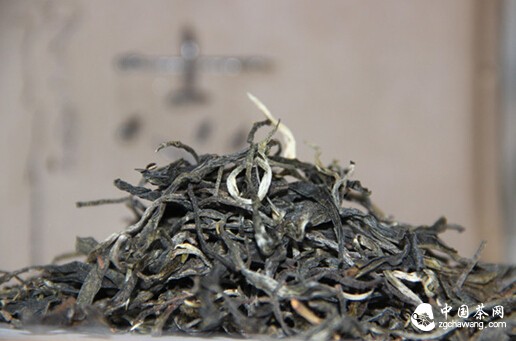
What is Pure Material Tea?
Theoretically, pure material tea refers to tea made from tea leaves of the same grade picked from the same tree at the same time.
However, strictly following this theory, one tree simply cannot produce enough tea for several cakes. In practice, pure material tea generally refers to tea made from leaves picked from the same tea garden during the same period.
Blended tea, on the other hand, refers to tea processed by mixing tea leaves from different origins of the same quality or from the same origin but different grades according to a specific formula.
The blended tea market is currently dominated by large factories. Blending is a technical task requiring highly skilled blenders. Large factories possess more extensive blending formulas and experience.
Current blending concepts include five types: regional blending, grade blending, tree age blending, seasonal blending, and blending of different years. Regional blending and seasonal/year blending are more common. For instance, some brands often blend old tea material into new tea to enhance the smoothness and aged flavor of the taste.
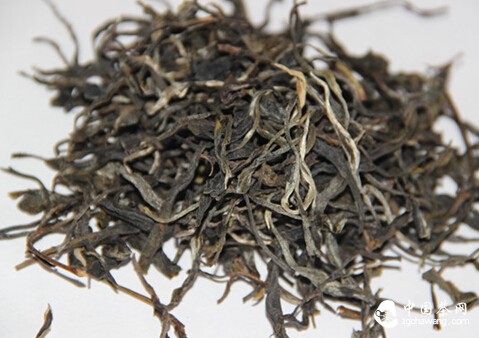
Which is better, blended tea or pure material tea? As I mentioned on my WeChat (dydy800), this is a matter of personal preference. It cannot be simplistically judged whether pure material is better or blended is better; each has its own advantages and disadvantages.
To use an analogy, pure material tea is like Linghu Chong, while blended tea is like Guo Jing.
Why say that? Linghu Chong's personality: open-minded, spontaneous, free-spirited, and sharp-edged.
Pure material tea is exactly like that, especially its sharp edge. Its strengths and weaknesses are clear at a glance. Therefore, compared to blended tea, it's easier to distinguish the origin of pure material tea. Veterans who have been in the Pu-erh world for decades can tell from the taste which mountain region a tea comes from. But trying to discern which mountains are blended in a blended tea is extremely difficult.
We can clearly describe the characteristics of mountain pure material teas. For example, Lao Ban Zhang is robust and powerful, while Yi Wu is soft and delicate. Their characteristics are clear. The advantage of pure material tea is its鲜明强烈 (distinct and strong) character,锋芒毕露 (sharp and exposed) like the "破剑式" (Sword-breaking stance) in Dugu Nine Swords.
Another characteristic of pure material tea is that the tea itself is less prone to developing off-flavors. Pu-erh tea has very明显并且复杂 (obvious and complex) regional characteristics. Even teas from two adjacent gardens might taste different. Pure material tea uses only原料 (raw material) from the same garden. Whether as new tea or after后期转化 (post-fermentation/aging), as long as it is not exposed to strange odors, its aroma and taste can remain very纯正 (pure) and are less likely to develop impurities.
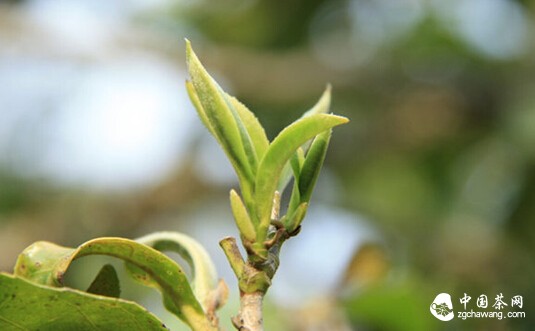
Pure material tea is picked from the same garden, so the appearance and strips of the raw material are basically consistent. The compressed tea cakes are neat and uniform, with a beautiful appearance. Blended tea, however, is varied. Especially teas blended with new and old material, the appearance is not very pleasing to the eye. Therefore, surface sprinkling (撒面 - sa mian) is very common in blended tea to make the cake surface more beautiful.
When we mention Linghu Chong, we often use three words:真性情 (true nature). Indeed, if Linghu Chong lost his true nature and became slick and worldly, who would still like this slick浪荡子 (playboy)? The value of pure material tea lies in its true nature, preserving the most obvious characteristics of its mountain. Its pros and cons are clear. This leads to some mountains being highly esteemed (like Lao Ban Zhang), while others are unknown. It is precisely because of the true nature of pure material tea that Pu-erh tea has regional mountain distinctions, and these mountains又有等级之分 (further have grade distinctions).
Another characteristic of pure material tea is that it's easier to predict its后期转化效果 (aging potential) from the current tea quality. For example, a pure Yi Wu tea, under proper storage conditions, often transforms into a soup that is醇滑柔和细腻 (mellow, smooth, soft, and delicate),饱满滋润 (full-bodied and moist), with a rich honey aroma (this example represents most, not all, Yi Wu teas, please don't nitpick). In contrast, predicting the outcome of blended tea is myriad and difficult. The simplest example is 88 Qing. No one could foresee the miraculous transformation of the once very low-value 88 Qing, which suddenly increased in value tremendously, a sparrow turning into a phoenix. This is the charm of Pu-erh tea transformation.
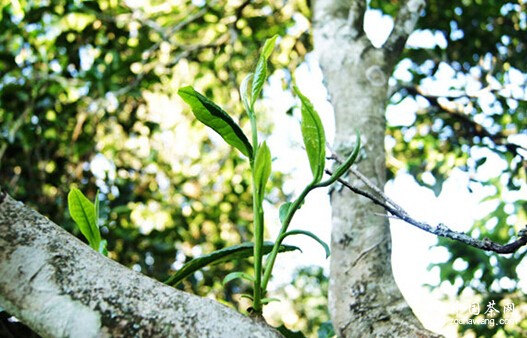
The disadvantages of pure material tea are obvious. First, the changing layers are not very rich, and the taste is relatively single. Second, the quantity is small (if this can be considered a disadvantage). This is one reason large factories don't produce pure material tea - the quantity is too small, time-consuming, labor-intensive, and cannot meet the demand of tea friends; it's more effort than it's worth.
Compared to pure material, blending has higher technical requirements. Without decades of experience with Pu-erh tea, one wouldn't dare claim to know how to blend. Blending is a secret weapon for many large factories; formulas are never revealed. All常规茶 (regular teas) from the state-owned tea factory era were blended. For large factories, blending can significantly increase product quantity and also consume raw materials of different grades and from different periods (spring tea, summer tea, autumn tea).
Large factories purchase raw materials comprehensively: spring tea, summer tea, autumn tea, ancient tree tea, arbor tea, terrace tea are all purchased together. This saves costs. Who would buy summer or autumn tea alone? So blending them together is the best method. It enhances the taste and mouthfeel while also masking shortcomings. Yes, this is the biggest advantage of blended tea -扬长避短 (exploiting strengths and avoiding weaknesses),优势互补 (complementing advantages).
The advantage of blended tea lies in its rich taste, obvious layers, steadiness, and solidity, just like Guo Jing. Each move of his降龙十八掌 (Eighteen Subduing Dragon Palms) is fierce and steady. Guo Jing himself is honest and steady, a perfect match.
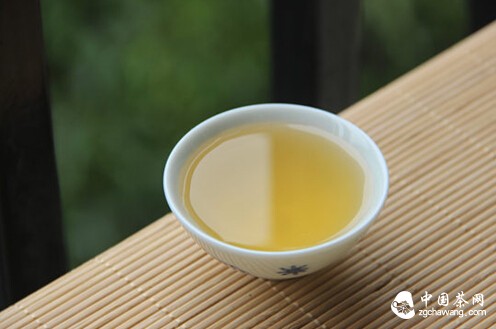
The same goes for blended tea. Tea blended by a master is like fine liquor blended by experts, with extremely high stability. It is steady with a good foundation. Combining the advantages of several teas results in a more馥郁持久 (rich and lasting) aroma. Perhaps one type of raw material has insufficient耐泡度 (infusion endurance) but a high and uplifting aroma, while another has good endurance but a weak aroma. Blending the two complements each other, producing a tea with good aroma and endurance. This is the charm of blending.
Therefore, blended tea has higher stability. After complementing each other, it's hard to find major flaws. A pure material tea from a certain mountain might be very weak in aroma, almost none, which is a big shortcoming. But this situation doesn't occur with blended tea. Blended tea is more balanced. It might excel in a particular taste but rarely lacks severely in another.
Another aspect that tests the skill in blending is the handling of aroma. As mentioned, Pu-erh tea can easily have mixed aromas. Blending several teas together, if the aromas cannot harmonize, will backfire. So, if the blender lacks experience, the likely outcome is impure aroma.
Blended tea uses raw materials from different tea areas and different grades. The varied appearance of the tea cake原料 (raw materials) inevitably affects its观赏性 (aesthetic appeal). Therefore, large factories often do this - surface sprinkling (撒面 - sa mian). This sprinkling is not meant to deceive consumers. For example, the inner material might be grade 8, sprinkled with grade 6 on the surface. The selected material for this tea is grade 7, but the proportion of materials and the taste are not affected; it's solely for a more beautiful appearance.
It's hard to find flaws in blended tea. A relatively obvious one is the difficulty in predicting its后期转化效果 (aging potential). Blended tea is often very delicious to drink now, but it's hard to say after three to five years of storage. After all, it's been disassembled and重组 (recombined). Even the blender cannot把握 (grasp) how it will perform later, making storage somewhat worrisome.
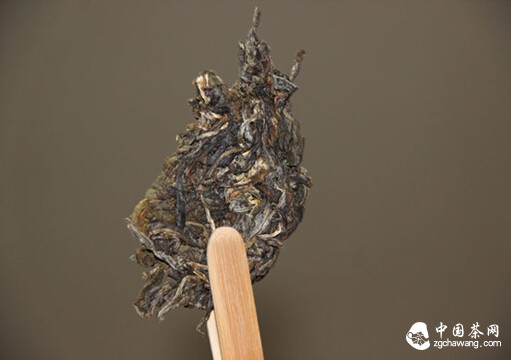
If born in ancient times, pure material tea would be a young knight-errant traveling the world with a sword, with sharp words, unorthodox moves, and a锋芒毕露 (sharp edge). Blended tea would be a middle-aged military strategist, slick, worldly, smart, experienced,极力遮掩瑕疵 (trying hard to cover flaws), and often深藏不露 (deep and unassuming). Some wish to be the knight-errant who "laughs loudly and goes out the door," while others prefer to be the strategist who "plans strategies within a tent and determines victory a thousand miles away." So, which is better, pure material tea or blended tea? This is a purely subjective question. The answer lies in which type of tea you prefer to drink.
Overall, for tea friends who want to learn about tea and understand the characteristics of various mountains, it is recommended to drink more mountain teas. Of course, the complexity of mountains will surely bring many questions. You can add my WeChat (dydy800) to exchange ideas together.
Text/Dong Yue (Founder of Nanming Jiaren, National Senior Tea Artisan). The Dong Yue Tea Talk article series is currently同步更新 (simultaneously updated) on Sohu, Jinri Toutiao, Shuocha Wang, Zhongguo Cha Wang, and Banxia Cha Wang.
Copyright Statement: This article is original. Except for cooperative media, other media must indicate the source (Dong Yue Tea Talk) and author when reprinting. Infringement will be pursued.