What is the Guanyin Rhythm? This is an old topic that everyone wants to understand but finds difficult to articulate clearly. Generations of tea masters and scholars have attempted to describe it, yet Chinese characters still fall short of capturing its essence. Hence, the regretful saying: 'It can only be sensed intuitively, not expressed in words.' Precisely because of this, Tieguanyin is shrouded in a mysterious veil, leaving room for people to seek,回味, and imagine an infinite space......
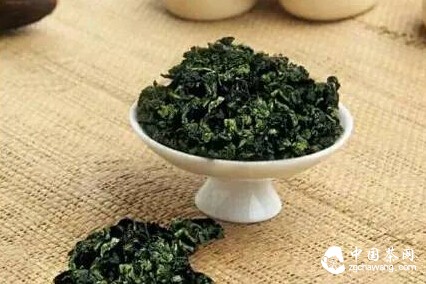
This Guanyin Rhythm can be high or low, strong or weak, sour or sweet, deeply hidden or overwhelmingly bold, gentle and elegant, or graceful and captivating.... It is incredibly diverse and endless, all embodying the Guanyin Rhythm. It is like the fish in the sea—all are called fish, but there are countless varieties, too many to take in at once. The Guanyin Rhythm is the same; each batch of Guanyin tea and every tea farmer's product has a different rhythm. So, what exactly does this rhythm feel like? Today, Brother Tie discusses what the 'Guanyin Rhythm' of Anxi Tieguanyin is.
First: The feeling of the Guanyin Rhythm begins with the aroma—a fragrance 'reminiscent of plum blossoms or orchids.' Imagine what kind of fragrance it is, and it will have that fragrance. Moreover, it possesses a magical penetrating power that can reach your internal organs and even every cell. In contrast, when smelling other varieties, the aroma might only reach the throat and then quickly fade, often feeling 'common.' Tieguanyin's aroma, however, comes across as 'elegant,' similar to the difference between smelling jasmine and orchids. This is likely one of the distinctions between having rhythm and lacking it.
Second: The 'drilling' sensation the moment it enters the mouth. Tieguanyin, upon entering the mouth, feels as if countless magical substances 'drill' into your teeth and spread to both cheeks, going straight to the base of the throat. On the tongue, it feels as if covered by a thin layer of ice film, with a slightly 'oily' sensation...... Other oolong teas do not have this feeling; they generally taste plain or平淡.
Finally: The feeling of the aftertaste. Tieguanyin's sweet aftertaste is different from other varieties. It carries a sense of 'qi,' promoting salivation in both cheeks, and this unique 'qi' rushes out from the nose, lingering between the throat and nostrils for a long time. Other varieties do not have this sensation......
In reality, what is the more commonly accepted meaning of 'rhythm'? If not delving deep into tea culture or discussing spiritual aspects, the simplest meaning of 'rhythm' is usually 'the taste of Tieguanyin.' Here, 'taste' refers to the scent, as the most important characteristic of Tieguanyin is its aroma.
Tea art experts explain: When people from Anxi evaluate Tieguanyin and find the rhythm good, they say 'the rhythm is present' or 'the rhythm is evident.' In most cases, it is referred to as 'rhythmic mouth.' If the rhythm is very strong, it means the characteristics of Tieguanyin are very prominent, which of course indicates good tea. If the rhythm is not clear, it means the characteristics of Tieguanyin are not obvious, so it is not good tea. In short, 'rhythm' refers to a good气质 or characteristic.
Tea friends might ask, doesn't Tieguanyin naturally have the taste of Tieguanyin? What does this mean?
Here, the taste of Tieguanyin refers to its good aroma, which implies a higher standard than usual. For example, like women—some have a feminine charm, and some do not. Those with grace have femininity, while those without are said to lack it. This is easy to understand.
The rhythm we talk about generally refers to the evaluation of the tea's quality during the tasting process, mainly pointing to the unique good aroma of Tieguanyin, including: the scent of the cup lid, the aroma of the tea water, and the fragrance of the tea leaves and cup bottom. It can refer specifically to one of these scents, for instance, the rhythm of the cup lid might be evident, but the rhythm of the tea water might not be as clear. These aspects of Tieguanyin's aroma are not necessarily consistent; there are some differences. Some have a very good cup lid aroma, but the tea water's aroma is not as good, and vice versa. It can also be comprehensively said whether the tea's rhythm is good or not. Additionally, the 'throat rhythm' after drinking is also considered part of the rhythm. 'Throat rhythm' is the feeling of fragrance lingering between the teeth and cheeks, with a sweet aftertaste in the throat and tongue.
This good aroma mainly refers to the fragrance, such as orchid or osmanthus scent, and also a sour taste with fragrance习惯 called 'sour lang flavor.' Due to its unique attributes, Tieguanyin can have various types of aromas in reality, with diverse descriptions. Some resemble 'the scent of red mushrooms,' some like 'the smell of candy,' some like 'the aroma of new枞,' and some like 'flowery sour scent.' There is a wide variety, and some places might even have local scent characteristics, some of which can only be sensed intuitively and not conveyed in words.
In reality, the most frequently mentioned are 'orchid fragrance,' 'sour lang flavor,' and 'new枞 flavor.' This kind of tea is also习惯 referred to as 'traditional Tieguanyin.'
Then, tea friends might ask again, are Tieguanyin's various aromas really hard to learn?
No, there is a simple method here.习惯上, we also call this good aroma 'zheng shi' flavor, meaning from your general feeling, what seems good we call 'zheng shi' flavor, and others are not. It's like smoking or drinking; you can discern their quality and characteristics. What feels good is good, and what doesn't feel good is not. Of course, this feeling也需要 practice.
Below are some summaries from Anxi tea art experts on the causes and characteristics of Tieguanyin's 'rhythm':
1. Good quality fresh leaves are the foundation of 'rhythm'
The quality of fresh leaves refers to the various chemical components in them. Only with good chemical components can they provide the material basis for producing aromatic substances after fermentation. Due to current production focusing on yield and large scale, chemical fertilizers are widely used. The nutritional elements of chemical fertilizers are singular, leading to a lack of trace elements required by tea trees. Generally, tea with rhythm cannot be produced this way. It's like comparing farm-raised chickens to free-range local chickens. Farm-raised chickens are fed with single feed; although they grow fast, their nutrition is far inferior to local chickens. Therefore, modern agriculture promotes organic farming to improve the quality of agricultural products. So, switching to farmyard manure and organic fertilizers naturally results in tea with better rhythm.
2. Moderate fermentation is the technical requirement for 'rhythm'
In the tea-making process, the most critical环节 determining tea quality is '摇青' (shaking), which controls the fermentation process of the tea leaves. If controlled appropriately, the chemical substances in the tea can be transformed into aromatic substances. What is moderate fermentation? It is traditionally described as 'green branches, green stems, with red edges.' This fermentation method is also called 'traditional method.' In reality, to pursue greener tea color, fermentation is often insufficient, resulting in tea with a 'green and grassy' smell.
3. Characteristics of tea with 'rhythm'
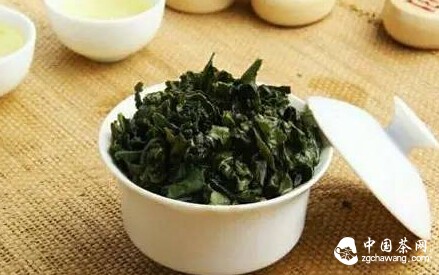
a. From the dry tea color, it appears dark green. Good tea is actually this color; if it is too green, the fermentation is not sufficient. In short, it won't be greenish; the color will be deeper.
b. Weighing the dry tea by hand, it feels substantial and has weight, because it contains more tea elements.
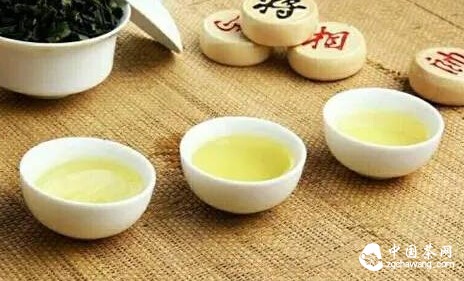
c. The tea soup is yellow, not green, and is stronger than green tea.
d. In terms of taste, good strong aroma is what we call having the Tieguanyin flavor as described above.
e. This kind of tea is more耐泡 (resistant to brewing).
Market situation of tea with 'rhythm':
In summary, 'rhythm' refers to Tieguanyin tea rich in aroma. How is the sales situation of 'rhythm' in the market? The biggest fans of rhythm-rich tea are people from Guangdong, who were the earliest to drink Tieguanyin and have a痴爱 for traditional Tieguanyin. This is a relatively mature and rational choice. They care most about the tea's aroma and耐泡程度, while the tea's color is secondary.
In most other parts of the country, there is a preference for lightly fermented tea, which has a greener appearance, green tea water, a greener taste, and is less耐泡. Its rhythm is not as strong.
Of course, people love 'rhythm,' but tea with strong rhythm often cannot be very green in appearance color. However, the market also prefers tea with greener appearance color, creating a contradiction. To have both simultaneously, the price is naturally high.
So, which one should we choose when purchasing? This depends on personal preference; it's like choosing between radishes and greens. You can compare and choose what you love. But this is not absolute; a high-grade good tea generally兼备 both.