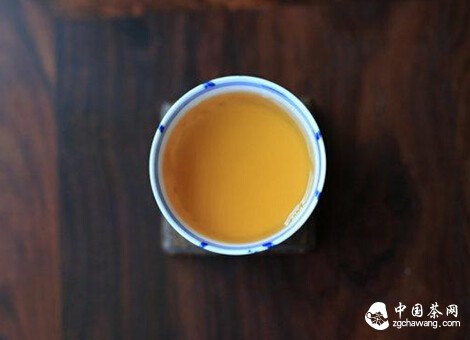
(Raw Tea Liquor Color)
The question of whether raw tea is better or ripe tea is better is a common topic, but for many novice Pu-erh tea lovers, it is not easy to explain clearly.
First, let's clarify the difference between raw tea and ripe tea.
After the fresh leaves are picked, they undergo fixation, rolling, and drying to become sun-dried raw tea. Then, through high temperature, high humidity, and high pressure, they are compressed into pressed raw tea products. This is raw tea. Ripe tea has an additional step compared to raw tea: pile fermentation. After the sun-dried raw tea is made, the tea is divided into piles, watered, and fermented through piling. After compression, it becomes the brick tea, cake tea, or tuo tea commonly seen on the market.
There is only a short distance between raw tea and ripe tea—this distance is "fermentation." However, it is this fermentation process that creates a huge difference between raw tea and ripe tea.
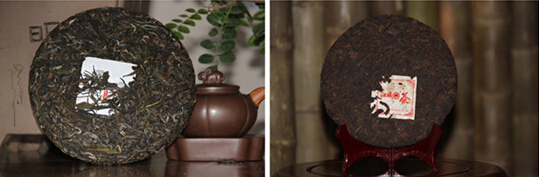
| Left: Raw Tea, Right: Ripe Tea
Fermentation is easy to understand. It is a process of rapid ripening, allowing the tea to transform quickly. Some of the internal substances are released, achieving a good drinking taste in a short period.
To judge whether a tea is good or not, at least two aspects need to be considered: the drinking taste and the health benefits.
Raw tea and ripe tea are very easy to distinguish. They can be clearly differentiated from any aspect, such as appearance, liquor color, or taste. The difficulty lies in determining whether the tea is a good one (for the production process and differences between raw and ripe tea, follow the WeChat platform Dongyue Talks Tea: dyshuocha).
Determining whether something is good or not is a very subjective issue, especially with Pu-erh tea. Raw and ripe teas each have their own characteristics. Instead of asking others whether raw tea or ripe tea is better, it is better to ask yourself whether you prefer raw tea or ripe tea, or ask which tea suits your body better.
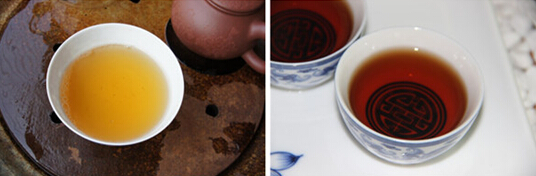
| Raw Tea Liquor and Ripe Tea Liquor
Raw tea that is less than five years old has a slightly cold nature. The most obvious manifestation is that people with poor stomachs may easily experience stomach pain after drinking it. After a transformation period of more than five years, the tea nature basically turns to warm-cool. Raw tea that is more than ten years old is said to have basically reached the best drinking period. For raw tea over ten years old, there are basically no shortcomings. As long as the raw material is good and the storage is proper, after ten years of aging, it will be comfortable to drink and will not have any side effects on the body.
The taste of raw tea is fresh, refreshing, and stimulating, especially the new tea of the current year. According to feedback from new tea lovers, the acceptance of raw tea is higher. The most common aromas of raw tea include floral, fruity, and honey notes. The taste is astringent and bitter, promoting salivation, with the latter part being sweet and smooth.
The main effects of raw tea include: cooling and reducing internal heat. Drinking raw tea in spring and summer can relieve heat, and it can also refresh the mind. Drinking raw tea during work can help with concentration. It has blood pressure-lowering and weight-loss effects. However, raw tea is highly stimulating and is more suitable for young people. Raw tea contains more active ingredients. Those with colds, fever, stomach ulcers, or those who are prone to insomnia should drink less raw tea, especially new tea (if there are other special circumstances and you are unsure whether it is suitable to drink tea, add my WeChat (dydy800) for communication). Young people who often suffer from internal heat and acne can drink raw tea after meals to reduce internal heat, with good effects. This is based on personal experience.
Compared to raw tea, ripe tea is milder. However, some new tea lovers feedback that the taste of ripe tea is not very acceptable at first, but after drinking it a few times, they gradually accept it and may even fall in love with ripe tea. The taste of ripe tea is indeed unique—sweet, smooth, mellow, and comfortable in the mouth after drinking.
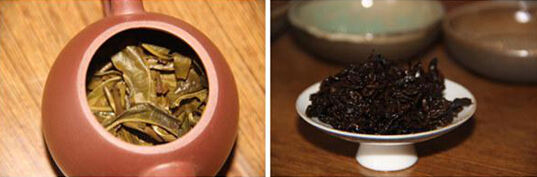
| Raw Tea Leaves and Ripe Tea Leaves
Newly fermented ripe tea has a hot nature. Drinking too much can easily cause internal heat. If you have a cold constitution, you can drink more ripe tea. The effect of ripe tea on nourishing and strengthening the stomach is very obvious. If you are prone to internal heat, try to choose ripe tea that has been aged for more than three years. Ripe tea with three to five years of aging turns warm in nature. From a medical and health perspective, it is recommended that tea lovers drink more ripe tea, especially the elderly. The most obvious effects of ripe tea, besides nourishing the stomach, include aiding digestion and reducing greasiness (i.e., weight loss), as well as lowering the three highs (blood pressure, blood sugar, cholesterol). The elderly drinking a moderate amount of ripe tea after meals is very beneficial to the body.
Objectively speaking, it is really impossible to determine whether raw tea or ripe tea is better based solely on the tea itself. Both have their own merits, and their tastes and effects are different. The choice can only be judged based on each person's preferences and physical acceptance. Whichever you like is the better one for you. If you are still unsure whether you are more suitable for drinking raw tea or ripe tea, you can add my WeChat for consultation and exchange.
Author | Dong Yue, founder of the Nanming Jiaren Pu-erh tea brand, national senior tea artist and tea taster. The "Dongyue Talks Tea" series of articles are now simultaneously updated on well-known websites such as Sohu, Jinri Toutiao, Shuocha Wang, Zhongguo Cha Wang, and Banxia Cha Wang. Dong Yue often shares many of her favorite teas on WeChat and answers various questions from tea lovers. Tea lovers can add Dong Dong's WeChat (dydy800) to share good tea with you.