Often on lazy afternoons with abundant sunshine, with a book in hand and a cup of tea on the table, accompanied by the slowly wafting aroma of tea, one wanders and roams through the words. The tea's delicate fragrance and the simple paper scent of books blend together, creating the best atmosphere for reading. Time alone is most suitable for brewing a cup of Gaiwan tea. You can adjust the strength and temperature according to your own preference, knowing exactly what suits you best.
The Gaiwan tea brewing method was popular during the Qing Dynasty. While the essential tea ware for Ming Dynasty Kung Fu Tea was the purple clay teapot, the Qing Dynasty used the Gaiwan for brewing tea. The Gaiwan, also called a lidded cup, consists of three parts: the lid, the cup body, and the saucer, hence it is also known as the "Three Talents Bowl" – the lid represents heaven, the saucer represents earth, and the bowl represents man, reflecting the traditional Chinese cultural concept of the unity of "heaven, earth, and man."
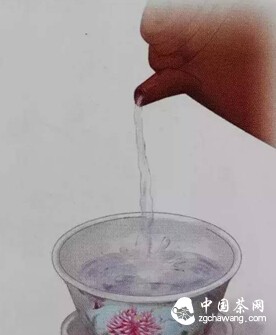
1. Warming the Cup
Pour boiling water into the Gaiwan, then pour the water from the Gaiwan into small teacups. The purpose is to keep the Gaiwan and teacups clean and warm during use.
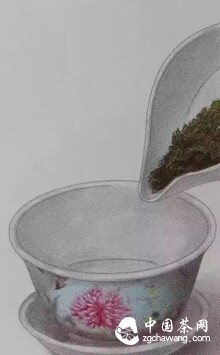
2. Placing the Tea
Place an appropriate amount of tea leaves into the lidded cup.
3. Adding Water
Pour water into the Gaiwan in a circular motion, ensuring that each tea leaf is fully moistened and heated.

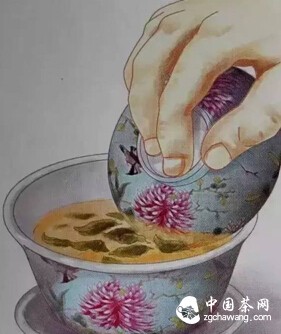
4. Steeping
When the water is nearly full, cover the cup with the lid. Before this, you can use the lid to stir the tea leaves, allowing each leaf to fully unfold.
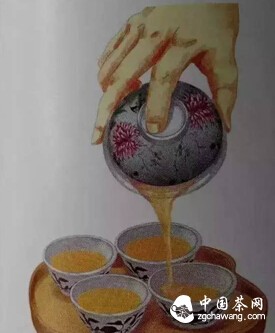
5. Pouring the Tea
Hold the Gaiwan with your index finger, middle finger, and thumb. Gently press the center of the lid with your index finger, while your middle finger and thumb grasp the rim of the cup. Lift the Gaiwan, tilting it slightly forward, and slowly pour the tea into small teacups. During the Qing Dynasty, there was also a method of drinking directly from the Gaiwan without using small teacups.
The tea wisdom of the ancients has been passed down to this day, allowing us, while savoring tea alone, to still faintly perceive the composure and leisure of those who drank tea before us. Whether sitting alone in the courtyard or receiving guests at home, why not brew a cup of Gaiwan tea!