Smoothness
Smoothness is often called mellow smoothness. It is the softest sensation, like holding the finest pure soy milk or ai-yu jelly in your mouth, creating a feeling of utmost softness. Smoothness brings a sense of gentleness, comfort, and familiarity, and can also make one's mind feel more at ease and stable.
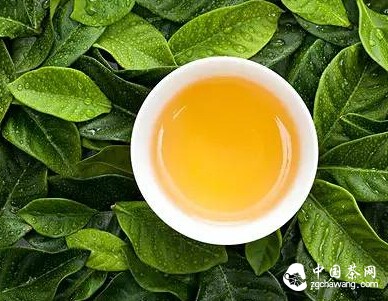
Older or more fully fermented (ripe/shú) Pu-erh teas tend to have smoother water properties. Early productions like Jingchang Hao, Jiangcheng Hao, Puqing Hao Pu-erh round cakes, as well as 1970s thick brick Pu-erh and 1970s Bai Zhen Jin Lian Pu-erh loose tea, all exhibit very smooth liquor. A smooth water property is a major characteristic of Pu-erh tea. Especially nowadays, most newly produced Pu-erh is made using the ripe tea method, and the water properties mostly demonstrate mellow smoothness, which is why many people enjoy drinking Pu-erh tea.
The mellow smoothness of Pu-erh tea's water properties improves with longer aging time, eventually reaching the state of 'melting'. This is one of the key factors that constitute Pu-erh tea's characteristic of becoming more fragrant with age.
Melting
'Melting in the mouth' is also a characteristic of well-aged fine tea and fine wine. For raw Pu-erh tea (shēng chá) to achieve this 'melting' quality in its water properties, it usually must be stored for over sixty to seventy years, and moreover, aged in a relatively ideal environment.
Ripe tea (shú chá) achieves the 'melting' water property more easily than raw tea. For example, the batch of 1970s ripe Pu-erh thick bricks, with only just over thirty years of age, is gradually transitioning its water property from smooth towards having a 'melting' quality. The last batch of tight teas (jǐn chá) from the 1960s, the Tong Qing Lao Hao Pu-erh round tea from the 1920s-30s, and the Hong Zhi Pu-erh, have already reached the 'melts in the mouth' stage. General experience tells us that the 'energy' (jìndao) exhibited by raw Pu-erh tea is more elegant than that of ripe tea, because the water property of ripe tea is somewhat thicker and coarser, and the feeling of 'melting' never seems as lively and ethereal as that of raw tea. However, the aging time required for raw tea is much longer to achieve a 'melting' energy equivalent to that of ripe Pu-erh.
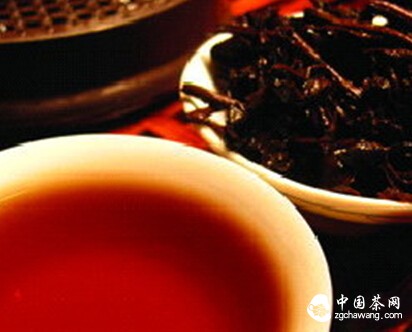
'Melts in the mouth, as if you drank nothing' is an exclamation of the highest realm of Pu-erh tea's water properties during tasting.
Although you drink the tea liquor into your mouth, it's like drinking fine liquor, instantly transforming into a sublime energy. But with liquor, you only feel a rush of alcohol vapor rising towards the palate, which then gradually dissipates. The 'melting' energy of Pu-erh tea is far softer and more tranquil than that of liquor, without the unpleasantness of that intoxicating effect on the brain. The melting energy of liquor can make one feel self-important, mentally vague, and lead to drunken speech and loss of composure. The melting energy of Pu-erh, however, clears the mind and sharpens wisdom.
Liveliness
Liveliness (Huó) is an elegant expression in the liquor that tea connoisseurs of all tea types consistently value, producing a lively, vibrant sensation in the mouth. The mouthfeel of liveliness, like aged aroma (chén yùn), is somewhat abstract. It also relies on developing the ability to discern it through multiple practical tasting experiences; it cannot be easily described with words or language, and is difficult to convey without actual experience.
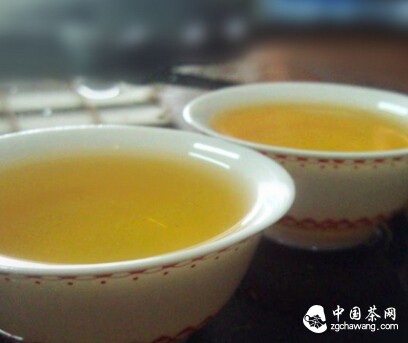
Within the realm of Pu-erh tea, only dry-stored (gān cāng) raw Pu-erh tea (shēng chá) liquor possesses a relatively strong lively character. During processing, Pu-erh ripe tea (shú chá), which undergoes a certain degree of wet-piling fermentation (wò duī), and wet-stored (shī cāng) aged raw Pu-erh tea that has undergone mold transformation, both of these Pu-erh categories increase their water-soluble component content. Furthermore, the heavier the fermentation or the heavier the mold transformation, the more the water-soluble substances in the tea liquor increase, and the darker the liquor color becomes, even turning black. The increase in water-soluble substances directly affects the lively character of the water property. Therefore, only dry-stored raw Pu-erh tea can potentially exhibit the best lively character. Liveliness can give a person a feeling of being vibrant, happy, and energized.
Grittiness
After drinking the tea liquor, there is a sandy, gritty feeling in the mouth. It's similar to the thick, sandy feeling left in your mouth after drinking a bowl of red bean soup. This sandy, gritty feeling brings a comfortable sensation to the mouth.
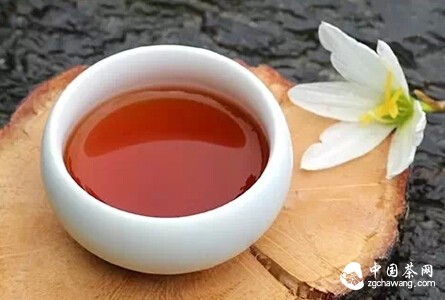
The gritty mouthfeel comes mainly from ripe Pu-erh tea liquor, and particularly from tea products that have undergone a longer aging period. Examples include the last batch of tight teas (jǐn chá) produced by the Fo Hai Ding Xing Tea Factory in the 1930s, and the early 1970s '73 thick brick' ripe tea. Those who have tasted these two batches of older ripe tea products can perceive the gritty character.
The gritty sensation of Pu-erh tea's water properties, perceived through the mouth's feeling, gives one a rough and rich impression. Grittiness is a major characteristic of ripe Pu-erh tea's water properties, and is not easily found in raw Pu-erh tea.