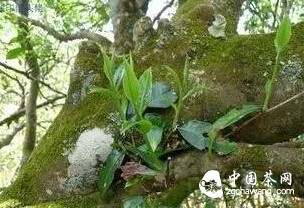
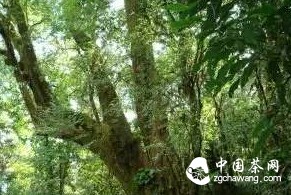
Ancient tree tea generally grows on tea mountains at high altitudes, is typically over 300 years old, and thrives in high-altitude, pristine environments free from human intervention. The plants are tall, with high trunks and extensive root systems, distinct main and branch structures, sparse distribution, low yield, and are difficult to harvest.
In identifying ancient tree tea, many people hold misconceptions, often judging by the size and thickness of the breaved leaves, assuming that large, thick leaves indicate ancient tree tea. Actually, leaf size and thickness are not necessarily related to whether it's ancient tree tea but are associated with the tea variety. Tea plants include large-leaf and small-leaf varieties, as well as thick-leaf and thin-leaf types. In the market, some people often use terrace tea with large, thick leaves, lightly rolled to create loose strips, to pass off as ancient tree tea. Ultimately, identifying ancient tree tea requires tasting through the mouth and sensing with the body.
Aroma
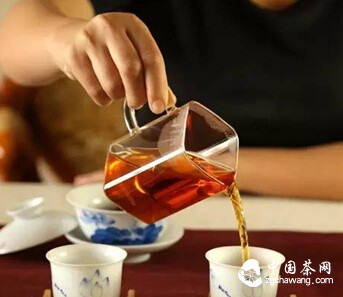
This is one of the key factors in identifying ancient tree tea. Different tea trees have varying root depths and soil environments, absorbing different nutrients, resulting in vastly different aromas. Ancient tree tea can absorb mineral components from deep within the soil, reflecting the uniqueness of each mountain, such as Yiwu's honey aroma and smooth, delicate soup, or Nannuo Mountain's fruity honey notes and perfectly balanced tea character. It's essential to choose tea with a rich, persistent aroma, unique character, and a stable, deep aroma. A stable, deep aroma means that after pouring out the first infusion, you can smell the aroma in the fairness cup – whether it is rich and sinking. Terrace tea rarely presents this aroma perfectly in the fairness cup. The more stable the aroma, the richer the internal quality.
Sweetness
The "sweetness" referred to here is the direct sensation on the tongue upon entry, and must not be confused with the sweet aftertaste (hui gan). The sweetness of ancient tree tea is generally elegant and clear, often overshadowed by the sweet aftertaste. As you gain more experience in tea drinking, you will gradually learn to separate and appreciate the various flavors. New tea drinkers may find it difficult to discern.
Tea Soup
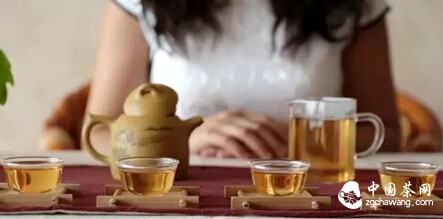
Ancient tree tea soup is mostly golden yellow, clear and bright, which is characteristic of early spring tea from the same year. The soup is the second key to identifying the richness of internal quality. The tea soup has a strong viscous feel, noticeable thickness, rapid and ample sweet aftertaste and saliva production, balanced bitterness and astringency that dissipates quickly, high vitality, and persistence lasting 20-30 minutes. Stability: The tea character remains stable even after 8-12 infusions, it transforms quickly with aging aroma later, and has high collection value. If terrace tea lacks internal substance, the tea soup will appear thin and weak. You can carefully compare and try to sense this.
Sweet Aftertaste and Saliva Production
Sweet aftertaste (hui gan) and saliva production (sheng jin) are basic tea flavors. Terrace tea exhibits these relatively quickly, but with poor persistence, usually weakening after 6 infusions. Ancient tree tea shows these flavors more stably, quickly, and persistently.
Bitterness and Astringency
Bitterness and astringency are also key to judging tea quality. They are inherent characteristics of tea; all teas have them. Heavier bitterness and astringency generally occur for two reasons: First, the tea tree is younger, absorbs fewer nutrients from the soil, other flavors are weaker, so bitterness and astringency become particularly prominent. Second, the tea trees have been fertilized, especially with urea which promotes rapid growth but quickly alters soil structure. Terrace tea can only absorb nutrients from shallow soil where alkalinity increases, leading to increased bitterness. Based on these two reasons, it can be stated that bitterness and astringency are definitely not "tea energy" (qi), nor do they mean the tea is very stimulating and will become less so after aging. Others claim that tea must be bitter and astringent – these are incorrect views. Bitterness and astringency are inherent properties, or can be said to be shortcomings of tea. Here's another practical identification method: set aside a cup of tea soup while drinking, and drink it after it has cooled. The bitterness and astringency will intensify, but the tea aroma, sweet aftertaste, saliva production, and sweetness will still be present. This demonstrates the rich internal substance and stable character of ancient tree tea.
Throat Sensation
Throat sensation (hou yun) is the third key to identifying ancient tree tea. It is a cool, comfortable feeling formed in the throat, making your breathing particularly smooth and highly pleasant. It also includes a lingering sweet aftertaste, saliva production, and aroma in the throat. Furthermore, when breathing, this sensation is brought back into the mouth with the breath, creating the illusion, "How can my throat also taste sweetness?" Throat sensation occurs because the tea is rich in internal substance; when the tea soup is swallowed, the flavors accumulate and release in the throat. Terrace tea lacks sufficient internal substance, so it releases before accumulation can occur, thus unable to form a throat sensation. For ancient tree tea, this throat sensation can last for 20-30 minutes after drinking. The longer the throat sensation, the richer the internal substance. However, if considering collection, this alone is not enough; one must also observe the two properties exhibited by the tea: persistence and stability.
Persistence
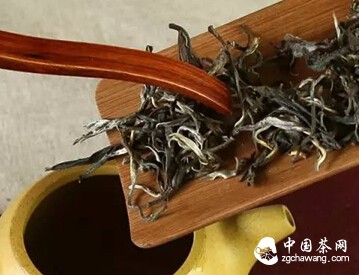
Simply put, this refers to the tea's durability through multiple infusions. The amount of raw tea used is generally 8 grams, precisely weighed. The brewing method should be standard, using at least a porcelain gaiwan, glass fairness cup, and thick-walled tasting cups. Use mineral water for brewing. After the water boils for the first time, maintain a gentle boil. Generally, we use an electromagnetic stove or halogen stove to keep the water continuously simmering. Each infusion's steeping time is about 10 seconds. When adding water, do not pour directly onto the leaves but slowly add water evenly around the edge of the gaiwan. Then pour out the tea soup after about 10 seconds. This brewing method allows you to objectively identify the persistence in each infusion's soup.
While tasting, if you notice any of the aforementioned flavors weakening in any infusion, it indicates the tea's persistence ends there. In comparison, ordinary terrace tea generally has slightly poorer durability than ancient tree tea, with flavors noticeably fading after 6 infusions. Ancient tree tea can usually last for 8-10 or more infusions, with better ones lasting over 12 infusions. Persistence determines the tea's stability. The longer the persistence, the higher the stability. By assessing persistence, you can determine the stability of the tea's character. Higher stability proves the tea is rich in internal substance and has value for aging.
The above methods are personal experiences for identifying ancient tree tea and may not be entirely correct. Everyone is welcome to discuss and share experiences. Actually, good tea is not strictly divided into ancient tree or terrace tea. However, currently, the price difference between ancient tree tea and terrace tea in the market is significant. Driven by profit, there are quite a few cases of misrepresentation. As consumers, it's necessary to possess some identification skills to avoid paying too much "tuition fee."