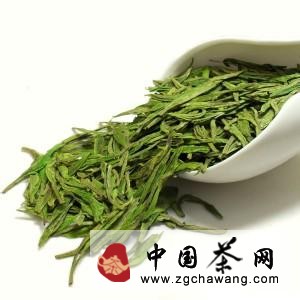
West Lake Longjing, known as the "Queen of Green Tea," has long enjoyed a high reputation both domestically and internationally. However, in recent years, with some commercial operations, West Lake Longjing seems to have drifted away from the masses, becoming a "tribute" for the privileged class. The "inferior substitutes" or magically switched teas carried in tourists' luggage from various places have further pushed West Lake Longjing towards "demonization." Although under the market economy, local specialties nationwide are unwilling to remain ordinary and share this trend, as a local tea farmer and grassroots wholesaler in Hangzhou, I feel responsible to talk about the real West Lake Longjing.
West Lake Longjing tea gets its name from the Longjing tea-producing area in Hangzhou's West Lake, China. It ranks first among China's top ten famous teas. "Comparing West Lake to the beauty Xishi, fine tea has always resembled a fair lady." Longjing is a place name, a spring name, and a tea name. "Jade marrow brewed in the morning before the Grain Rain, this spring tea is the freshest." Longjing tea picked before the Qingming Festival is called Mingqian Longjing, also known as "Daughter Red." Tea picked between Qingming and Grain Rain is called Yuqian Longjing. Mingqian and Yuqian actually have their own fans. As far as I know, most northerners aren't particularly fond of the precious Mingqian tea but prefer the stronger Yuqian tea, which relates to regional habits and tastes.
After promoting Longjing tea, let's talk about the current Longjing tea and its market. Currently, Longjing tea on the market is generally divided by production region into West Lake Longjing, Qiantang Longjing, Zhejiang Longjing, and other Longjing teas.
West Lake Longjing, as the name suggests, is produced within the West Lake district of Hangzhou. Within West Lake district, it can be further divided into core producing areas (Shi, Long, Yun, Hu, Mei) and non-core producing areas (Longwu, Liuxia, etc.). Ironically, core area tea, firstly due to low yield and secondly because of "tribute" and "preciousness," is only consumed by a few (as in every historical period). In contrast, the non-core area Longjing, which is the mainstay, is less favored, and some pseudo-elites even judge Longjing based on non-core area standards. Of course, I must clarify that I'm not saying non-core is necessarily inferior to core. After all, they are within the same West Lake district. How big can a district be? How much difference can there be in climate, environment, and temperature? This difference is negligible on the average person's palate. In fact, some non-core West Lake Longjing teas, due to terrain, local temperature, and environment, can surpass core area teas in taste!
Qiantang Longjing refers to tea produced outside the West Lake district but still within the Hangzhou region, such as Fuyang, Jiande, and now-districts like Xiaoshan and Yuhang. Qiantang Longjing is an extension of West Lake Longjing. Its appearance and taste differ somewhat due to two reasons: 1. The frying technique spread from West Lake district but changed with local habits and customs. 2. The environment in Qiantang differs from West Lake. West Lake is called Hangzhou's "lungs," showing its impact on people, animals, and plants. Although Qiantang masters can achieve almost flawless appearance, they cannot change the inherent differences in the tea leaves themselves.
Zhejiang Longjing naturally refers to tea produced outside Hangzhou but within Zhejiang province, including Wenzhou, Jinhua, Shaoxing, Lishui, etc. Due to different terrain, the output varies, with distinct characteristics and relative chaos. For example, Dafo Longjing from Xinchang, Shaoxing, and Wuniu Zao from Wenzhou are quite distinctive, with very aesthetic and robust shapes but lighter taste. Scientifically, one cannot rule out the existence of high-quality teas with excellent flavor and appearance, which we wholesalers have indeed encountered.
Other Longjing refers to tea produced outside Zhejiang province. It used to be said that many places in Shandong planted the Longjing 43 variety, developing quite well—a缘分 (fate) between Shandong and Longjing. Now, I've even heard that areas like Sichuan also grow Longjing, imitating the frying technique. My cousin, a master tea fryer, goes there every spring as a mentor, treated with good food and drink.
By variety, West Lake Longjing is divided into "Qunti Zhong (Population Variety), Longjing 43, and others (like Wuniu Zao)."
Qunti Zhong refers to the old tea bushes in the West Lake producing area. Of course, upon closer inspection, there are some different varieties among these old bushes. These are the original varieties that have built the West Lake Longjing brand, dazzling the world. They are mainly concentrated in Hangzhou's West Lake district. Back then, propagation and migration were pure diffusion of the original species. As mentioned earlier, this variety can still be seen in the Hangzhou region, but few remain outside the West Lake producing area. Strictly speaking, these Qunti Zhong, which we call old tea bushes, are the essence or the ancestors of West Lake Longjing! Their传承 (inheritance) is orderly: tea seeds grow into trees without any alteration, unless global warming causes a基因突变 (mutation), just kidding.
Longjing 43 was selected and bred by the Tea Research Institute of the Chinese Academy of Agricultural Sciences from the Qunti Zhong. This selection reportedly involved cuttings and even genetic modification (verification needed from professionals). The main characteristic of Longjing 43 is early sprouting, most prominent in the middle and lower reaches of the Yangtze River. Generally, it sprouts in early March, reaching one bud and one leaf by late March. A key feature is good tenderness in the early stage but easy纤维化 (fiberization) later, requiring timely picking. Regarding taste compared to Qunti Zhong, it's not very distinguishable. The difference is more noticeable in Yuqian tea. Appearance-wise, only locals know, and it's hard to summarize in a few words. Longjing 43 doesn't seem to outshine its predecessor but, as an economic crop,顺应 (conforms to) the fast pace of the market economy. This variety is widely promoted全省 (province-wide) and even全国 (nationwide), as mentioned with Shandong and Sichuan.
Others, taking Wuniu Zao as an example. Wuniu Zao is also an ancient tea variety, lost for centuries and restored in 1985. Yongjia Wuniu Zao tea is a newly created famous tea in recent years, named after Wuniu Town in Yongjia. It is a variety with特早 (extremely early) sprouting in China, harvestable in early March. The "Wuniu Zao Longjing" processed from it has a flat shape,醇味气香 (mellow taste and fragrant aroma),翠绿 (emerald green) color, and is a tea treasure. Wuniu Zao sprouts even earlier than Longjing 43. Honestly, some Wuniu Zao does come to Hangzhou to steal West Lake Longjing's thunder, especially in the early Mingqian period when tea prices are high, but West Lake producing areas may not have大量 (large quantities)上市 (on the market). Its shape can冒充 (impersonate) high-end Longjing, but there is a鉴别方法 (identification method): "short, dark, stout." Short means短芽头 (short bud), stout means胖芽头 (plump bud). These two points might be hard to distinguish early in the picking stage, but non-Wuniu Zao buds are pointier with better流线型 (streamlining). Dark refers to a small black dot often found at the picking point of Wuniu Zao buds.
This classification from Baidu Zhidao is basically textual. Actually, distinguishing above a certain grade is difficult without practical comparison. First, regarding shape,整齐程度 (uniformity) is an important standard for judging quality, and uniformity can be improved by后期筛选 (post-sorting). Nowadays, when purchasing tea, farmers usually only have about ten斤 (jin, catty) to sell per day (prices vary daily, decreasing over time after上市 (coming to market). Selling early fetches higher prices; holding for days results in吃亏 (disadvantageous) prices, especially mid-March). We generally select teas with similar shapes and from the same region as a batch. After purchase,碎片 (fragments) occur during transport, so we筛除 (sift out) the fine powder using sieves. Diligent wholesalers use fans or machines to separate larger and smaller leaves, improving the tea's grade. However, during the new tea上市期 (season), we wholesalers usually don't have time for this. Large tea companies or retailers do this, and prices increase accordingly. How can consumers choose good tea? Regarding shape, smaller is generally better—overall smaller than a finger segment. The close-up photos in my shop look large but are actually very small. After assessing size, check匀整度 (evenness): looking at it in hand, similar size and shape are good. But there are exceptions. For example, the shape of tea from some core areas like Wengjiashan in previous years was... not very commendable. Recently, there seems to be improvement.
Then, regarding color, each region's tea has slight color differences, but they are hard to distinguish because few consumers have the chance to compare. Color is宏观上 (macroscopic)—you need to compare large baskets. Generally, Longjing dry tea is yellowish-green, with yellow and green杂糅 (blended) but with a certain bias. In our wholesale business, some clients prefer偏绿 (greener), some偏黄 (yellower), based on local consumer preferences. In recent years, clients preferring greener have increased. Some淘宝网 (Taobao) shop descriptions of authentic local West Lake Longjing color are somewhat misleading. Some Zhejiang Longjing are indeed偏绿 (greener), and their green isn't the bright, blended yellow-green but somewhat深绿 (dark green) comparatively. West Lake Longjing is green带黄 (with yellow), core area tea even more偏黄 (yellowish),黄得有点暗 (yellow to the point of being somewhat dull). Of course, if it's黄得有点黑或者红 (yellowish-black or reddish), it's陈茶 (old tea).
Now, looking at liquor color. As a green tea, West Lake Longjing's liquor is明亮 (bright), especially Mingqian tea; Yuqian is略逊 (slightly inferior);雨后 (post-Grain Rain) tea is somewhat暗 (dark) due to strength. Also, don't use freshly boiled water to brew Longjing immediately. Brewing with just-boiled water easily cooks the tea, causing it to become暗淡 (dull) after the initial brightness. It's best to use矿泉水 (mineral water). Current自来水 (tap water) isn't like before, especially in big cities where污水 (wastewater) hasn't fully渗开 (dispersed) before being pumped back for tap water. If there are显白的污迹 (whitish stains) on your glass, it's not your mouth being脏 (dirty) but the water quality. Some online shop photos either brew only a few leaves or use excessive PS, distorting colors unrealistically—be wary of such shops. I'm speaking as thoughts come, forgive the digression! Actually, during transport, packaging, and even when scooping tea, even well-sifted tea produces some碎片 (fragments), visible when brewing. Another factor affecting liquor color is茶毫 (tea fuzz/hair). As mentioned,茶毫 (tea fuzz) is unavoidable. Large tea companies meticulously sift and blow high-end teas, but there's always a取舍 (trade-off) between aesthetics and nutrition.
Finally, regarding aroma.茶香味 (Tea fragrance) is crucial for judging新茶陈茶 (new vs. old tea). One aspect is the dry tea fragrance. Yuqian tea's dry leaves are easier to smell than Mingqian because Yuqian leaves have grown more, carrying more fragrance. Mingqian tea values buds, whose fragrance is more evident in the brewed liquor. Mingqian dry tea fragrance is稍内敛 (slightly more restrained). Another aspect is the brewed tea's fragrance. Freshly brewed tea generally smells fragrant. West Lake Longjing typically has a豆香 (bean-like aroma). After the leaves are fully浸润 (infused), the fragrance is in the liquor. Good Longjing liquor should first taste鲜爽 (fresh and brisk). Whether it回甜 (has a sweet aftertaste) depends on the individual's palate. In our market, many know what good tea is but can't articulate why.