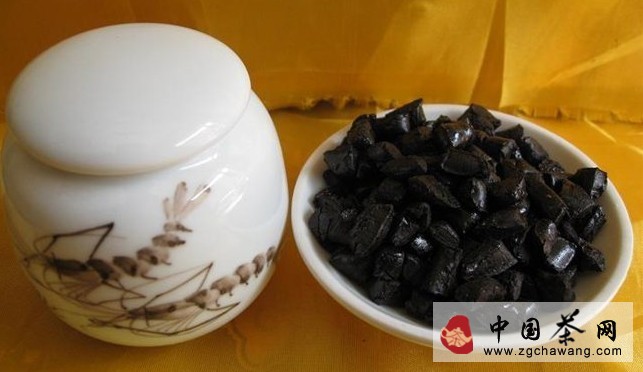
What is tea paste?
Tea paste is a higher-grade solid instant tea reconstituted by processing and fermenting the large-leaf arbor tea leaves unique to Yunnan, then separating the fibrous material from the tea juice through a special method, and reprocessing the obtained tea juice. -- Excerpt from "Pu-erh Tea Paste--A Forgotten Culture of Health Preservation"
History of Tea Paste
Tea paste originated in the Southern Tang Dynasty, matured in the Song Dynasty, flourished in the Qing Dynasty, and thrives in contemporary times. It is made from raw materials of century-old or millennium-old ancient arbor tea trees, extracted and concentrated into a paste solid through 186 secret processes over 72 days. It was enjoyed exclusively by ancient monarchs and is now reserved for modern political, business, and social elites.
Tea Paste Originated in the Southern Tang Dynasty
In China's historical development, the Tang Dynasty was an important era for the tea industry and tea culture, known as "the prosperity of tea in the Tang Dynasty." During this period, tea paste surfaced through the line of folk tribute (Tang Dynasty tribute tea was divided into folk tribute and official baking, where local officials actively presented superior tea to the court). According to Wu Renchen's "Spring and Autumn Annals of the Ten Kingdoms," as early as the second year of Tongwen during the reign of Min Kangzong of the Southern Tang (937 AD), tribute tea paste was presented, namely "tribute Jianzhou tea paste, made with exotic flavors, adorned with gold thread, named 'Nai Zhong Er,' totaling eight pieces." From this text, we can easily find: First, the term "tea paste" officially appeared; second, it was adorned with gold thread, indicating its preciousness; third, the quantity was extremely small, only eight pieces, unlike other tribute teas calculated in loads. Upon its debut, tea paste possessed a prominent status unmatched by other tribute teas.
Tea Paste Matured in the Song Dynasty
Tea drinking customs were quite popular in the Song Dynasty. Unlike the Tang Dynasty, Song tea producers paid more attention to the phenomenon of tea paste formation. They adopted a pressing technique: first steaming the tea, then "rinsing several times. Then placed in a small press to remove water, and then into a large press to extract the paste," successfully separating the tea paste from the tea leaves, making it an independent product.
The Song Dynasty used tea paste obtained by this method in two aspects: First, as an independent tea product included in the Song Dynasty tea catalog. For example, Tao Gu (907–960 AD), the first author of a tea monograph in the Northern Song, included two types of tea paste in his "Record of Famous Teas": one was "Jade Cicada Paste," and the other was "Gold Thread Nai Zhong Er." Although "Record of Famous Teas" mainly describes eighteen interesting anecdotes about tea, we see the names of these two tea pastes in the descriptions, marking the existence of tea paste as an independent product. Second, consciously coating the surface of cake tea with tea paste during its production to increase the brightness and color of the cake tea's surface. This was a significant step forward compared to the "containing paste" technique in Tang Dynasty tea making.
Tea Paste Flourished in the Qing Dynasty
By the Qing Dynasty, with the prosperity of Yunnan Pu-erh tea, the production of tea paste quietly reappeared. In 1729, a Yunnan chieftain presented Pu-erh tea paste to Emperor Yongzheng, who then ordered the Imperial Tea Room to supervise the production of imperial Pu-erh tea paste. Subsequently, successive emperors and nobility were fond of Pu-erh tea paste.