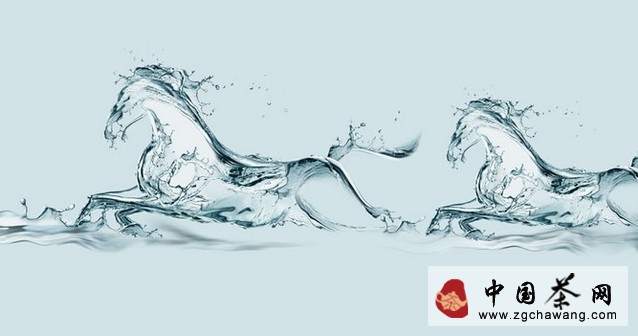
Everyone can drink tea, but brewing it skillfully is not easy. The brewing of tea leaves involves great knowledge; even with the same quality of tea leaves, different water or brewing techniques can produce vastly different results in the tea soup, with very noticeable differences.
China has long emphasized the art of tea brewing (infusing tea), accumulating rich experience. As early as the Tang Dynasty, Lu Yu summarized the experience of using water for boiling tea in "The Classic of Tea": "For water, mountain water is best, river water is average, and well water is inferior." In the Ming Dynasty, Tian Yiheng said in "Essays on Boiling Springs": "Tea is a fine plant of the south, indispensable in daily use. Its quality can be delicate or coarse, but if the water is unsuitable or the brewing improper, even fine tea will not taste good." Thus, truly brewing good tea is not as simple as imagined.
To brew a good pot or cup of tea, one must consider practicality, scientific principles, and artistry.
"Practicality" means proceeding from actual needs and conditions, whether brewing a simple "bowl of tea" or a pot of exquisite famous tea. "Scientific principles" involve understanding the characteristics of various teas and mastering scientific brewing techniques to fully bring out the inherent qualities of the tea. "Artistry" refers to selecting appropriate utensils and employing elegant, civilized brewing procedures and methods. In short, mastering tea brewing focuses on choosing suitable water and utensils while learning scientific brewing techniques.
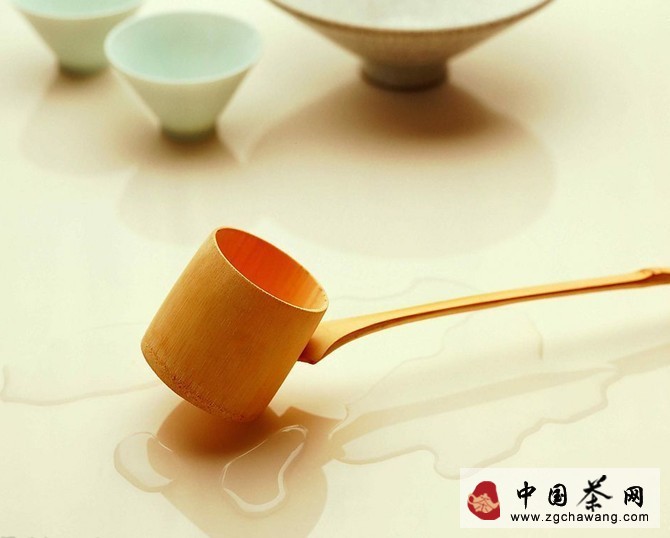
Xu Cishu of the Ming Dynasty wrote in "Tea Commentary": "Fine tea holds its fragrance, which is released through water; without water, there is no discussion of tea." Zhang Dafu of the Ming Dynasty also noted in "Plum Blossom Cottage Notes": "The nature of tea is necessarily expressed through water. Eight parts of tea met with ten parts of water yields ten parts of tea; eight parts of water testing ten parts of tea yields only eight parts of tea." This shows that water quality directly affects the quality of the tea soup. Poor water quality cannot correctly reflect the color, aroma, and taste of tea, especially impacting the flavor of the tea soup. Hangzhou's "Longjing Tea with Tiger Spring Water" is known as the city's "Two Wonders." "Tea from Mengding Mountain, water from the heart of the Yangtze River" is also renowned far and wide. Famous springs paired with famous teas enhance beauty and complement each other perfectly.
The ancients' criteria for selecting water for brewing tea can be summarized as follows:
First, water should be sweet and clean. Cai Xiang of the Song Dynasty said in "Tea Record": "If the spring water is not sweet, it can impair the taste of tea." Zhao Ji pointed out in "Da Guan Tea Treatise": "Water is best when clear, light, sweet, and clean." Wang Anshi also wrote the line: "Sweet water strings through fragrant tea."
Second, water should be fresh and lively. Tang Geng of the Song Dynasty recorded in "Notes on Tea Competitions": "Whether from river or well, water is valued for being lively."
Zhang Yuan of the Ming Dynasty analyzed this more specifically in "Tea Record," stating: "Mountain spring water is clear and light; water from the foot of a mountain is clear but heavy; water from rocks is clear and sweet; water from sand is clear and cool; water from soil is bland and white. Water flowing over yellow stones is excellent; water flowing from blue stones is useless. Flowing water is better than still water; water from shaded areas surpasses that from sunny areas. True sources have no flavor; true water has no scent."
Third, storing water requires proper methods. As Xiong Mingyu of the Ming Dynasty noted in "Luoshan Tea Notes": "To nurture water, one must place stones in the jar..." Xu Cishu further elaborated in "Tea Commentary": "Water's nature dislikes wood, especially pine and fir. Storing water in wooden barrels is particularly harmful; clean bottles are best." Luo Lin of the Ming Dynasty provided even more detailed instructions in "Tea Explanations": "Fill a large jar and add a piece of 'Fulonggan' (dry earth from the center of a stove) while it is hot. Place the water storage jar in a shaded courtyard beforehand, cover it with gauze, so it absorbs daylight by day and receives starlight and dew by night. Then its essence will not scatter, and its spiritual energy will remain. If pressed with wood or stone, sealed with paper or bamboo leaves, and exposed to the sun, the inner energy will be confined, the outer essence depleted, the water's spirit diminished, and its flavor ruined."
Water for brewing tea generally comes from natural sources. Natural water can be categorized by origin as mountain water (spring water), stream water, river water, lake water, well water, rainwater, snowmelt, etc. Tap water is also purified natural water.
The question of which water is best for brewing tea has attracted attention and interest since ancient times. Lu Yu clearly stated in "The Classic of Tea": "For water, mountain water is best, river water is average, well water is inferior. For mountain water, choose that from milk springs or stone pools with slow flow."
China is extremely rich in spring (mountain) water resources, with over a hundred famous springs. The five most renowned are: Zhongling Spring in Zhenjiang, Huishan Spring in Wuxi, Guanyin Spring in Suzhou, Tiger Spring in Hangzhou, and Baotu Spring in Jinan.
(1) Zhongling Spring in Zhenjiang, also known as Nanling Water, was famous throughout the land as early as the Tang Dynasty. Liu Bochu ranked it first among the seven best waters nationwide for boiling tea. Originally located in a treacherous whirlpool in the Yangtze River west of Jinshan Mountain in Zhenjiang, drawing water from it was extremely difficult. "A bronze bottle worries over drawing Zhongling's cold water (Nanling Water), not seeing the ninety-year-old tea master." This is a description by Southern Song poet Lu You. Wen Tianxiang also wrote: "The first spring in the heart of the Yangtze, southern gold comes north to cast literary depths; a man beheads the Loulan chief, leisurely savors the tea classic and worships the immortal Yu." Today, due to riverbank expansion, Zhongling Spring is connected to land and is merely a scenic spot.
(2) Huishan Spring in Wuxi is known as the "Second Best Spring Under Heaven." This spring was excavated in the 14th year of the Dali era of the Tang Dynasty and has a history of over 1,200 years. Zhang Youxin wrote in "Notes on Boiling Tea Water": "Water is divided into seven grades... Huishan Spring is the second." Yuan Dynasty calligrapher Zhao Mengfu and Qing Dynasty official Wang Shu respectively inscribed "Second Best Spring Under Heaven" on stone tablets by the spring, with vigorous and powerful calligraphy preserved intact to this day. This is the origin of the name. Huishan Spring is divided into upper, middle, and lower pools. The upper pool is octagonal, with transparent water, mellow and pleasant taste, and the best quality; the middle pool is square with secondary quality; the lower pool is the largest, rectangular, with the lowest quality.历代王公贵族和文人雅士都把惠山泉视为珍品。相传唐代宰相李德裕嗜饮惠山泉水,常令地方官吏用坛封装泉水,从镇江运到长安(今陕西西安),全程数千里。当时诗人皮日休,借杨贵妃驿递南方荔枝的故事,作了一首讽刺诗:“丞相长思煮茗时,郡侯催发只忧迟。吴园去国三千里,莫笑杨妃爱荔枝。”
(3) Guanyin Spring in Suzhou is one of the scenic spots at Tiger Hill. Zhang Youxin ranked the stone water (Guanyin Spring) from Tiger Hill Temple in Suzhou as the third best spring in "Notes on Boiling Tea Water." The spring is sweet, cool, clear, and delicious.
(4) Tiger Spring in Hangzhou Legend has it that during the Yuanhe period of the Tang Dynasty, a monk named "Xingkong" traveled to Tiger Run and found the environment beautiful and the scenery splendid. He wanted to build a temple but had no water source and was at a loss. At night, he dreamed of a deity telling him: "There is a Boy Spring at Hengshan Mountain in the south; I will send two tigers to move it here tonight." The next day, two tigers indeed came, dug a hole, and water gushed forth, sweet and mellow, hence the name Tiger Spring. It ranks fourth nationally. In fact, like other famous springs, Tiger Spring has its geological basis. North of the spring are densely forested mountains, with quartz sandstone underground. Over time, weathering of the rock created many fissures. Groundwater filtered through the sandstone slowly emerges from the cracks—this is the true source of Tiger Spring. Analysis shows the water has low soluble mineral content and low total hardness, with only 0.02 mg of salt ions per liter, making the water quality excellent.
(5) Baotu Spring in Jinan is the foremost of the local seventy-two springs, ranked fifth nationally. Located at the southwest corner of old Jinan city, southwest of the spring stands an exquisitely built "Guanlan Pavilion." A Song Dynasty poet once praised it in verse: "A stream flows from the Jade Water source, unseen it sprinkles the dust of Lishan; nourishing winter herbs, warmth always comes early; moistening spring tea, the flavor is most true."
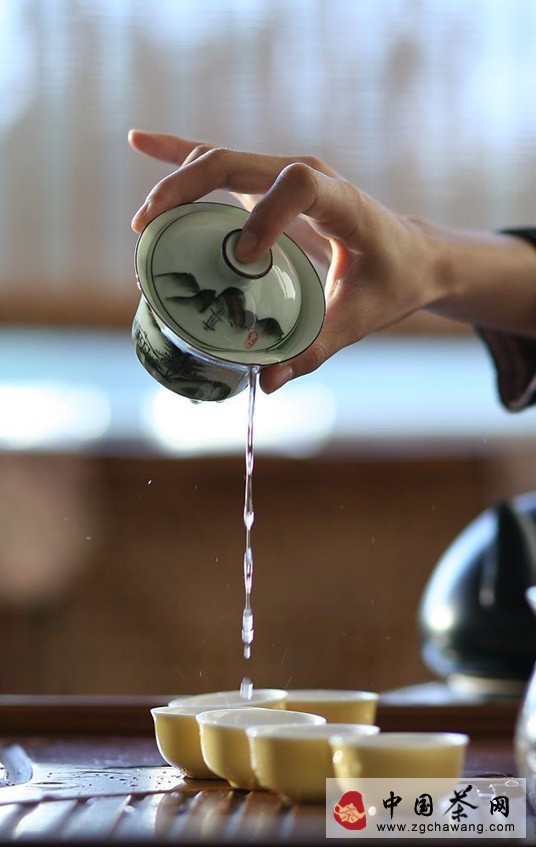
Generally speaking, among natural waters, spring water is relatively refreshing, with few impurities, high transparency, low pollution, and the best quality. However, due to different sources and flow paths, there are significant differences in dissolved substances, salt content, hardness, etc. Therefore, not all spring water is of high quality. Some springs, like sulfur mineral springs, have lost their value for drinking.
For brewing tea, while spring water is best, flowing waters like streams, rivers, and creeks are also excellent for infusing tea. Song Dynasty poet Yang Wanli wrote a poem depicting boatmen using river water to brew tea: "Rivers and lakes are my old livelihood, why not moor at fine places? Drawing water myself from under Songjiang Bridge, testing new tea at Chuihong Pavilion." Ming Dynasty's Xu Cishu said in "Tea Commentary": "Water from the Yellow River comes from the heavens; its turbidity is the color of earth. Once clarified, its fragrance emerges naturally." This indicates that even river water with high turbidity can be used after clarification. Usually, near towns, river water is easily polluted. "The Classic of Tea" from the Tang Dynasty already mentioned: "For river water, fetch it from places far from people." That is, fetch water from remote, uninhabited areas. Over a thousand years ago this was the case; now with widespread environmental pollution, many rivers require purification before use.
Well water is groundwater; whether suitable for brewing tea cannot be generalized. Some well water is sweet and excellent for tea, like the "Dapao Well" in the Wenhua Hall of the Forbidden City in Beijing, which was once an important drinking water source for the imperial palace. Generally, deep groundwater, protected by aquicludes, has less pollution and is cleaner; shallow groundwater is easily contaminated by surface pollution and is of poorer quality. Thus, deep wells are better than shallow ones. Secondly, well water in cities is more polluted, often salty, and unsuitable for tea; rural well water, less polluted and of good quality, is suitable for drinking. Of course, there are exceptions, like the famous "White Sand Well" in Changsha, Hunan, which gushes from sandstone, has good quality, flows year-round, and makes excellent tea with fine aroma and taste.
Rainwater and snowmelt were praised by the ancients as "heavenly springs." Using snow water to brew tea has long been valued. For example, Tang Dynasty poet Bai Juyi's poem "Rising Late" mentions "melting snow to boil fragrant tea"; Song Dynasty poet Xin Qiji's lyric "Six Yao Order" includes "writing the tea classic in detail, boiling fragrant snow"; and Yuan Dynasty poet Xie Zongke's poem "Snow-Boiled Tea" says "sweeping cold blossoms at night to boil green dust." All describe using snow water for tea. In Cao Xueqin's Qing Dynasty novel "Dream of the Red Chamber," the chapter "Jia Baoyu Samples Tea at Green Lattice Nunnery" vividly depicts this: When Miaoyu invites Baochai and Daiyu for "private tea," Daiyu asks Miaoyu: "Is this last year's rainwater too?" Miaoyu replies: "This is... collected snow from plum blossoms... How could stored rainwater from last year be so pure and mellow?" Rainwater is generally clean but varies greatly by season. Autumn, with clear skies and less dust, yields clear, cool rainwater that makes refreshing, sweet tea; the rainy season, with gentle winds and drizzle, promotes microbial growth, resulting in poorer tea quality; summer thunderstorms, often accompanied by sand and dust, yield impure water that makes cloudy tea soup unsuitable for drinking.
Tap water is usually artificially purified and disinfected river or lake water. Tap water that meets China's Ministry of Health drinking water standards is suitable for brewing tea. However, sometimes tap water is disinfected with excessive chlorine, giving it a strong odor that severely affects tea quality when used for brewing. To remove chlorine, store tap water in a jar for a day to let the chlorine dissipate naturally, then boil it for tea—the effect is significantly different. Thus, treated tap water is also a relatively ideal choice for brewing tea.
When selecting water for brewing tea, one must also understand the relationship between water hardness and tea soup quality. Natural water can be hard or soft: water containing relatively high amounts of calcium and magnesium ions is called hard water; water containing little or no calcium and magnesium ions is called soft water. If hardness is caused by calcium bicarbonate or magnesium bicarbonate, it is temporary hard water; if caused by calcium and magnesium sulfates or chlorides, it is permanent hard water. Temporary hard water can be softened by boiling, as the bicarbonates decompose into insoluble carbonates that precipitate. The white sediment at the bottom of an aluminum kettle is carbonate. One milligram of calcium carbonate per liter of water equals one degree of hardness. Soft water is 0-10 degrees; hard water is above 10 degrees. Typically, drinking water should not exceed 25 degrees hardness.
Water hardness closely relates to tea soup quality. First, hardness affects water pH, which in turn affects tea soup color. When pH exceeds 5, the soup darkens; at pH 7, theaflavins tend to oxidize and be lost. Second, hardness affects the solubility of tea's effective components. Soft water, with fewer other solutes, allows higher solubility of tea components, resulting in stronger flavor; hard water, with more calcium, magnesium ions, and minerals, lowers solubility, resulting in weaker flavor. If iron ion content is too high, the tea soup turns dark brown or even develops a layer of "rust oil," making it undrinkable—this results from polyphenols reacting with iron. If lead content reaches 0.2 ppm, tea turns bitter; magnesium above 2 ppm makes tea bland; calcium above 2 ppm makes tea astringent, and at 4 ppm, bitter. Thus, for brewing tea, soft water or temporary hard water is preferable.
Among natural waters, rainwater and snowmelt are soft; spring, stream, and river water are mostly temporary hard water; some groundwater is hard water. Distilled water is artificially produced soft water but is costly and impractical for general drinking water.